
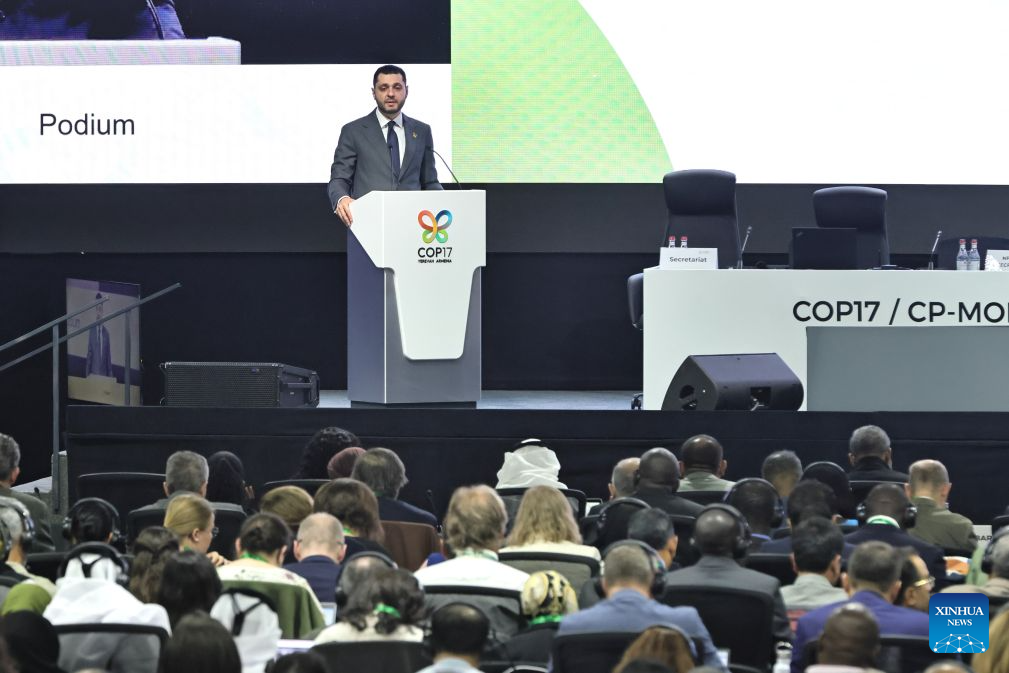
The 2026 United Nations Biodiversity Conference opened in Yerevan, Armenia, on Monday, with a new global report warning that countries are not moving fast enough to meet international targets to protect nature and reverse biodiversity loss by 2030.
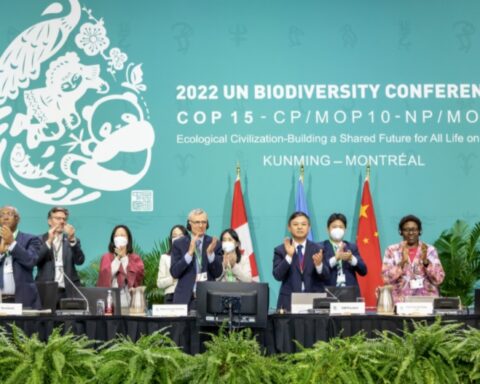
The conference marks the halfway point between the adoption of the Kunming-Montreal Global Biodiversity Framework (KMGBF) in 2022 and its 2030 deadline, with governments, Indigenous Peoples, local communities and other stakeholders gathering to assess progress and accelerate implementation.
The report, State of Biodiversity Action, shows growing international engagement with the framework, with nearly 90 per cent of participating countries setting national biodiversity targets and more than 70 per cent submitting national reports.
However, fewer than half of the national targets assessed by countries are considered on track, highlighting a gap between commitments and the action needed to address biodiversity loss.
Speaking at the conference, the COP17 President and Armenia’s Minister of Environment, Hambardzum Matevosyan, called for renewed commitment to delivering the global biodiversity framework.
“Four years ago, we agreed on an ambitious global agreement for nature. In Yerevan, halfway between the adoption of the Kunming-Montreal Global Biodiversity Framework and 2030, we must renew our collective commitment and focus on its delivery,” he said.
Matevosyan added that inclusive and constructive cooperation would be essential to finding common ground and delivering outcomes that benefit people and nature.
The Executive Secretary of the Convention on Biological Diversity, Astrid Schomaker, said the conference should serve as a turning point in efforts to accelerate action.
“Protecting biodiversity is not separate from protecting our economies. Our food, water, health and livelihoods all depend on healthy ecosystems,” Schomaker said.
She noted that although countries agreed in 2022 on a plan to halt and reverse biodiversity loss, implementation remained too slow to achieve the framework’s objectives.
“Yerevan must mark a turning point in our journey to 2030, putting us on a faster path to meeting the biodiversity targets and achieving our vision of living in harmony with nature,” she said.
At COP17, countries are expected to undertake the first global review of collective progress under the framework, alongside negotiations on biodiversity conservation, sustainable use and measures to address the drivers of biodiversity loss.
Financing, capacity-building and international cooperation are also expected to feature prominently, including efforts to strengthen the participation of Indigenous Peoples and local communities in biodiversity decisions.
The Cartagena Protocol meeting will focus on improving implementation, including guidance on risk assessment and management and strengthening countries’ capacity to make informed decisions on biosafety.
Meanwhile, discussions under the Nagoya Protocol will address monitoring, capacity support, cooperation and institutional effectiveness in implementing rules governing access to genetic resources and the sharing of benefits arising from their use.
Beyond formal negotiations, the conference is expected to attract more than 10,000 delegates from governments, scientific institutions, financial organisations, businesses, cities, Indigenous Peoples and local communities, and youth groups.
The gathering will provide opportunities for stakeholders to exchange ideas, build partnerships and develop solutions to support biodiversity action.
For Nigeria and other biodiversity-rich countries, the conference’s focus on implementation and financing is particularly relevant because biodiversity conservation is closely linked to food production, water security, livelihoods and climate resilience.
The global framework calls for urgent action to halt and reverse biodiversity loss, with countries expected to align national policies, conservation efforts and financing with its targets by 2030.
The report’s findings indicate that while countries have made progress in setting targets and submitting reports, stronger implementation will be required to translate those commitments into measurable improvements for ecosystems and the communities that depend on them.
With four years remaining until the 2030 deadline, the Yerevan conference is expected to test whether countries can turn their commitments into faster and more effective action to protect nature.
The 2026 conference comprises the 17th meeting of the Conference of the Parties to the Convention on Biological Diversity (COP17), alongside the 12th meeting of the Parties to the Cartagena Protocol on Biosafety and the sixth meeting of the Parties to the Nagoya Protocol on Access and Benefit-sharing.
Discussions are expected to focus on reviewing collective progress, mobilising finance, strengthening international cooperation and improving scientific and policy guidance for biodiversity conservation.
Participants will also consider how to address the economic and financial conditions contributing to biodiversity loss, strengthen biosafety measures, and promote the fair and equitable sharing of benefits arising from the use of genetic resources.
By Dare Akogun