
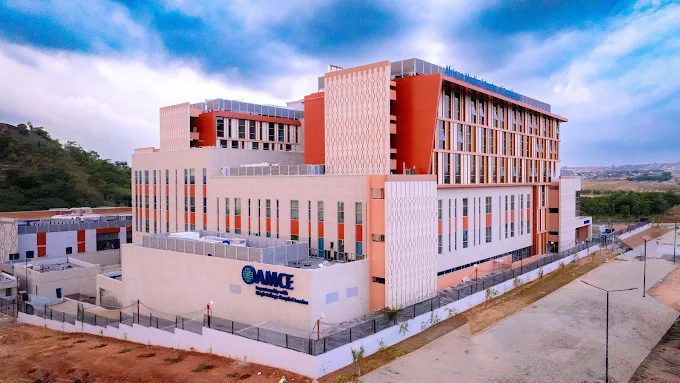
The African Medical Centre of Excellence (AMCE), Abuja, is strengthening access to advanced specialist healthcare in Nigeria through its growing range of cardiac, cancer, diagnostic, and laboratory services, offering patients additional options for complex medical treatment closer to home.
Developed by the African Export-Import Bank (Afreximbank) in clinical partnership with King’s College Hospital, London, AMCE is a 170-bed quaternary-level multispecialty hospital established to improve access to specialised treatment, support medical research and training, and reduce Africa’s dependence on healthcare services abroad.
Supported by Afreximbank, the Nigerian National Petroleum Company Limited and the Bank of Industry, the centre forms part of broader efforts to strengthen Africa’s healthcare infrastructure and expand the continent’s capacity to manage complex medical conditions.
During a tour of the facility as part of the 2026 UK Media Excellence for Emerging Technology Fellowship, participants visited the hospital’s automated laboratory, radiology unit and cardiac catheterisation laboratories, showcasing its investment in advanced medical equipment and specialist healthcare infrastructure.

Dr Rosemary Otalor, AMCE’s Head Corporate Communications, said the centre was among five planned facilities intended to transform access to specialised healthcare across Africa.
“These facilities are part of broader efforts to expand access to specialised medical services within Africa. The hospital is here to change the narrative in Africa’s healthcare services,” Otalor said.

Advanced diagnostics and laboratory services
AMCE’s automated laboratory is equipped with advanced testing systems to support diagnostics and clinical decision-making.
During the tour, fellows were shown some machines could perform up to 2,000 tests per hour, highlighting automated testing’s potential to support high-volume diagnostic work. The precise capacity of the equipment would need to be confirmed against the manufacturer’s specifications.
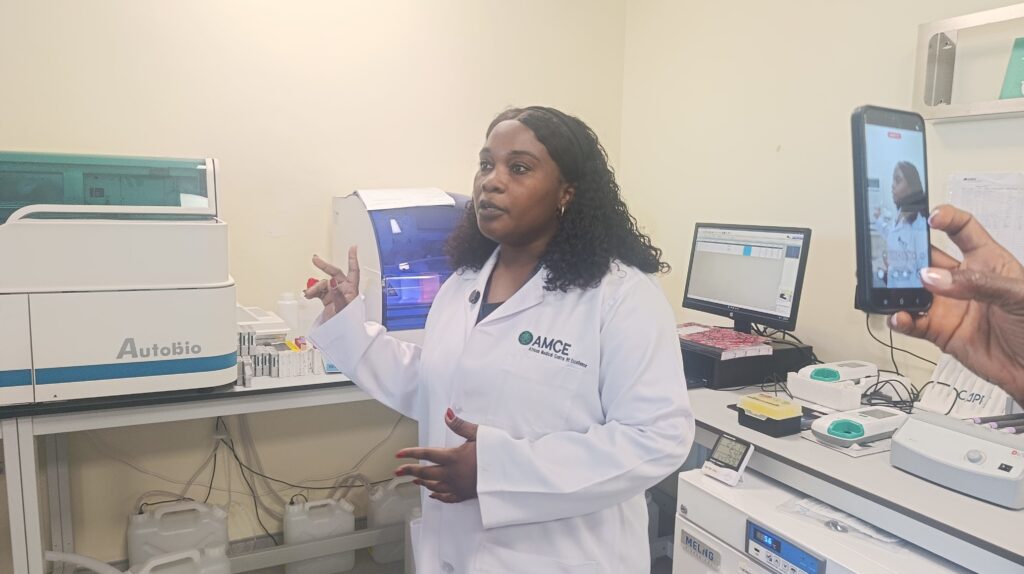
Reliable laboratory services are essential to the diagnosis and management of conditions such as cancer, cardiovascular disease and blood disorders, helping clinicians obtain the information required to determine appropriate treatment.
The hospital’s radiology unit houses magnetic resonance imaging (MRI) and computed tomography (CT) scanners, which support medical imaging for diagnosis, treatment planning and clinical assessment.

By bringing specialist diagnostic facilities together with clinical services, AMCE aims to provide patients and referring physicians with access to a range of investigations within one healthcare institution.
Strengthening cardiac care
The centre also houses three cardiac catheterisation laboratories, commonly known as cath labs, used for diagnostic and interventional procedures involving the heart and blood vessels.
One of the facilities is a hybrid cath lab, according to information provided by staff during the tour. Such facilities combine imaging and interventional capabilities to support complex cardiovascular procedures.

Cardiovascular services are among AMCE’s core specialist offerings. The hospital announced in December 2025 that it had completed its first open-heart surgery, a milestone in its development of local capacity to manage complex cardiac conditions.
The availability of specialised cardiac services in Nigeria could give eligible patients another option to consider when seeking treatment, subject to clinical assessment, affordability and the availability of the required procedure.
Expanding cancer and specialist treatment
AMCE also provides oncology services, including specialised cancer treatment, alongside haematology, cardiovascular care and general medical and surgical services.
In December 2025, the centre announced that it had delivered stereotactic body radiation therapy for lung cancer. The treatment uses highly focused radiation to target tumours while limiting exposure to surrounding healthy tissue.
The hospital also has advanced imaging and specialist laboratory infrastructure intended to support its diagnostic and treatment capabilities.
Its broader clinical focus includes cancer care, blood disorders such as sickle cell disease, cardiovascular conditions and other illnesses requiring specialist assessment and management.
These services are part of the centre’s effort to expand local access to specialised treatment and strengthen Nigeria’s capacity to manage complex medical conditions.
Building a sustainable healthcare institution
Beyond clinical services, AMCE has secured Silver certification under the Leadership in Energy and Environmental Design (LEED) programme, a green-building rating system developed by the United States Green Building Council.
The certification recognises building design and construction practices assessed against environmental and resource-efficiency criteria, including energy and water use, indoor environmental quality and materials.
For a specialist hospital that depends on advanced equipment and essential building systems, effective energy and water management can contribute to operational resilience. The certification itself, however, does not establish the centre’s actual energy savings or reductions in environmental impact.
The facility’s sustainability efforts complement its investment in medical technology and specialist infrastructure.
A wider vision for African healthcare
AMCE was officially commissioned in Abuja on June 5, 2025, as part of efforts to strengthen access to specialised healthcare in Africa.
Afreximbank has identified medical tourism as a significant challenge for African health systems, with patients travelling abroad for complex procedures contributing to substantial healthcare expenditure outside the continent.
AMCE’s ambition is to help address that challenge by providing specialised services locally, while supporting medical education, research and the development of healthcare professionals.
Its long-term impact will depend on its ability to expand clinical services, attract and retain specialist personnel, maintain high standards of patient care and make treatment accessible to people who need it.
For Nigerian patients and families, the development of specialist facilities such as AMCE offers additional possibilities for diagnosis and treatment within the country. The centre’s continued growth could contribute to stronger domestic healthcare capacity and greater choice for patients seeking complex medical care.
As the hospital develops its services, its priority remains the delivery of specialised healthcare supported by modern diagnostic equipment, clinical expertise and infrastructure designed to serve patients in Nigeria and across Africa.
By Dare Akogun