
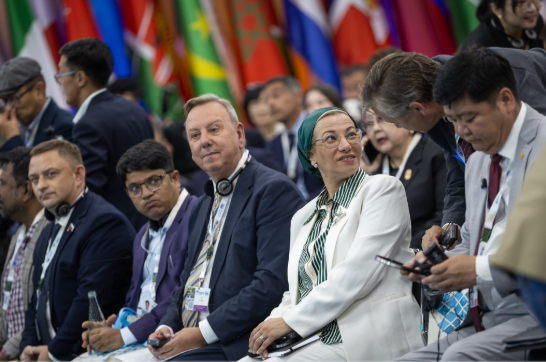
About 30 mayors, governors and other local and regional leaders have adopted the Ulaanbaatar Declaration, calling for stronger local action on sustainable land management, drought resilience and land restoration.
The declaration was adopted at the UNCCD COP17 Mayors’ Forum, held from August 20 to 22 in Ulaanbaatar, Mongolia, where more than 200 participants from over 30 countries gathered to discuss the role of cities and regions in tackling land degradation, desertification, drought and related climate and water challenges.
The forum was hosted by the Governor’s Office of the Capital City of Ulaanbaatar and co-organised by the UN Convention to Combat Desertification (UNCCD), UN-Habitat, the Local2030 Coalition and ICLEI Local Governments for Sustainability, with United Cities and Local Governments (UCLG), through the Global Taskforce of Local and Regional Governments, serving as a key partner.
Five key calls for action
Titled “Local Leadership for Land Resilience: Advancing Implementation across the Rio Conventions,” the Ulaanbaatar Declaration sets out five priorities for local and regional governments, UNCCD Parties and development partners.
The leaders called for an integrated local action on sustainable land management, drought resilience, biodiversity, climate adaptation, water security and sustainable urban development.
They also called for a stronger role for local and regional governments in the UNCCD process, including structured engagement between sessions of the Conference of the Parties.
Another is the greater coordination across the three Rio Conventions and the water agenda to improve implementation at the local level. The Stronger partnerships and financing, including simpler, more direct and predictable access to finance for local governments.
They also called for more knowledge-sharing and innovation, including peer learning and the exchange of practical solutions such as nature-based approaches.
The declaration also commits signatories to advancing land restoration and drought resilience while promoting inclusive participation by communities, women, youth and Indigenous Peoples.
Ulaanbaatar Initiative to measure land degradation
The forum also launched the Ulaanbaatar Initiative, a voluntary effort led by the Capital City of Ulaanbaatar to develop a practical approach for cities to measure and report on land degradation.
Results from the initiative are expected to be shared with the UNCCD by COP18, potentially providing cities with a stronger evidence base for planning and investment in land resilience.
Purevdagva, Governor of the Capital City and Mayor of Ulaanbaatar, said land resilience directly affects cities’ ability to provide safe water, clean air, green spaces, livelihoods and a healthy environment.
“Land resilience is not an abstract global agenda,” Purevdagva said, stressing the importance of cooperation among cities facing dryland and extreme-climate challenges.
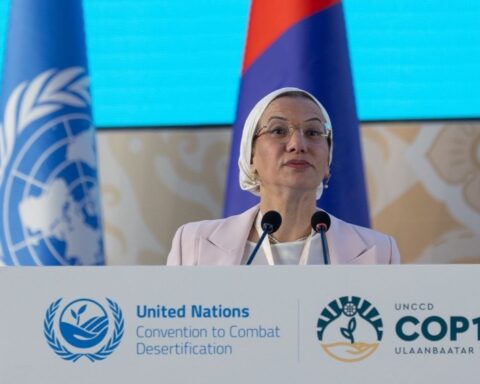
UNCCD Executive Secretary Yasmine Fouad said national commitments provide direction, but implementation ultimately takes place in cities, regions and communities.
She said local governments make critical decisions on land and water management, drought preparedness, infrastructure and public services, making their participation essential to achieving measurable results.
Relevance for developing countries
The forum’s emphasis on local implementation is particularly significant for countries facing desertification, drought, water stress and rapid urbanisation.
African local and regional governments were represented at the meeting, with Oumar Ba, Mayor of Ndiob, Senegal, and President of UCLG Africa, calling for stronger recognition and participation of local governments in global land governance.
Ba said local governments are essential to translating international commitments on land restoration and drought resilience into action within communities.
The declaration also strengthens the Riyadh Process, established through previous UNCCD engagement with local and regional governments, as a platform for continued dialogue between the UNCCD, its member states and organised local authorities.
The Ulaanbaatar meeting builds on nearly three decades of municipal cooperation on desertification, dating back to the 1999 World Forum of Mayors on Cities and Desertification in Bonn, Germany.
It follows subsequent forums in Rome, Ordos and Riyadh, with the 2024 Riyadh Mayors’ Forum reaffirming the importance of local and regional governments in addressing land degradation, desertification and drought.
Participants said 2026 presents a significant opportunity to connect global agendas on land, biodiversity, climate and water, amid major international processes including the World Urban Forum, reviews of the Sustainable Development Goals and the New Urban Agenda, and preparations for the 2026 UN Water Conference in Abu Dhabi.
The forum also featured discussions on urban ecosystem restoration, sand and dust storms, water scarcity, drought resilience, sustainable urban growth, land use and financing.
Following the meeting, the UNCCD Secretariat and its partners will track voluntary progress on the declaration’s commitments, with findings expected to be presented at the next Mayors’ Forum and at UNCCD COP18.
The Ulaanbaatar Declaration therefore marks a shift from simply recognising the role of cities and regions to demanding sustained local implementation of global commitments on land, water and climate resilience.
By Dare Akogun