
Nigeria loses an estimated $450m annually to illegal, unreported and unregulated fishing, a growing threat to marine resources, food security and the livelihoods of coastal communities, as the Federal Government moves to deploy satellite-based surveillance with support from Norway.
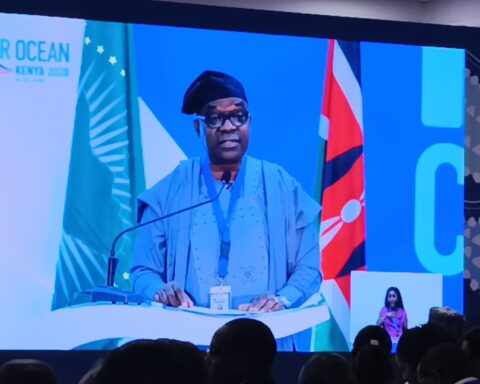
The Minister of Marine and Blue Economy, Adegboyega Oyetola, disclosed the estimated annual loss in Abuja on Monday when he received Norway’s Ambassador to Nigeria, Svein Baera, who introduced the Blue Justice initiative, a programme designed to help countries detect suspicious fishing activities through satellite-based vessel tracking.
The initiative offers participating countries access to real-time and historical Automatic Identification System data, which can help maritime authorities monitor vessel movements, identify suspicious activity and investigate possible fisheries offences.
Norway’s programme provides the data free of charge, with additional analytical support available through its tracking centre.
For Nigeria, where millions of people depend directly or indirectly on fishing, the proposed collaboration presents an opportunity to strengthen the monitoring of its coastal waters and exclusive economic zone, improve enforcement and address the economic consequences of illegal exploitation.
However, the effectiveness of the initiative will depend on more than the availability of satellite data.
Authorities will need the capacity to analyse the information, investigate suspected violations, coordinate enforcement operations and prosecute offenders where evidence establishes wrongdoing.
Oyetola said illegal fishing was undermining local livelihoods, depleting fish stocks and depriving the country of legitimate economic benefits.
“We cannot continue to allow foreign operators to exploit our marine resources illegally while our local fishers and businesses suffer the consequences. The Federal Government is determined to bring this practice to an end,” he said.
The minister also expressed concern that some foreign operators illegally harvested fish from Nigerian waters before returning the products to the domestic market for sale at exorbitant prices.
He said improved surveillance and intelligence sharing would complement government efforts to increase domestic fish production, reduce dependence on imports, create jobs and conserve foreign exchange.
How satellite tracking could help
At the centre of the proposed collaboration is the Automatic Identification System, a maritime tracking technology that transmits information about a vessel’s identity, position, speed and direction.
The technology was initially developed to improve maritime safety by helping vessels identify and monitor one another. Satellite-based AIS extends the monitoring capability beyond the range of conventional coastal receivers, allowing authorities to observe vessel movements over wider maritime areas.
Through the Blue Justice Ocean Surveillance Programme, Norway shares satellite-derived AIS information with participating countries to help identify vessels whose movements may indicate illegal fishing or other maritime offences.
The data can help authorities identify vessels operating in restricted areas, compare vessel movements with fishing licences and authorised activities, and investigate suspicious patterns such as prolonged activity in prohibited fishing grounds or unexpected encounters between vessels.
Historical tracking records can also help investigators reconstruct vessel movements and examine suspected offences that may not have been detected while they were occurring.
Norway’s programme operates alongside the Blue Justice Community, a platform designed to facilitate cooperation among countries tackling fisheries crime.
The initiative also provides access to an international tracking centre in Vardø, Norway, where participating authorities can obtain analytical assistance.
For Nigerian authorities, such information could strengthen risk-based patrols, enabling enforcement teams to concentrate limited resources on vessels and locations requiring closer investigation.
But satellite tracking is not a substitute for enforcement. AIS signals can be switched off, manipulated or unavailable, and not every fishing vessel is required to carry an AIS transponder. A vessel disappearing from a tracking map is therefore not, by itself, proof of illegal fishing.
Authorities would need to combine satellite information with fishing licence records, vessel registration details, port inspections, patrol reports, catch documentation and other evidence before taking enforcement action.
The initiative’s success will ultimately be measured by whether it leads to more effective investigations, sanctions against proven offenders, reduced illegal catches and improved protection for legitimate fishers.
A wider West African crisis
Nigeria’s reported annual loss of $450m forms part of a wider regional challenge confronting countries along the Gulf of Guinea and the Atlantic coast of West Africa.
Illegal, unreported and unregulated fishing is not limited to vessels operating without licences. It also includes fishing in prohibited areas, failing to report catches accurately, breaching applicable conservation rules and exploiting weaknesses in fisheries monitoring and management.
The consequences extend beyond government revenue. Illegal fishing can accelerate the depletion of fish stocks, undermine the competitiveness of local fishers and disrupt the livelihoods of people involved in processing, transporting and selling seafood.
A 2017 study published in Frontiers in Marine Science estimated that illegal fishing cost six West African countries Mauritania, Senegal, The Gambia, Guinea-Bissau, Guinea and Sierra Leone approximately $2.3bn annually, based on reconstructed fishing and enforcement data for the period studied. The estimate should not be interpreted as a current figure for Nigeria or as a loss attributable to Nigeria and Ghana alone.
More recently, the Food and Agriculture Organisation of the United Nations, the Economic Community of West African States and regional fisheries bodies have continued to push for stronger coordination against illegal fishing.
At a regional donors’ roundtable held in Abuja in September 2025, the FAO reported that West Africa lost more than $2bn annually to illegal, unreported and unregulated fishing, warning that the practice threatened food security, nutrition, livelihoods and the sustainable management of shared fisheries resources.
The regional dimension matters because fish stocks and fishing fleets do not respect national boundaries. Vessels can move between jurisdictions, while weaknesses in one country’s monitoring and enforcement arrangements can complicate efforts by neighbouring countries to protect shared resources.
The problem therefore requires more than isolated national interventions. Effective action will depend on intelligence sharing, compatible enforcement procedures, reliable vessel records and cooperation among coastal states.
For Nigeria, participation in the Blue Justice initiative could provide an additional source of information for monitoring its waters and working with neighbouring countries to identify suspicious maritime activity.
The cost to fishing communities
For artisanal fishers, the consequences of illegal fishing are experienced less through national revenue figures than through the daily struggle to secure viable catches and earn a living.
Small-scale fishing communities depend on access to productive fishing grounds. When industrial vessels enter areas reserved for artisanal fishers or contribute to excessive pressure on fish stocks, local operators may face declining catches, longer fishing trips and higher operating costs.
The effects spread across the wider fisheries economy. Women who smoke, dry and sell fish may have less produce to process, while traders, transporters and other small businesses face disruptions to their supplies and incomes.
In Nigeria, where fish is an important source of animal protein, pressure on domestic fisheries also raises concerns about the affordability and availability of food.
The government has not, in the announcement of the Norway initiative, provided a breakdown of the estimated $450m annual loss by state, fishing community, vessel category or type of offence. Such information would help establish where illegal fishing is most damaging and guide the deployment of surveillance and enforcement resources.
There is also a need to distinguish losses arising directly from illegal catches from those linked to under-reporting, unpaid fees, market distortions and other fisheries-related offences. A transparent methodology would make it easier to assess the scale of the problem and measure progress.
Beyond Nigeria’s borders
The challenges facing Nigerian fisheries reflect concerns across the wider Gulf of Guinea, where industrial fishing, weak monitoring and pressure on coastal livelihoods have featured prominently in regional debates about marine conservation and economic justice.
In Ghana, for example, the practice known as saiko has attracted scrutiny because it involves the transfer and sale of fish caught by industrial trawlers to other vessels or buyers, with consequences for small-scale fisheries and coastal livelihoods. Research has examined how such practices persist and affect communities that depend on artisanal fishing.
Although the specific practices and legal circumstances differ between countries, the regional experience demonstrates why surveillance must be accompanied by transparent licensing, effective port inspections and consistent enforcement.
Nigeria’s response will therefore have implications beyond its own fishing grounds. Stronger monitoring could contribute to regional efforts to identify vessels suspected of repeated violations, improve cooperation among maritime authorities and protect fishing communities whose livelihoods depend on healthy marine ecosystems.
The challenge is to ensure that information generated through satellite tracking translates into coordinated action, rather than remaining data that authorities are unable to use effectively.
What Nigeria must do next
The Federal Government’s assurance that Nigeria will participate in the Blue Justice initiative is an important step, but the practical arrangements will determine its value.
First, the Ministry of Marine and Blue Economy and relevant enforcement agencies need a clear operational framework for receiving, analysing and acting on satellite information. Responsibilities for verifying alerts, coordinating patrols and investigating suspected violations should be defined.
Second, Nigeria needs reliable and accessible records of licensed fishing vessels, beneficial ownership, fishing authorisations and permitted operating areas. Such records would help investigators compare observed vessel movements with the activities each vessel is legally authorised to undertake.
Third, the country must strengthen cooperation among fisheries regulators, maritime enforcement agencies, port authorities and neighbouring coastal states. Information about suspicious vessels will be more useful when it can support timely investigations and lawful enforcement across jurisdictions.
Fourth, authorities should make enforcement outcomes transparent. Publishing verified information on inspections, confirmed violations, prosecutions, sanctions and recovered revenue would allow the public to assess whether the programme is delivering results.
Finally, artisanal fishers and coastal communities should be included in fisheries monitoring and policy decisions. Their knowledge of local fishing grounds, vessel movements and changes in catches can complement satellite information and help authorities identify areas requiring investigation.
The government should also establish a baseline against which to measure the initiative’s impact, including changes in illegal fishing incidents, enforcement actions, fish stocks and the livelihoods of small-scale fishing communities.
Without such benchmarks, Nigeria may struggle to determine whether the initiative is reducing illegal fishing or simply improving its ability to observe it.
A test for the blue economy
Nigeria’s proposed collaboration with Norway comes at a time when the Federal Government is seeking to expand the contribution of the marine and blue economy to national development.
Protecting fisheries is central to that ambition. Marine resources cannot generate sustainable jobs, reliable food supplies and long-term economic benefits if they are depleted through illegal exploitation or poorly regulated fishing.
The Blue Justice initiative offers Nigeria access to technology and international expertise that could strengthen its response. But satellite data alone will not recover lost revenue, replenish depleted stocks or restore the incomes of affected fishing communities.
Those outcomes will require sustained investment in enforcement, stronger institutions, regional cooperation and accountability for fisheries offences.
For the fishers who depend on Nigeria’s waters, the real test of the partnership will not be the number of vessels appearing on a satellite screen. It will be whether more fish remain available in local waters, whether legitimate operators can compete fairly and whether coastal communities see tangible improvements in their livelihoods.
Nigeria has an opportunity to turn a new surveillance partnership into a broader strategy for protecting its marine resources.
Whether that opportunity delivers lasting benefits will depend on what authorities do with the information they receive.
By Dare Akogun