
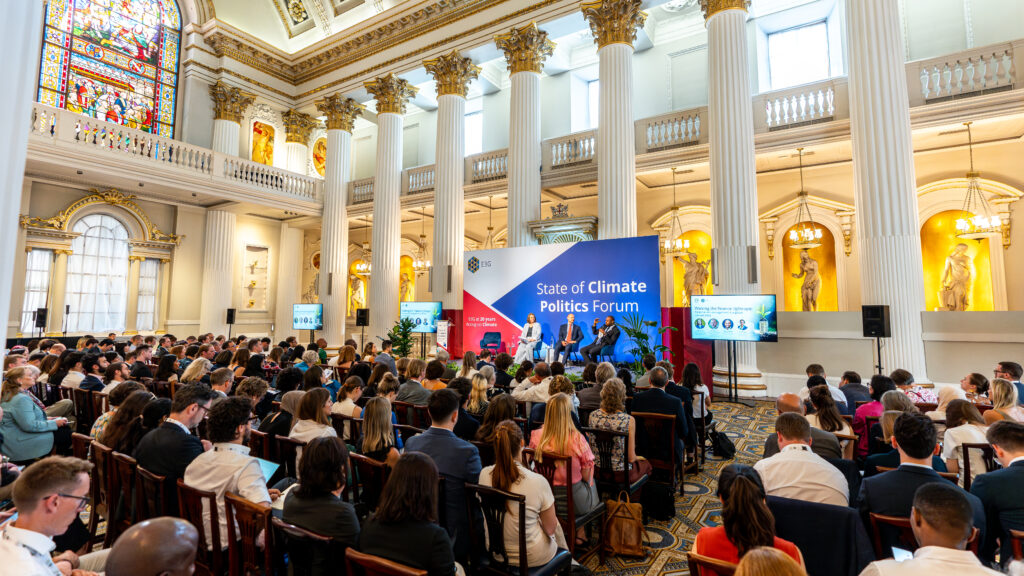
Barely a week after negotiators left Bonn divided over climate finance, adaptation funding, and implementation of the Paris Agreement, attention has shifted to London, where policymakers, investors, legislators, and climate advocates are gathering for what has become one of the world’s most influential climate diplomacy events outside the formal United Nations process.
From Monday through Thursday, the London Climate Action Week will serve as an unofficial bridge between the technical negotiations concluded at the Bonn Climate Change Conference (SB64) and the political negotiations expected later this year at the 31st Conference of the Parties.
Although no negotiating texts will be adopted in London, experts say many of the political alliances, investment commitments, and policy ideas that eventually shape COP31 outcomes will first emerge from discussions taking place across the British capital.
For Nigeria, this year’s event carries added significance.
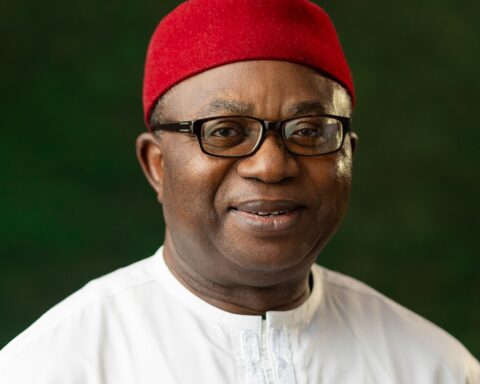
Former member of the House of Representatives and sponsor of Nigeria’s landmark Climate Change Act 2021, Rt. Hon. Sam Onuigbo will formally assume office on Tuesday as President of GLOBE International, becoming the first Nigerian to lead the global parliamentary network dedicated to climate action and sustainable development.
His inauguration at the House of Commons coincides with the organisation’s 35th anniversary and comes as Nigeria intensifies efforts to attract climate finance needed to implement its energy transition and climate adaptation plans.
Onuigbo is also expected to address participants at the inaugural Nigeria Climate Investment Summit at London’s historic Mansion House, where policymakers, investors, development partners, and business leaders will discuss opportunities to unlock financing for Nigeria’s low-carbon development agenda.
Unlike the annual COP meetings, where governments negotiate legally binding decisions, London Climate Action Week provides a platform where governments interact with investors, insurers, philanthropists, researchers, civil society organisations, and private sector leaders.
The event has steadily evolved into one of the world’s largest climate engagement platforms, hosting hundreds of discussions on climate finance, renewable energy, sustainable cities, food systems, adaptation, health, and industrial decarbonisation.
Its influence has grown partly because it allows conversations that often struggle to gain traction within the highly structured UN climate negotiations.
Issues such as innovative climate finance mechanisms, carbon markets, shipping and aviation levies, fossil fuel taxation, and private investment are debated openly among actors who rarely sit together during formal negotiations.
This year’s gathering comes against the backdrop of fresh disagreements exposed during the Bonn Climate Conference, where developing countries accused wealthier nations of slowing negotiations on adaptation finance and failing to honour earlier commitments to mobilise greater support for vulnerable countries.
Climate finance is expected to dominate discussions in London as countries prepare for COP31.
Nigeria seeks bigger climate investment
Nigeria faces one of Africa’s largest climate financing gaps.
While the country has adopted a Climate Change Act, launched an Energy Transition Plan, and developed several sectoral climate strategies, experts say implementation continues to lag because of inadequate financing.
The Nigeria Climate Investment Summit is expected to focus on attracting private and public capital into renewable energy, clean transportation, resilient agriculture, climate-smart infrastructure, and green industries.
The discussions also come as African countries continue to demand easier access to international climate finance, insisting that adaptation projects cannot depend solely on private investment because many generate limited commercial returns despite delivering enormous social benefits.
The relocation of GLOBE International’s global headquarters from Europe to Nairobi is also being viewed as recognition of Africa’s increasing influence in shaping global climate policy.
Speaking ahead of the event, a climate advocate, Saheed Salami, said Nigeria must move beyond participating in climate conferences to presenting bankable projects capable of attracting international investment.
According to him, climate finance is becoming increasingly competitive, and countries that combine sound governance with well-prepared investment proposals will secure greater support.
“Our challenge is no longer the absence of climate commitments but translating those commitments into projects investors and development partners are willing to fund,” he said.
Also speaking, climate policy analyst Abdulmajeed Kayode, cautioned against relying excessively on private finance.
He argued that developed countries still have legal obligations under the Paris Agreement to provide public climate finance to developing nations.
“Private investment cannot replace public climate finance obligations. Adaptation, loss and damage, and community resilience are public responsibilities that should not depend solely on market interests,” Bassey said.
Similarly, environmental economist Dr. Eugene Asari said Nigeria should use platforms such as London Climate Action Week to build strategic partnerships capable of accelerating green industrialisation.
He noted that climate action is increasingly becoming an economic opportunity rather than simply an environmental obligation.
“Nigeria has abundant renewable energy resources, a growing youth population, and expanding green investment opportunities. The challenge is creating policy certainty that encourages long-term investment,” he said.
As delegates converge on London, much of the United Kingdom is experiencing unusually high temperatures, reinforcing concerns over the growing impacts of climate change.
The heat wave serves as a reminder that climate risks are no longer confined to vulnerable developing countries but are increasingly affecting advanced economies as well.
For climate advocates, the weather provides a powerful backdrop to discussions on accelerating emission reductions while increasing investments in adaptation and resilience.
Road to COP31
With COP31 expected to confront unresolved disagreements over climate finance, adaptation, and implementation of the Paris Agreement, observers believe London Climate Action Week could shape many of the conversations that eventually define the global negotiations.
For Nigeria, analysts say the priority is ensuring that diplomatic engagement translates into measurable investments capable of supporting national development priorities.
As lawmakers, financiers, and climate experts gather in London, the question for Nigeria is no longer whether climate finance exists, but whether the country can position itself to secure a greater share of it while strengthening its leadership in Africa’s climate transition.
By Dare Akogun