
The floodwaters may have receded after days of torrential rain, but the devastation they left behind remains. Thousands of Lagos residents are still counting their losses as submerged homes, damaged vehicles, contaminated surroundings and disrupted livelihoods paint a grim picture of the deluge’s aftermath. While officials attribute the flooding to Lagos’ low-lying topography and the effects of climate change, many victims blame the authorities for failing to take adequate preventive and mitigation measures. DARE AKOGUN reports
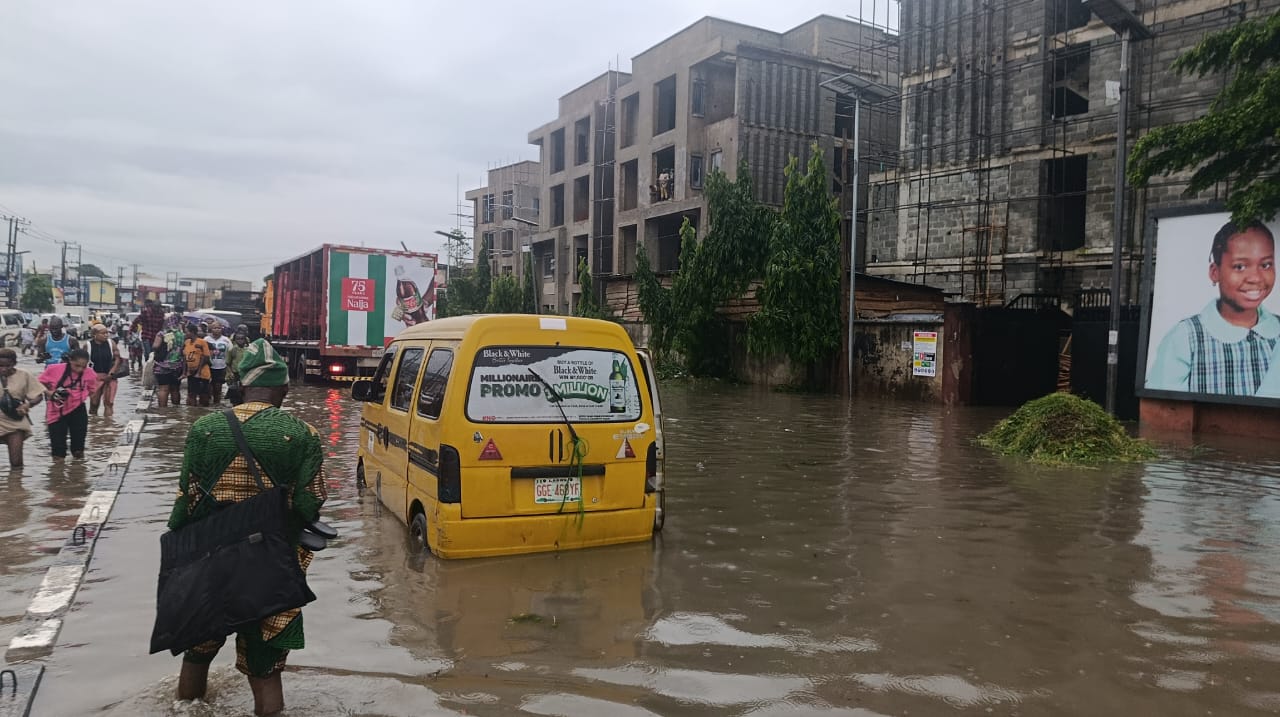
For six agonising hours, Fatai Saheed sat helplessly behind the steering wheel of his yellow commercial bus, watching murky floodwater rise steadily up the tyres.
The rain had long stopped, but nothing moved. Not the endless line of vehicles stretching from Agege Pen Cinema through Ogba to Ojodu Berger. Not the weary commuters who had surrendered to the gridlock. And certainly not Saheed, whose daily earnings disappeared with every passing minute.
He had experienced and lived through this nightmare before.
Three years back, shortly after purchasing the same bus with borrowed money, he unknowingly drove into floodwater along Wemco Road. By the following day, the water had seeped into the engine, damaging it beyond repair.
“I had to borrow money again to buy another engine,” he recalled, his voice heavy with emotion as he spoke with Saturday PUNCH.
“I promised myself I would never make that mistake again. Since then, whenever it rains heavily, I avoid flooded roads. If I can’t avoid them, I simply park. It is better to lose a day’s income than lose another engine.”
Last Thursday, as another torrential downpour battered Lagos, Saheed kept that promise.
His passengers grew impatient. Some accused him of overreacting, while others pointed to buses attempting to force their way through the floodwater.
“They kept telling me, ‘Look, other buses are passing.’ But I told them I wasn’t going anywhere. Nobody would buy another engine for me if this one got damaged,” he said.
Nearly six hours later, when the floodwater finally receded, Saheed drove home with barely enough money to buy fuel, let alone provide for his family.
“This is not the first time we have complained about flooding here. It is getting out of hand. The government needs to find a permanent solution,” he lamented.
The flooding that trapped Saheed for hours was only a preview of what came days later.
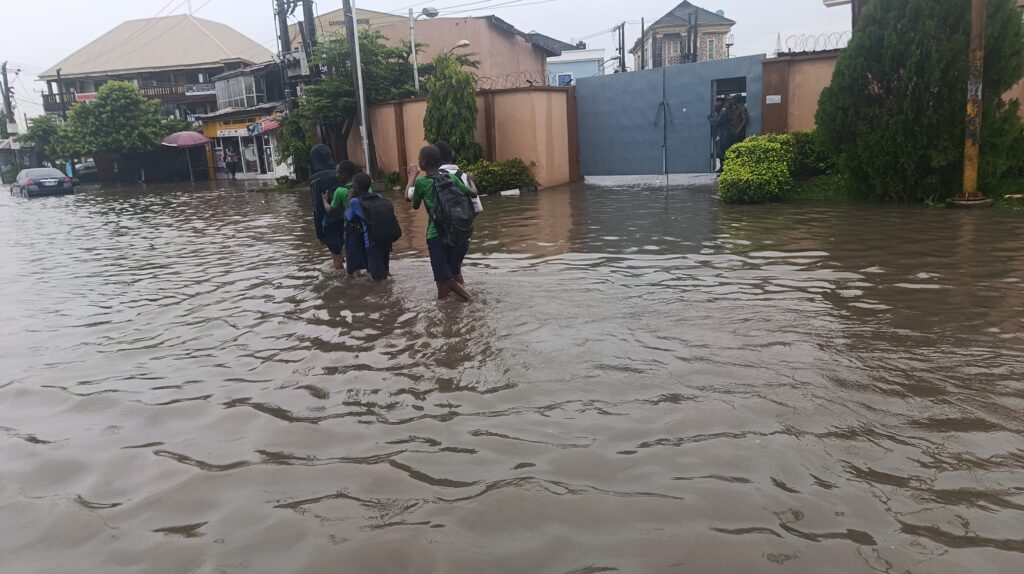
Last Sunday’s torrential rainfall transformed major roads across Lagos into temporary rivers, trapping commuters inside vehicles, flooding homes, paralysing businesses and forcing thousands of residents to face yet another rainy season defined by uncertainty.
The incident triggered widespread outrage, with many residents criticising the Lagos State Government over the recurring flooding that submerged major roads, left motorists stranded, disrupted commercial activities, and inundated homes across the metropolis.
The downpour triggered widespread flooding across major roads in Gbagada, Iyana Ipaja, Ikorodu Road, Ikeja, Maryland, Mushin, Ogudu, Lekki, Oshodi, Agege, Alimosho, and Obalende. Sections of the Lagos-Ibadan Expressway, Lagos-Abeokuta Expressway, Apapa-Oshodi Expressway, and Lekki-Epe Expressway also disappeared beneath floodwaters, worsening traffic gridlock across the state.
Vehicles stalled midway through flooded streets. Homes became islands. Workers abandoned hopes of reaching their offices, while business owners watched helplessly as floodwater poured into their shops.
Several motorists eventually abandoned their vehicles after their engines failed while attempting to navigate the submerged roads.
By Wednesday morning, although floodwaters had largely receded and commercial activities had gradually resumed in some areas, residents and traders said the latest flooding had once again exposed Lagos’ vulnerability despite repeated government assurances and annual flood preparedness campaigns.
When roads became rivers
Along sections of Ijaiye Road in Ogba, commercial buses, private cars and articulated trucks stood motionless like abandoned relics.
Many vehicles were submerged almost to their headlights, while only a handful of Sports Utility Vehicles dared push through the floodwater.
Johnson Aloba, who was trapped in the gridlock, blamed blocked drainage channels for worsening the flooding.
“The entire road was submerged. There was simply no movement. The drainage here is no longer functioning the way it should,” he told Saturday PUNCH.
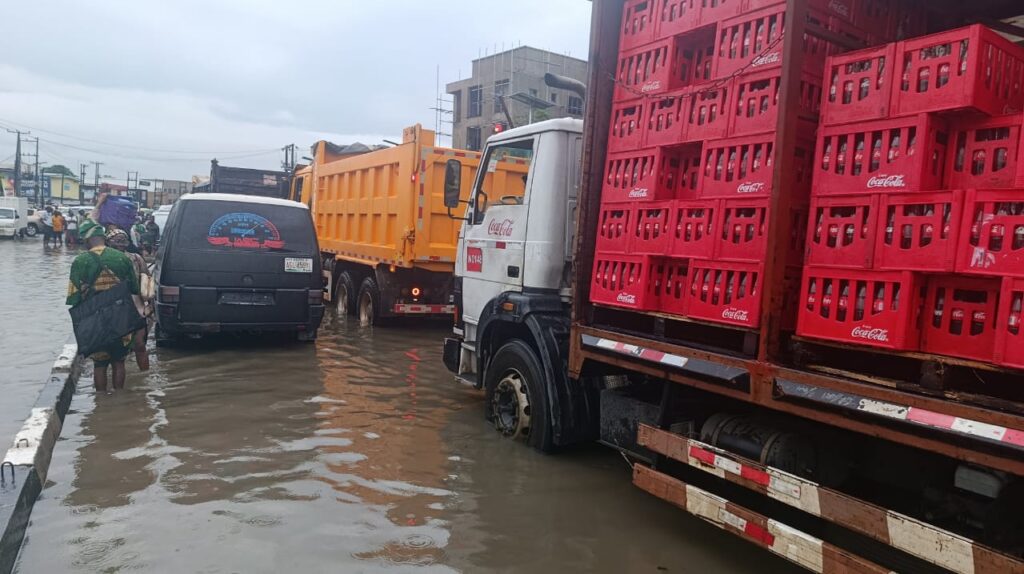
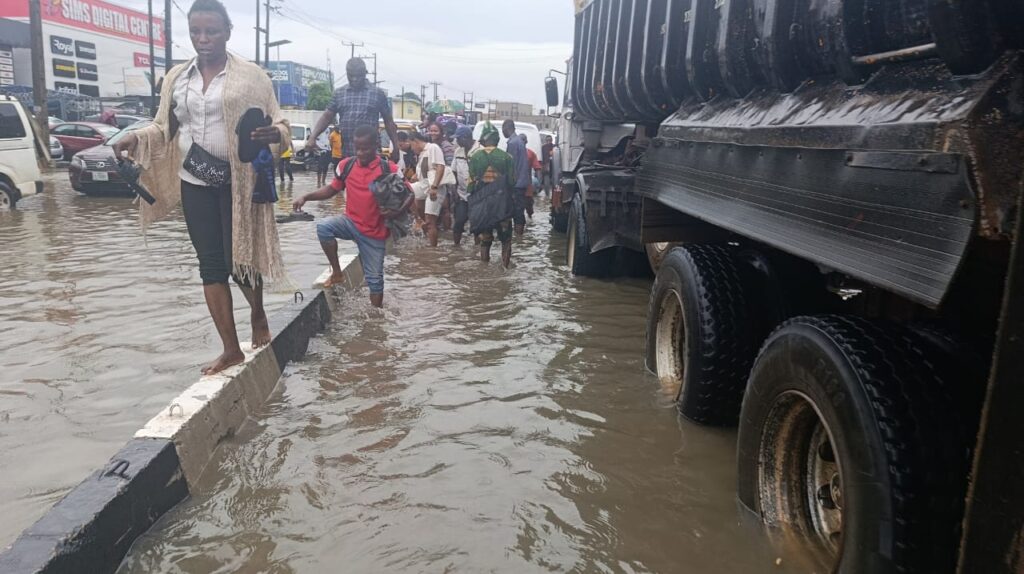
Another commuter, Oladapo Owojaiye, who said he eventually abandoned the vehicle he was in to continue on foot through the flood, described the experience as one of the worst he had witnessed in recent years.
“The vehicles were moving very slowly because of the flooded portions of the road. After a while, there was a complete standstill, and we all had to come down and continue our journey, wading through the floodwater. The earlier the government addresses this flooding problem, the better,” he said.
Across Lagos, several motorists abandoned their vehicles after their engines failed while attempting to navigate submerged roads.
Around the Odo Iya Alaro Bridge along Ikorodu Road, broken-down vehicles dotted the flooded landscape as desperate owners stood beside them, hoping for rescue.
Adebayo Abubakar said floodwater entered his engine while he was driving to Ojota.
“I drove through the floodwater on my way to Ojota. By Monday morning, my car wouldn’t start. I had to tow it to the mechanic’s workshop and spent about N150,000 to fix it, money I never planned to spend,” he lamented.
But the consequences extended far beyond damaged vehicles.
Every stalled car represented missed appointments, lost man-hours, disrupted businesses, delayed medical visits and economic losses in a city where millions depend on daily movement to earn a living.
Inside flooded homes
For residents of Mafoluku, Oshodi, Iwaya and Idi Oro in Mushin, the flood did not merely block roads; it invaded their apartments.
Some lamented having to watch floodwater mixed with refuse and sewage flowing into homes.
Furniture floated. Household belongings became soaked. Children watched helplessly as dirty floodwater took over their living rooms.
Some families spent the night lifting mattresses, refrigerators and electrical appliances onto tables in desperate attempts to salvage what they could, while others stayed awake until dawn, praying the water would not rise any higher.
Kemi Badero, a mother of three who lives on Agboola Street in Mushin, told Saturday PUNCH that Sunday night felt like a war zone as she watched floodwater steadily rise inside her room-and-parlour apartment.
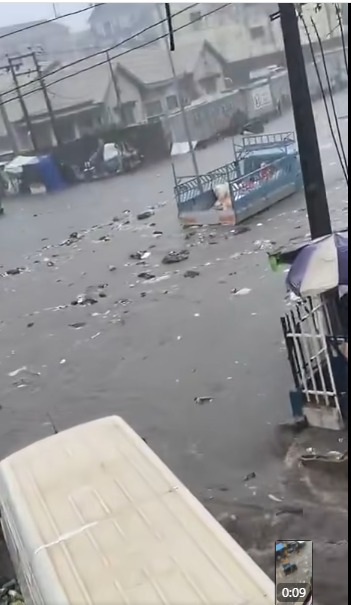
“I was scared and couldn’t sleep. My children slept on the table. Most of my belongings were floating in the water, and it was only on Tuesday evening that we started trying to salvage what we could. I pray I never experience anything like that again in my life,” she told Saturday PUNCH.
Another Mushin resident, Femi Arowosegbe, attributed the flooding to situation to poor waste management and accused the state government of failing to learn from years of similar experiences.
“The current flooding ravaging Lagos is heartbreaking and entirely avoidable. Heavy rains turned streets into rivers, trapped vehicles, flooded homes and brought the city to a standstill. Why? Because of blocked drainage channels and mountains of refuse.
“It is unfortunate that the state government refused to learn from last year’s flooding, which it dismissed as flash flooding.
“Lagos deserves better than flooded streets and heaps of refuse. Every rainy season, families lose property, businesses shut down, and commuters spend hours trapped because our drainage systems have been neglected for too long,” he said.
Also speaking with Saturday PUNCH, a Lekki resident, Mrs Cynthia Amadi, lamented that her apartment, for which she pays N3m in annual rent, was taken over by floodwater.
A resident of Agungi, along the Lekki-Epe Expressway, told Saturday PUNCH that residents often resort to using canoes whenever heavy rain falls.
“On Monday, most people, including schoolchildren, were ferried through flooded streets. It looked like one of those places that I only see in movies,” she said.
Mr Segun Ibrahim, a resident of Gbagada, also expressed shock over the flooding in the area, saying he had never witnessed anything like it despite being born and raised in the area.
Floodwater creates temporary economy
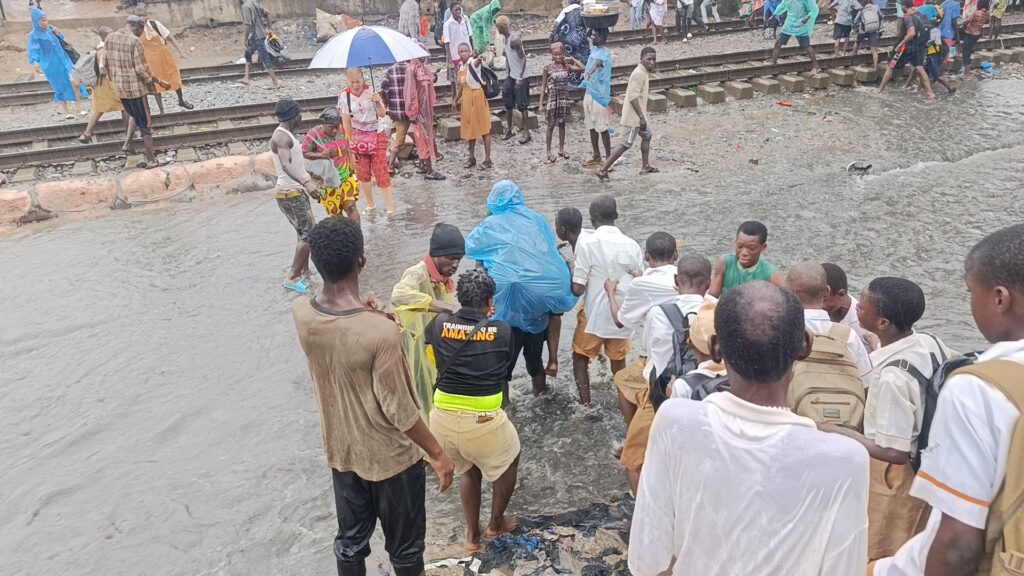
Ironically, while many residents saw disaster, others found temporary opportunities to earn a living. Beneath the Pen Cinema Bridge in Agege, floodwater quietly created an informal economy.
It was gathered that whenever there is heavy rainfall, street urchins, popularly known as area boys, spring into action around the flooded rail crossing, offering to carry pedestrians across the rushing water for a fee.
Usually, along the rail crossing linking Capital Road, Iyana Ipaja and Pen Cinema, floodwater routinely cuts off pedestrians.
For Wasiu, one of the young men, every downpour presents an opportunity to earn an honest living.
“People pay between N100 and N500, especially women who are afraid of the strong current,” he told Saturday PUNCH.
Another, simply identified as Fawaz Segun, said the business had existed ever since the Pen Cinema Bridge was constructed.
“Whenever it rains, water always gathers here. People can’t cross on their own, so we help them. That’s how we make money,” he said, beaming.
Rasaq, another member of the group, explained that part of their earnings goes to their coordinator, popularly known as “Ijoba.”
Meanwhile speaking with Saturday PUNCH, Ijoba, whose real name is Samson Alabi, rejected the stereotype that the boys were criminals.
“I sell phone accessories and charge phone batteries for a living. These boys are conductors, load carriers and hustlers trying to survive. I coordinate them so there won’t be fights over customers. I always tell them to make money legally rather than steal,” he told Saturday PUNCH.
Not far from where the young men ferried pedestrians across the floodwater, another group of entrepreneurs waited with buckets filled with sachet water.
Ironically, the water was not for drinking.
It was meant for washing muddy feet after residents had waded through the filthy floodwater.
For Shade Michael, a mother of two, every downpour brings brisk business.
“Whenever it rains, I sell more sachet water,” she said with a smile. “People buy it to wash their legs after crossing the dirty water.”
Another trader, Kemi Adigun, who ordinarily runs a Point-of-Sale business, temporarily switches trades whenever the skies open.
“I buy a bag of sachet water for about N500 and sell each sachet for N50. The demand is always high after heavy rain,” she said.
Yet, behind the makeshift businesses lies a deeper frustration.
Ajibade Akinsanya, a civil servant, wondered why residents had been left to depend on street youths to navigate floodwaters.
“Surprisingly, people have to risk their lives and spend extra money just to cross a road. The government should construct an elevated pedestrian walkway here. It would save lives, especially at night,” he said.
For Mrs Edna Ikwuji, the experience any time it rains has always been terrifying.
“I almost fell into the water. If one of the boys hadn’t grabbed my hand, I might have been swept away. I still had to pay him N500 afterwards. I know the government is trying, but protecting people’s lives should also include fixing places like this.”
A secondary school student, however, stood helplessly at the edge of the flood, watching his classmates disappear into the distance after being ferried across.
“My friends have crossed already. But I’m afraid of water. I don’t want these boys to carry me. I’ll wait until it goes down, “the visibly shaking teenager said.
Not bothered by the street urchins calling on them for patronage, a group of schoolboys successfully crossed the rampaging water by locking arms and moving cautiously together.
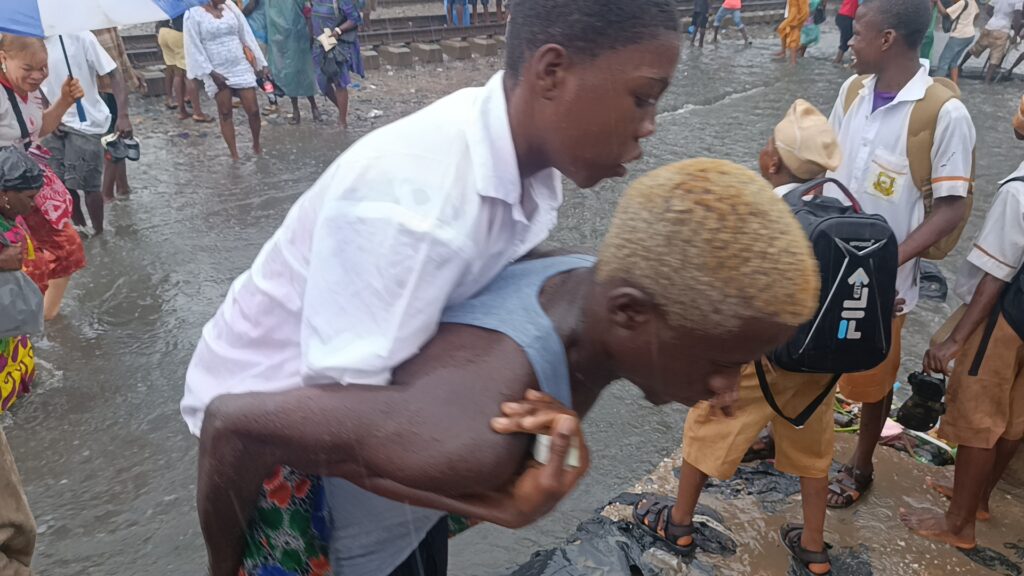
“We held on tightly to one another while one of the boys guided us. He wasn’t interested in collecting money from us,” one of the students, Gbenga, said.
Floodwaters pose serious health risks — Medical practitioners
For many Lagosians, the greatest fear begins after the floodwaters recede. Dirty water leaves behind contaminated surroundings, mosquito infestations, and heaps of waste deposited inside homes.
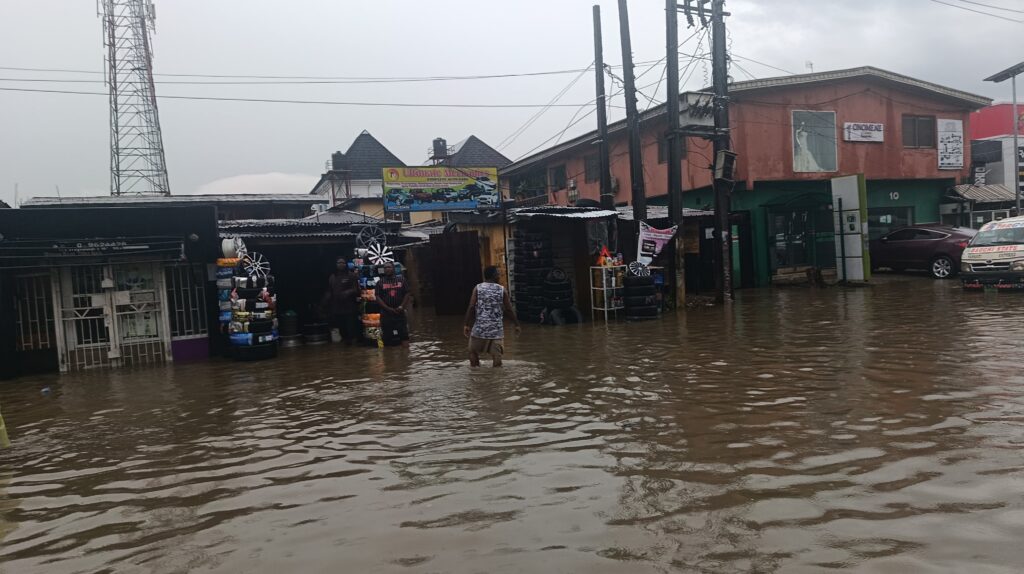
Families begin cleaning without knowing the harmful bacteria and other disease-causing organisms that may have entered their once healthy living spaces.
Medical experts warn that while floodwaters may disappear within hours, the health risks they leave behind can persist for weeks.
A medical practitioner at the General Hospital, Gbagada, Dr Adeniyi Mustapha, told Saturday PUNCH that the greatest danger often begins after residents return to clean their homes.
“The residue left behind by floodwater poses a serious health risk, especially to children. Children naturally play on surfaces that were submerged without knowing they may be contaminated with bacteria and other disease-causing organisms.
“Once those germs find their way into the mouth through contaminated hands, the risk of cholera, diarrhoea, typhoid fever and other waterborne diseases increases significantly,” he said.
Mustapha added that floodwater in densely populated cities such as Lagos is rarely just rainwater.
“It mixes with sewage, refuse, chemicals and waste from different sources before entering homes. Families should thoroughly disinfect floors, walls and household items, while parents should discourage children from playing in areas recently affected by flooding,” he advised.
A Public Health Physician, Dr Tuyi Raphael, also warned that people who wade through floodwater unknowingly expose themselves to dangerous microorganisms capable of causing severe infections.
“Floodwater often contains viruses, bacteria, parasites, sharp objects and other contaminants that may not be visible,” he told Saturday PUNCH.
The medical expert advised residents to wash every part of the body that comes into contact with floodwater with soap and clean water, and to seek prompt medical attention if they develop persistent fever, diarrhoea, skin rashes or unusual itching in the days following exposure.
Lagos witnessing flash flooding — Commissioner
While thousands of residents are still smarting from the devastation, the Lagos State Government insisted that what occurred across the metropolis was not flooding in the conventional sense but flash flooding caused by an unusually intense downpour, the state’s topography, rising sea levels and the realities of climate change.
In an interview with Saturday PUNCH, the Commissioner for the Environment and Water Resources, Tokunbo Wahab, maintained that the state’s drainage infrastructure functioned as designed, stressing that floodwaters receded within a relatively short period in most affected areas.
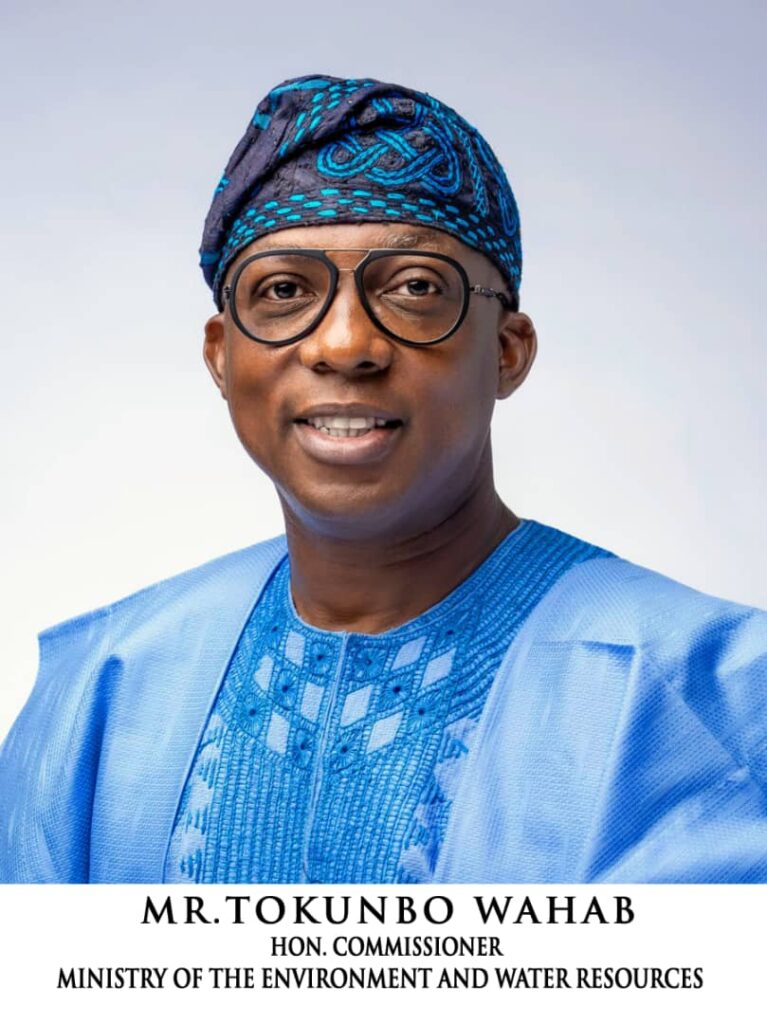
“Lagos doesn’t have flooding issues; what we experienced was flash flooding,” Wahab insisted.
According to him, conventional flooding occurs when water remains on roads and in communities for several hours or even days, whereas the recent incident lasted between 35 minutes and one hour in most locations before the water drained away.
“The rainfall was extremely heavy and temporarily overwhelmed some drainage channels, but within minutes after it stopped, the water receded. In virtually every area affected, the water disappeared within an hour or two,” he said.
He argued that the state had moved beyond the old practice of carrying out seasonal desilting before the rainy season, saying drainage maintenance had become a year-round exercise through the Emergency Flood Abatement Gang, a dedicated team that operates round the clock to clear blocked canals and monitor drainage infrastructure.
“We now do much more than seasonal desilting. Whenever we notice that a canal previously cleared has become blocked again, we immediately deploy our workers. It has become a continuous maintenance exercise,” he said.
He acknowledged, however, that Lagos’ coastal geography presents challenges beyond human control.
“Lagos is a coastal state. We receive water from upstream rivers and share about 186 kilometres of Atlantic coastline. We cannot stop sea-level rise caused by climate change,” he said.
The commissioner urged residents to complement government efforts by avoiding indiscriminate dumping of refuse into drainage channels, insisting that flood resilience would require shared responsibility.
“Our responsibility is to remain responsive and proactive, but residents must also take ownership by keeping drainage channels free of waste,” he added.
Also speaking with Saturday PUNCH, the Permanent Secretary, Office of Drainage Services and Water Resources, Mahmood Adegbite, said preventing flooding remained the government’s priority as it expanded flood-control interventions.
“My primary assignment is to ensure that flooding does not occur,” he said.
Adegbite disclosed that the state had recently introduced a flood insurance policy to support residents affected by flooding and directed those seeking more information about the programme to the Lagos State Emergency Management Agency.
He also cited the ongoing System 1 drainage channel project as one of Lagos’ flagship flood-control interventions, noting that it is still in its early stages.
“The System 1 drainage channel project is a 36-month project, and it is currently in its first year. The state government is exploring every available avenue to ensure the work is delivered on schedule,” he said.
Climate, poor planning fuel flooding – Expert
Offering a broader perspective, climate change advocate and Executive Director of the International Climate Change Development Initiative, Olumide Idowu, said the recurring flash floods reflected the growing impact of climate change on coastal cities such as Lagos.
According to him, rainfall patterns have become more intense, causing larger volumes of water to fall within a short period and overwhelming existing drainage infrastructure.
“Lagos is experiencing increasingly frequent and more intense downpours as a result of climate change. When it rains, much larger volumes of water fall within a short period, overwhelming the city’s drainage systems,” he said.
Idowu, however, stressed that climate change alone could not explain the recurring flooding.
“Blocked drains, poor waste management, indiscriminate development on floodplains, and rapid urbanisation are all contributing to the problem. That is why many communities remain vulnerable despite repeated warnings,” he said.
The expert urged the state government to accelerate climate adaptation efforts through improved urban planning, expansion of drainage infrastructure, restoration of wetlands, and stricter enforcement against illegal developments.
“If Lagos is to become more resilient, we need to address both the climate challenge and the human factors that continue to worsen flooding,” he added.
Expect more rains – NiMet
The Nigeria Hydrological Services Agency, the Nigerian Meteorological Agency, and the National Emergency Management Agency have all identified July through September as the period of greatest flood risk for Lagos this year, suggesting that the recent rainfall could be an early indication of what lies ahead during the peak of the rainy season.
NiMet’s 2026 Seasonal Climate Prediction, released in February, forecast above-normal rainfall across Lagos, with a delayed end to the rainy season.
The agency projected annual rainfall of up to 2,010mm in the Badagry Division and an average of 1,965mm across the state’s 20 local government areas.
The forecast was partly linked to prevailing climate conditions, including a weak La Niña at the beginning of the year and a neutral El Niño-Southern Oscillation phase expected through mid-year, which contributed to projections of an early onset and late cessation of rainfall.
NIHSA’s 2026 Annual Flood Outlook, presented at the Presidential Villa in April, listed Lagos among the 33 states at high flood risk, identifying flash flooding, riverine flooding, and coastal tidal surges as the three major threats confronting the state.