
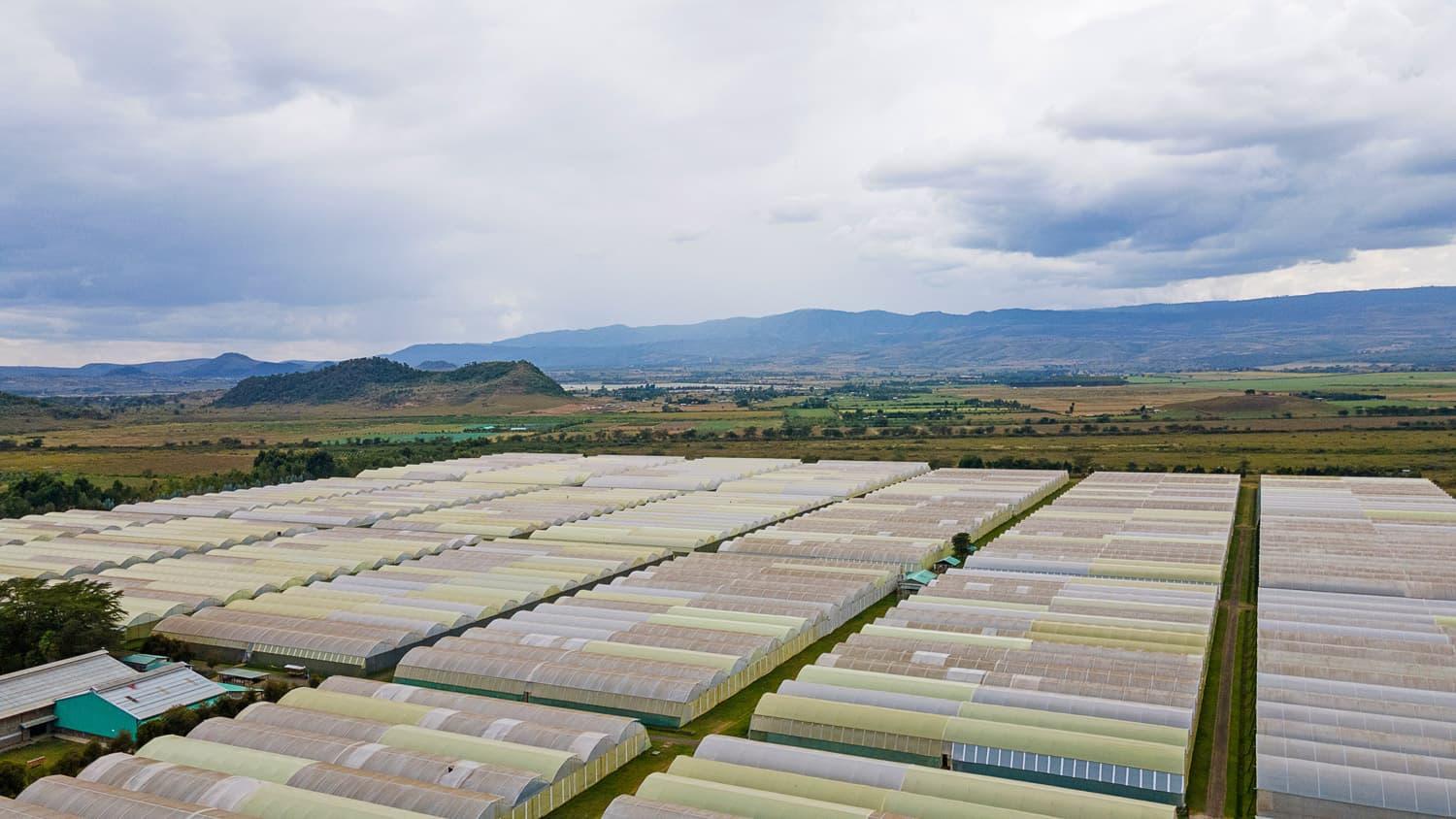
Kenya’s horticulture industry is entering a period of rapid technological and ecological change as growers confront rising production pressures, climate-related challenges, soil degradation, pests and diseases, and increasing input costs.
The sector contributes an estimated KSh145 billion annually to Kenya’s economy, with flowers accounting for about 57 per cent, according to Agriculture Cabinet Secretary Mutahi Kagwe, as cited at the 23rd Naivasha Horticultural Fair.
But behind the economic figures is a more difficult question: how can horticulture produce more without placing greater pressure on the resources that sustain production?
That question was central to the 23rd Naivasha Horticultural Fair, popularly known as Hortifresh, held at the Naivasha Sports Club. The event brought together growers, exporters, scientists, technology companies, input suppliers, innovators and logistics firms, with more than 225 exhibitors from 15 countries represented.
Beyond the flowers, seeds, machinery and conventional farm inputs, the exhibition revealed another story: one of a horticultural sector increasingly looking towards artificial intelligence, biological solutions, precision agriculture, soil health, water treatment, energy efficiency and local manufacturing.
The emerging message is clear: the future of horticulture may depend not simply on using more inputs, but on understanding farms better and using resources more precisely.
From spraying to seeing: AI enters pest management
One of the most striking technologies on display was a digital insect monitoring system developed by Russell IPM.
Traditional insect traps can help farmers determine whether pests are present, but identification and counting have often depended on manual scouting and close visual examination.
The new approach combines trapping with an onboard AI-powered vision system capable of identifying and counting insects through a smartphone-based system known as the True Pest app.
The technology is designed to identify economically important pests, including thrips, whiteflies, False Codling Moth, and spotted wing drosophila.
The significance goes beyond simply identifying an insect.
By turning pest activity into data, growers can monitor trends, develop risk maps, and receive early indications of potential outbreaks. This can create an opportunity to intervene before pest populations reach damaging levels.
For horticulture, that could mean moving further away from routine spraying towards targeted and timely interventions.
The technology also illustrates a wider transition taking place across agriculture: the farm is increasingly becoming a source of real-time information.
Instead of asking only what should be applied to a crop, farmers can increasingly ask a more fundamental question: what is actually happening in the field?
That information can then guide the next decision.
Combining digital tools with biological solutions
Technology alone, however, does not solve the pest problem.

Russell IPM also showcased Lycomax, a biological pesticide containing the beneficial fungus Metarhizium anisopliae, which targets the soil pupal stages of pests including thrips and False Codling Moth.
The approach demonstrates how digital monitoring and biological control can work together.
Adult insects can be monitored and captured through traps, while biological treatment targets pests developing in the soil. The objective is to disrupt the pest’s life cycle rather than relying exclusively on conventional chemical control.
Even the design of insect traps reflects an understanding of insect behaviour. Different colours attract different pest groups — blue, for example, is associated with thrips, while yellow can attract a wider range including aphids and whiteflies. Pheromones can also be used as chemical signals to attract specific insects.
These technologies point towards a more integrated approach to pest management in which observation, data and biological interventions complement each other.
The invisible workforce beneath the farm
If pest management is one side of the horticultural challenge, soil health is another.
The exhibition placed considerable attention on the biological processes taking place beneath crops, processes that farmers may not see but which directly influence productivity.
The article’s source material cites research indicating a 72 per cent decline in total soil organic carbon over the years, alongside declines in trace elements including magnesium, zinc, boron and nitrogen.
At the same time, soil testing remains an important tool for determining nutrient availability, pH, salinity and other conditions affecting crop performance, this creates a paradox.
Farmers need better information about their soils at the same time that the cost of obtaining that information can become a barrier.
Several exhibitors therefore showcased technologies and products aimed at improving soil biological activity and reducing dependence on conventional inputs.
Biofertilisers and the return of biology
Nakuru-based Dahwa Agrochemicals Ltd showcased Phytomax foliar, described at the fair as a biofertiliser containing photosynthetic bacteria, Rhodoblastus acidophilus.
The product is presented as supporting nutrient cycling and bioremediation while helping plants utilise biological processes associated with photosynthesis and the root environment.
The broader idea is significant for horticulture: rather than treating soil simply as a medium into which nutrients are added, biological approaches seek to improve the functioning of the soil-plant system.
Local manufacturing is also part of this transition.
Evaeli Supplies, based in Thika, has been manufacturing organic fertilisers, including EM products produced through biofermentation, for about two decades.
According to Martin Maina, the company’s work addresses soil degradation while also providing technical capacity-building and employment opportunities for young people.
This places soil innovation within a wider development story.
For Kenya and other African countries, the question is not only whether new agricultural technologies can increase production. It is also whether they can generate local enterprises, technical skills and employment.
Integrated pest management gets a wider toolbox
Another exhibitor, Van Beek Biologicals, displayed biological pesticides, biostimulants, insect pheromone traps and a digital microscope.
Together, the technologies represented an integrated pest management approach built around three stages: monitoring the pest, understanding what is present, and selecting an appropriate intervention.
That model is particularly relevant as farmers face increasing pressure to produce crops that meet demanding local and international standards.
The shift is from treating symptoms after damage occurs to detecting problems earlier and selecting interventions more carefully.
Building stronger crops from the beginning
Innovation is also entering horticulture before crops even reach the farm.
Stockman Rozen Kenya (SRK) showcased rose top grafts and potato rooted apical cuttings, technologies aimed at producing pathogen-free planting material.
Healthy planting material can form the foundation for stronger crops and improved resistance to soil-borne diseases.
During the fair, CS Kagwe also called for stronger private-sector linkages with agricultural research institutions, including through a proposed private-sector liaison with the Kenya Agricultural and Livestock Research Organization.
The message reflects an important part of the innovation equation: technology developed by researchers or companies has to connect with farmers, markets and institutions if it is to have a meaningful impact.
Soil testing: the information farmers cannot afford to ignore
A recurring theme at the fair was that agricultural inputs are only as effective as the information guiding their use.
Questions such as What is the soil pH? How much salinity is present? Which nutrients are available? How much organic matter remains? are becoming increasingly important.
Cropnuts showcased soil testing services and provided technical explanations around soil analysis.
But the challenge remains affordability.
For small and medium-scale growers in Kenya and elsewhere in Africa, advanced soil testing must become accessible enough to inform routine farm decisions rather than remain a service available mainly to larger commercial operations.
This is where the future of digital agriculture could intersect with practical farmer needs: making complex information easier, faster, and cheaper to obtain.
Water: the resource that can make or break a crop
Water quality was another important part of the innovation landscape.
A glass of water may appear clean while still containing levels of salts or minerals that affect crops and soil.
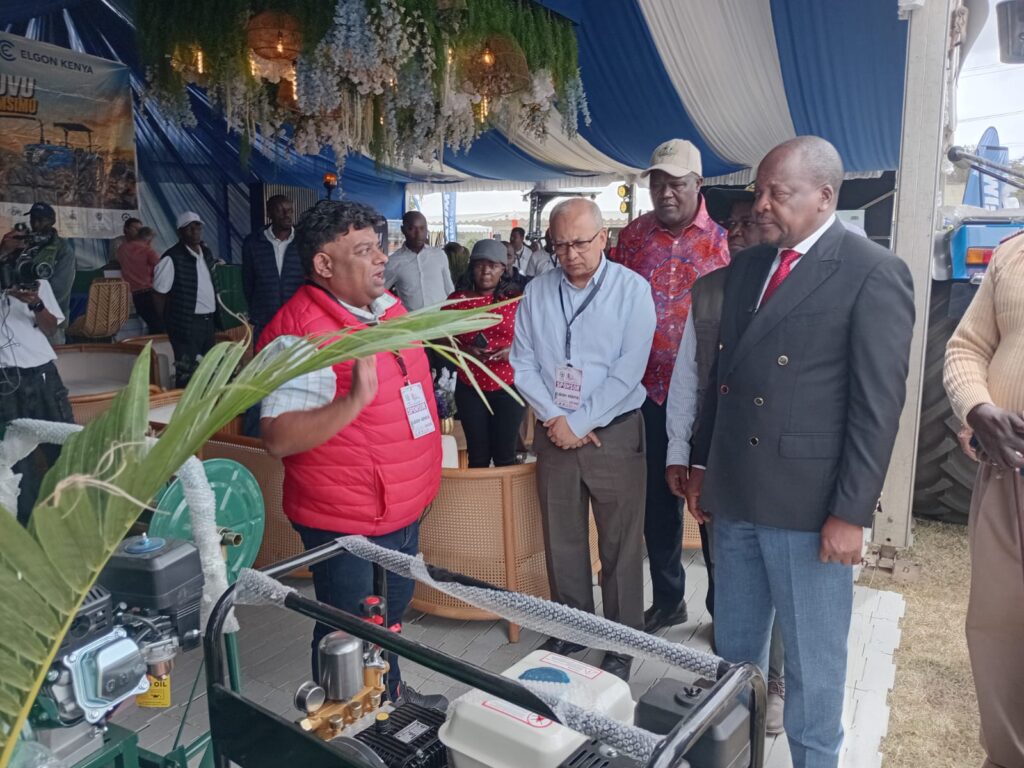
Fenghai New Energy Desalination, a China-based government company, demonstrated reverse osmosis technology designed to treat water using renewable energy and make it more suitable for horticultural use.
Aarif Young, the company’s regional director for the East African market, highlighted a lack of awareness among farmers about the importance of desalination where salinity threatens plant roots.
The company also indicated that reverse-osmosis systems can be configured according to individual requirements and that it provides field visits and soil-water analysis.
For horticulture, water management is therefore becoming more than a question of quantity. Quality matters too.
Producing more value, not simply more crops
Innovation at the fair was not limited to production. Chinese-based company Boxiya demonstrated how value addition can create another pathway for agricultural innovation.
The company displayed a sweet-potato snack known as “huan-tsu-pian”, illustrating how an agricultural product can be transformed into a consumer product rather than being sold only in its raw form.
The company also showcased energy-saving cooking technologies, including a portable foldable jiko designed to reduce energy use.
The lesson is relevant beyond horticulture: agricultural transformation can occur at multiple points along the value chain from the soil to production, processing, energy use, transport and markets.

Local manufacturing and the future of African agriculture
The exhibition also included locally manufactured vehicle parts for logistics by Rob’s Magic Romageco Kenya Ltd.
At first glance, vehicle components may appear disconnected from horticulture, but logistics is fundamental to the industry.
Fresh produce has to move quickly from farms to collection points, processors, airports, domestic markets and international destinations. Locally available parts and services can potentially strengthen the supporting infrastructure around agriculture.
This highlights an often-overlooked dimension of agricultural innovation: the horticulture economy is bigger than the farm itself.
It includes laboratories, technology companies, manufacturers, transporters, processors, exporters, financiers, researchers and young entrepreneurs.
Can Africa grow more with fewer resources?
The Naivasha fair offered a glimpse into how Kenya’s horticulture industry is responding to a changing production environment.
AI-powered insect identification, biological pest control, biofertilisers, soil testing, climate-adapted planting material, water desalination, energy-saving technologies, value addition and local manufacturing may seem like separate innovations.
Together, however, they tell a larger story.
Horticulture is gradually moving from a model dominated by more inputs and reactive intervention towards earlier detection, better information, biological processes, resource efficiency and targeted management.
For Kenya, a major horticultural exporter, this transition carries implications beyond national borders.
Across Africa, farmers face questions about soil fertility, water availability, climate pressures, pest outbreaks, production costs, market standards and access to technology.
The challenge will be ensuring that innovation does not remain concentrated among the largest producers.
Affordable soil testing, accessible digital tools, locally manufactured technologies, farmer training and stronger links between researchers, private companies and producers will determine how widely these innovations can spread.
The next phase of African horticulture may therefore not be defined simply by how much farmers can produce.
It may be defined by how intelligently they can use soil, water, biodiversity, technology, energy and knowledge to produce more sustainably.
The most powerful innovations may begin with something deceptively simple: observing what is happening on the farm, listening to farmers and designing solutions around the realities they face.
Writer: Lorreine Kabaka
By Joseph Mutua Silali, Chief of Bureau, ABOS Africa News Agency