
As Nigeria prepares for the next round of global climate negotiations, the Federal Government says states must move beyond policy declarations to climate-resilient budgets, funded projects and measurable results for vulnerable communities.
Nigeria’s response to climate change will depend increasingly on what happens beyond the Federal Capital Territory, as flooding, extreme heat, drought and desertification place growing pressure on communities, agriculture, infrastructure and livelihoods.
With the country preparing for the 31st United Nations Climate Change Conference (COP31), the Federal Government has urged state governments to translate climate commitments into practical interventions, warning that the effects of a changing climate are already undermining economic and social security.
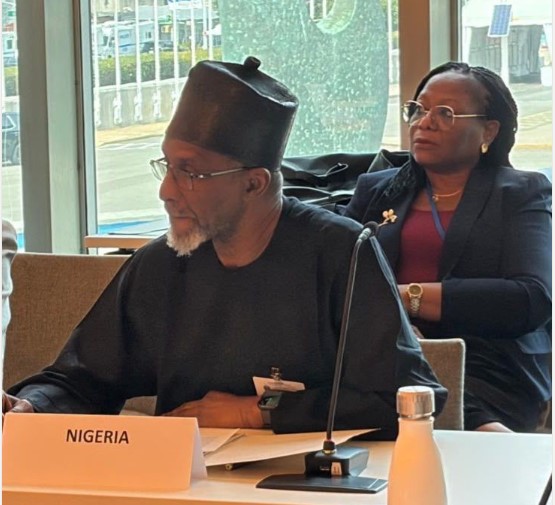
Minister of Environment, Balarabe Abbas Lawal, gave the warning in Abuja on Thursday while launching the third edition of the Subnational Climate Governance Performance Ratings and Ranking of Nigeria’s 36 states.
The assessment, organised by the Federal Ministry of Environment in collaboration with the Society for Planet and Prosperity and the African Climate Foundation, seeks to measure how effectively states are building institutions, incorporating climate priorities into development plans and budgets, mobilising resources and implementing climate-related projects.
Lawal said climate change could no longer be treated as a distant environmental concern or a responsibility reserved for the Federal Government.
“Climate change is no longer a distant environmental sign. It is here with us. It is a global economic and social security imperative,” he said.
The minister identified agriculture, water resources, food systems, infrastructure, human settlements and livelihoods as areas already affected by climate-related pressures. He also cited flooding in places traditionally considered less vulnerable, arguing that environmental degradation and the loss of natural water reservoirs were increasing communities’ exposure to disasters.
His message comes as Nigeria’s climate response faces a critical implementation test: whether commitments made at the national and international levels can translate into better preparedness, stronger local institutions and tangible protection for people whose lives and livelihoods are exposed to climate risks.
From climate pledges to state-level action
Nigeria’s climate commitments cannot be implemented by the Federal Government alone. State governments oversee or influence critical areas of development, including agriculture, land use, water management, urban planning, transport and local infrastructure. Their decisions can determine whether climate risks are incorporated into development projects or ignored until disasters occur.
For communities facing recurrent flooding, farmers dealing with changing rainfall patterns and households exposed to extreme heat, the practical value of climate policy lies in what it delivers on the ground.
A climate policy may establish priorities, but implementation requires dedicated funding, clear institutional responsibilities, effective coordination and monitoring systems capable of showing whether interventions are working.
Lawal said the subnational ranking was designed to provide an evidence-based accountability and management tool rather than serve merely as a scorecard for states.
According to him, the assessment examines the existence and functionality of climate governance structures, the integration of climate priorities into development plans and budgets, resource mobilisation, project implementation and the measurable benefits delivered to citizens.
He said the initiative had recorded improvements across its three editions, including stronger institutions, better policy and planning frameworks, improved coordination and increased implementation of climate resilience and low-carbon initiatives.
However, the significance of those improvements ultimately depends on whether stronger governance systems produce results that residents can experience, particularly in communities with limited resources to prepare for or recover from climate-related shocks.
The minister challenged governors to establish a clear connection between policy, budgeting and implementation.
He said states should ensure that climate policies informed budgetary allocations, that approved budgets translated into projects and that completed projects delivered measurable benefits.
He also called for an enabling environment that would attract climate finance, private investment and strategic partnerships.
For the states, the challenge is not only to establish climate institutions but also to ensure that they have the authority, technical capacity and funding required to function effectively.
The climate finance question
Financing remains a central challenge for countries seeking to adapt to climate change while pursuing lower-carbon development. For Nigeria, the availability of funding will influence how quickly states can strengthen early-warning systems, improve drainage and water management, support climate-resilient agriculture and protect vulnerable settlements.
Lawal said Nigeria’s performance in subnational climate governance could strengthen its case for accessing international climate finance.
He disclosed that the international Loss and Damage Fund had begun accumulating resources, with about $800m reportedly available at the time of his remarks. He acknowledged, however, that the amount remained far below the scale of funding developing countries had sought and the sums previously promised.
The fund is intended to support vulnerable countries dealing with the adverse effects of climate change, particularly losses and damage that cannot be fully avoided through mitigation or adaptation alone.
But access to international funding does not depend solely on the existence of climate risks. Governments must also demonstrate the capacity to identify priorities, prepare credible projects, manage resources transparently and account for results.
For state governments, this places a premium on reliable climate data, well-developed investment proposals, functional institutions and systems for tracking expenditure and outcomes.
A ranking that identifies weaknesses in these areas could help states improve their readiness for climate finance. Its practical value, however, will depend on whether the findings lead to corrective action, stronger budgetary commitments and sustained monitoring.
As Nigeria looks towards COP31, the question is whether climate governance assessments can help bridge the gap between the scale of the country’s climate vulnerabilities and the resources available to address them.
Connecting national commitments to local realities
Earlier, the Director of the Department of Climate Change in the Federal Ministry of Environment, Dr Iniobong Abiola-Awe, said the subnational assessment was important for closing the gap between Nigeria’s national climate commitments and implementation at state and community levels.
She said progress towards implementing Nigeria’s Nationally Determined Contributions under the NDC 3.0 framework and its recently submitted National Adaptation Plan would depend substantially on how effectively climate priorities were incorporated into state development plans, budgets, sectoral programmes and investment decisions.
Nationally Determined Contributions set out countries’ climate commitments, including measures to reduce greenhouse gas emissions and, where specified, strengthen resilience. Adaptation plans identify priorities for managing the effects of climate change.
Yet national commitments can have limited impact if they are not reflected in the decisions that shape everyday life at state and local levels.
Urban development that disregards flood risks, inadequate water management, poorly maintained drainage infrastructure and agricultural planning that fails to account for changing climate conditions can increase communities’ exposure to climate hazards.
Conversely, better land-use planning, improved climate information, resilient infrastructure, effective disaster preparedness and support for farmers can help reduce vulnerability.
Abiola-Awe called on governors to provide sustained political leadership for climate action and urged state institutions to convert policy commitments into practical programmes with measurable results.
She said the ministry would continue to provide policy direction, coordination and technical support, while development partners, the private sector, civil society and other stakeholders would need to contribute to stronger climate governance and faster implementation.
Putting vulnerable communities at the centre
The impact of climate change is not experienced equally. Communities differ in their exposure to hazards, access to public services, financial resources and ability to recover after a disaster.
Rural households dependent on rain-fed agriculture, residents of flood-prone settlements and people whose livelihoods depend on natural resources can face significant disruption when weather patterns change, or environmental hazards intensify.
Lawal stressed the need for a people-centred climate response, urging greater participation by women, young people, farmers, businesses and rural communities in the design and implementation of resilience programmes.
Such participation is important not only for ensuring that interventions reflect local needs but also for making public spending more responsive to the risks communities face.
For example, a state’s climate programme should be assessed not simply by the existence of a policy or committee but also by whether farmers can access useful climate information, vulnerable settlements benefit from improved preparedness, and public infrastructure is better equipped to withstand climate-related hazards.
The same principle applies to the distribution of climate finance. Transparent project selection, public reporting and accessible channels for community feedback can help ensure that resources reach those most exposed to climate risks.
Lawal also encouraged states that performed strongly in the assessment to share their experiences, while urging those that ranked lower to use the exercise as an opportunity to improve.
“The state that comes in at number 36 can move up and be number one. Nothing is stopping them from doing that,” he said.
He explained that the assessment measured governance structures, institutional capacity and performance rather than functioning as a conventional academic examination.
A test of accountability before COP31
The launch of the third subnational climate governance ranking presents an opportunity to examine how Nigeria’s states are preparing for a future in which climate risks increasingly intersect with economic development, food production, infrastructure and public health.
But the ranking’s impact will depend on what follows its publication.
States need to identify weaknesses exposed by the assessment, assign responsibilities for addressing them, incorporate climate priorities into annual budgets and disclose progress against clear indicators. The Federal Government, in turn, must sustain technical support and coordination while ensuring that assessments inform policy and implementation rather than remain periodic exercises.
The private sector and development partners also have roles to play, particularly in financing projects that can deliver measurable resilience benefits and support lower-carbon development. Civil society and the media can help scrutinise commitments, track public spending and communicate climate risks in ways that communities can understand and use.
For Nigeria, COP31 offers another opportunity to engage international partners on climate finance, adaptation and loss and damage. But the credibility of those demands will also be shaped by the country’s ability to demonstrate progress at home.
International negotiations can establish frameworks and mobilise support, but state budgets, institutions and projects will determine how much of that support translates into protection for communities.
Lawal said the Federal Government remained committed to working with state governments and other stakeholders to build a more resilient, low-carbon and sustainable Nigeria.
The challenge ahead is to ensure that climate commitments are matched by resources, implementation and accountability and that improvements in governance are reflected in the lives of Nigerians facing the consequences of a changing climate.
By Dare Akogun