
International conservation organisations have urged consumers and retailers worldwide to stop buying and selling products made from Antarctic krill after governments failed to agree on additional protections for the Southern Ocean’s wildlife and ecosystems.
The call came after the annual meeting of the Commission for the Conservation of Antarctic Marine Living Resources (CCAMLR), which concluded in Hobart, Australia, without agreement on proposed new marine protected areas or additional precautionary measures to manage the Antarctic krill fishery.
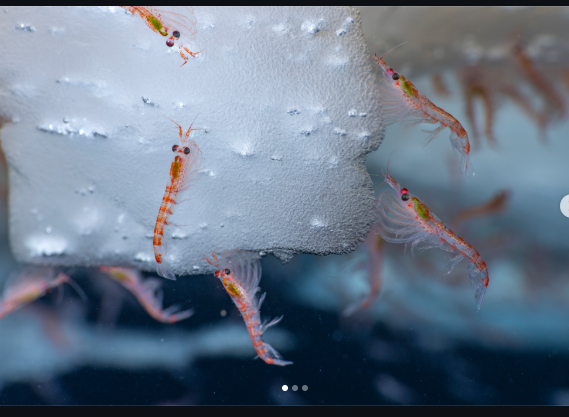
Environmental campaign groups said the outcome leaves penguins, whales, seals and other marine species increasingly exposed to competition with industrial fishing vessels for krill. This small shrimp-like crustacean forms the foundation of the Antarctic food web.
The Antarctic Wildlife Alliance, Our Antarctica Campaign and the Bob Brown Foundation are now asking consumers to boycott krill-based products and urging retailers to remove them from their shelves.
Their campaign targets products including krill oil supplements, aquaculture feed and pet food, arguing that commercial demand for the species is contributing to pressure on an ecosystem already affected by climate change.
“Penguins, whales and seals cannot survive without Antarctic krill. People can,” the organisations said in their joint statement.
The campaign follows a global consumer boycott launched on September 23 during Climate Week in New York by the Antarctic Avengers, a group of ocean advocates led by oceanographer Dr Sylvia Earle.
Why Antarctic krill matters
Antarctic krill are small marine crustaceans that gather in large swarms and feed on phytoplankton. Despite their size, they play an essential role in sustaining the Southern Ocean’s marine ecosystem.
They provide a major food source for penguins, whales, seals, seabirds, and several fish species. Their contribution also extends to ocean carbon cycling, as carbon contained in krill waste and other organic material can sink into deeper waters and become stored in marine sediments.
The Marine Stewardship Council identifies Antarctic krill as a keystone species because of its importance to the survival of several marine predators.
Commercial fishing companies harvest the crustaceans mainly for krill oil, which is marketed as an omega-3 supplement, and krill meal used in aquaculture and animal feed.
Conservationists argue that extracting large quantities from areas where penguins and whales feed could intensify competition for food, particularly during breeding and feeding seasons.
Chief Campaign and Policy Officer of the Antarctic Wildlife Alliance Andrea Kavanagh said the failure of governments to strengthen protections had made consumer action increasingly important.
“CCAMLR has an obligation to conserve Antarctic wildlife, but its continued failure to act is leaving penguins, seals and whales competing with industrial fishing vessels for their food,” she said.
She added that consumers and retailers could help reduce demand for Antarctic krill products rather than wait for further international negotiations.
The alliance’s Executive Director, Ally Kristan, also warned that penguins feeding their chicks, seals nursing their pups and whales returning to Antarctica all depend on adequate supplies of krill.
Conservation negotiations end without new protections
Before the meeting, conservation organisations had urged CCAMLR members to adopt a proposed marine protected area around the Antarctic Peninsula, establish a roadmap for a wider network of Southern Ocean protected areas, prevent increases in krill fishing limits and restore measures to distribute fishing pressure across different management areas.
However, the Antarctic and Southern Ocean Coalition reported that the October 19–30 negotiations ended without agreement on the proposed protected areas or new precautionary krill management measures.
The disagreement is particularly significant because a previous conservation measure, known as CM 51-07, which distributed krill catches across four management areas, expired at the end of the 2024 fishing season after members failed to agree on its extension.
The measure had been designed to prevent excessive concentration of fishing activity in particular areas, including locations important to wildlife feeding and breeding.
Without that spatial allocation arrangement, fishing vessels have greater flexibility to concentrate catches within the wider management area, raising concerns about localised depletion of krill.
A 2025 scientific paper published in the Proceedings of the National Academy of Sciences warned that the removal of spatial catch restrictions increased the risk of concentrated fishing in ecologically sensitive areas, particularly around the Antarctic Peninsula.
The fishery reached its 620,000-tonne trigger limit in the 2025 season, resulting in an early closure. The limit was also reached during the 2026 season, which ended in August, according to the fishery’s official reporting and industry announcements.
Sarah Locke, Antarctic Campaign Lead at the Blue Marine Foundation, said the failure to establish additional protected areas was particularly concerning because the Antarctic Peninsula was an important feeding and breeding ground for penguins and whales.
She said the proposed protected area should not be postponed through successive rounds of negotiations while fishing activity continued in sensitive locations.
Alistair Allen, Antarctic and Marine Campaigner with the Bob Brown Foundation, also called for an end to commercial krill fishing, arguing that the species was too important to the Southern Ocean ecosystem to be treated primarily as an industrial commodity.
Industry defends existing safeguards
The debate, however, extends beyond calls for a complete boycott.
The krill fishing industry and supporters of certified fisheries argue that the activity is regulated under an international management system designed to prevent overexploitation.
The Marine Stewardship Council says CCAMLR sets a precautionary trigger limit of approximately 620,000 tonnes for the main Antarctic krill fishing area, representing about one per cent of the estimated krill biomass in the designated area.
It also says fisheries certified under its sustainability standard are subject to independent assessment and monitoring, including requirements to demonstrate that fishing does not cause serious or irreversible harm to other species and marine ecosystems.
Some members of the Association of Responsible Krill Harvesting Companies have also adopted voluntary no-fishing zones around important penguin feeding and chick-rearing areas.
Industry representatives have argued that the fishery should be managed through science-based catch limits and improved spatial arrangements rather than an outright ban.
However, conservation groups maintain that existing safeguards are insufficient to address the growing concentration of fishing activity and the combined pressures of commercial harvesting and climate change.
The disagreement highlights the challenge facing CCAMLR, whose conservation mandate requires balancing the management of marine resources with the protection of the wider Antarctic ecosystem.
Retailers become the new conservation battleground
With governments unable to reach agreement on additional protections, conservation organisations are increasingly targeting the companies that sell krill-derived products.
The Antarctic Wildlife Alliance said several retailers had already taken steps to remove krill products from their shelves.
These include UK health and wellness retailer Holland & Barrett, which has committed to phasing out krill products, while major Australian supermarket chains Coles and Woolworths have confirmed that they no longer stock krill oil supplements.
Whole Foods Market in the United States also stopped selling krill oil supplements in 2010, citing sustainability concerns.
However, the reasons behind some recent retail decisions have been disputed. Some industry representatives have attributed product removals to commercial decisions and sales performance rather than environmental concerns, underlining the need to distinguish corporate sustainability commitments from ordinary stocking decisions.
The Antarctic Avengers’ boycott is seeking to expand the movement by encouraging consumers to check product labels, avoid krill-derived ingredients and demand that retailers stop stocking them.
The group includes oceanographer Dr Sylvia Earle, actor Benedict Cumberbatch, marine photographers Cristina Mittermeier and Paul Nicklen, and economist Professor Rashid Sumaila.
The campaign is also encouraging companies in the health supplement, pet food and aquaculture sectors to explore alternatives to Antarctic krill.
Protecting Antarctica beyond negotiations
The latest disagreement has renewed questions about the ability of international environmental agreements to deliver protection for ecosystems facing multiple pressures.
Climate change is affecting Antarctic sea ice and ocean conditions, while commercial fishing activity is increasingly concentrated in areas where marine wildlife depends on krill.
Scientists have warned that the interaction between climate-related changes and concentrated fishing could intensify pressure on predators, making effective monitoring and ecosystem-based management increasingly important.
For campaigners, reducing consumer demand is an opportunity to influence the market while diplomatic negotiations continue.
The Antarctic Wildlife Alliance, Our Antarctica and the Bob Brown Foundation are urging consumers to avoid krill oil supplements, check pet food labels, demand krill-free alternatives from retailers and sign their Antarctic Wildlife Ally pledge.
Their message is that protecting the Southern Ocean requires action beyond government negotiating rooms, including decisions made by businesses and consumers across the world.
As the international debate continues, the challenge remains how to ensure that commercial exploitation does not undermine the survival of the species and ecosystems that depend on Antarctic krill.
By Dare Akogun