
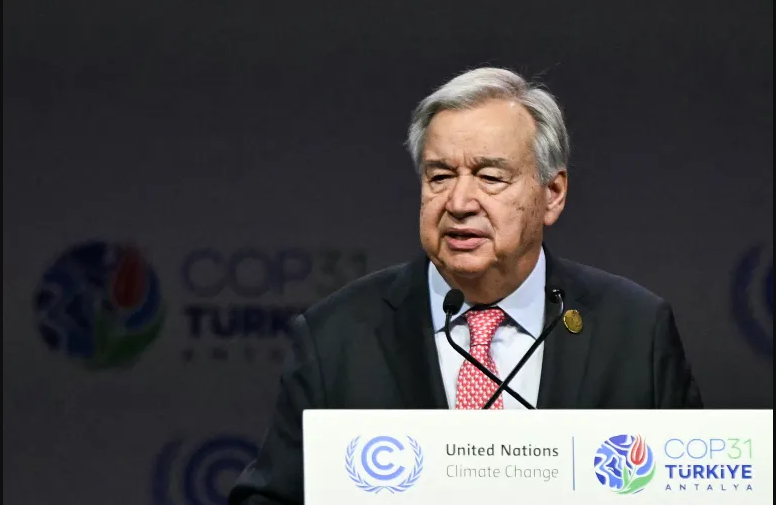
The United Nations Secretary-General, António Guterres, has called for increased climate finance and technology transfer to developing countries, including Nigeria, warning that the global transition to clean energy will remain slow and unequal unless poorer nations receive adequate support.
Guterres said emerging and developing economies outside China were home to nearly two-thirds of the world’s population but received less than one-fifth of global clean energy investment.
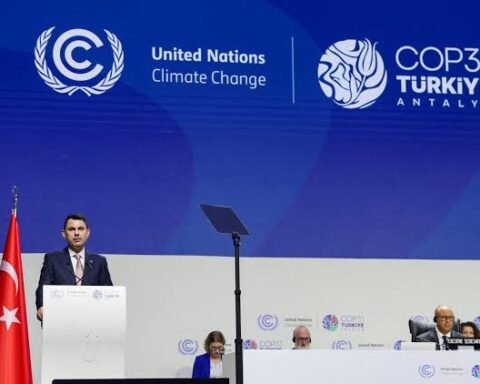
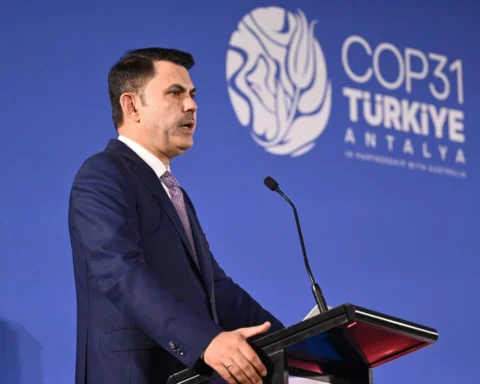
He made the call on Wednesday at the opening ceremony of the Leaders’ Summit at the 31st United Nations Climate Change Conference, COP31, in Antalya, Türkiye.
The UN chief said most developing countries paid two to three times more to borrow than advanced economies, making it difficult for them to invest in renewable energy and adapt to the effects of climate change.
He warned that without affordable access to clean energy, developing countries could be forced to rely on fossil fuels for decades, worsening global emissions.
“We cannot demand that countries transform their economies while denying them the means to do so,” Guterres said.
He called for a new Climate Justice Compact based on shared responsibility, security, and benefits, stressing that developed countries must cut emissions faster and fulfil their climate finance and technology commitments, while emerging economies accelerate their transition to renewable energy.
The appeal comes as Nigeria and other African countries grapple with the effects of rising temperatures, flooding, drought, and other climate-related challenges, alongside the need to expand electricity access and finance their energy transitions.
Guterres said climate justice would be the defining challenge of the next decade, insisting that all countries must contribute to tackling the crisis in line with their capacities and responsibilities.
He identified four pillars of the proposed compact: a just transition away from fossil fuels, the protection of vulnerable populations, adequate and accessible climate finance, and international cooperation.
On the transition to clean energy, the Secretary-General urged governments to develop credible national roadmaps for moving away from fossil fuels while protecting workers and communities whose livelihoods depend on the sector.
He called for an end to new coal projects and oil and gas infrastructure that could undermine the 1.5-degree Celsius temperature goal, as well as faster investment in renewable energy, electricity grids, energy storage, and clean electrification.
“Leaders, and in particular those from developed countries, cannot keep expanding fossil fuel production while claiming to be committed to 1.5 degrees,” he said.
Guterres cited the United Nations Environment Programme’s Emissions Gap report, which indicated that global renewable energy capacity must at least triple from 2025 levels by 2035, while unabated coal power must fall by at least 75 per cent.
He added that unabated coal power must be almost completely phased out by 2040, while oil and gas use should decline by about one-third.
The UN chief also urged governments to strengthen climate adaptation measures, warning that rising temperatures had made protecting vulnerable communities a matter of survival.
He called for a new generation of national adaptation plans, universal coverage by early warning systems, and stronger protection for communities exposed to floods, droughts, and rising sea levels.
He said support for countries suffering losses and damage from climate disasters must be swift and accessible, particularly where the effects of climate change exceed the limits of adaptation.
On financing, Guterres urged developed countries to deliver at least $300bn annually by 2035 and provide concrete plans to at least triple adaptation finance by then.
He also called for the mobilisation of the $1.3tn climate finance goal, saying the commitment must translate into actual funding reaching developing countries.
According to him, multilateral development banks must go beyond their Baku commitment of providing $120bn annually by 2030, while shareholders should empower them to increase lending and take greater risks in financing vulnerable economies.
He further urged donors to strengthen contributions to the Green Climate Fund and the Fund for Responding to Loss and Damage.
Guterres proposed that governments tax fossil fuel companies’ windfall profits to support countries affected by climate disasters.
He said the nine largest oil companies made $95bn in profits in the last quarter alone, while the Loss and Damage Fund had received about $600m.
“That is what these companies made in about 14 hours,” Guterres said, adding, “Polluters must pay.”
The Secretary-General also warned that global climate action was moving too slowly, noting that annual global emissions needed to fall by about six per cent, while current national climate plans would deliver, at best, only one-third of the required reduction.
He said even if existing national commitments were fully implemented, global temperatures could rise above 2.5 degrees Celsius by the end of the century, increasing the risk of dangerous and irreversible climate tipping points.
Guterres acknowledged progress in renewable energy and electric mobility, noting that solar power accounted for nearly three-quarters of the growth in global electricity demand in 2025.
He added that electric vehicles were projected to account for nearly one in three new car sales in 2026, compared with one in every 100 a decade ago.
However, he warned that the influence of fossil fuel interests continued to undermine climate action through efforts to distort scientific evidence, delay policies, and weaken accountability.
“The climate crisis is outrunning us,” he said, warning that the world must act faster to prevent the temporary breach of the 1.5-degree Celsius threshold from becoming a permanent reality.
He also urged countries to strengthen international cooperation, warning that trade barriers, technology monopolies, and geopolitical rivalries could make the energy transition more expensive and leave vulnerable populations behind.
“Negotiations matter, but success must be measured on the ground. Implementation is essential,” he said.
Guterres, whose tenure as UN Secretary-General is due to end next year, pledged to continue advocating for stronger climate action after leaving office.
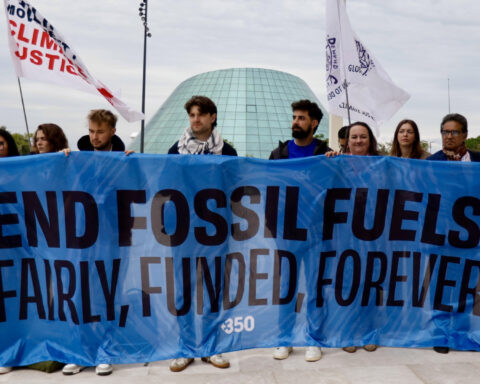
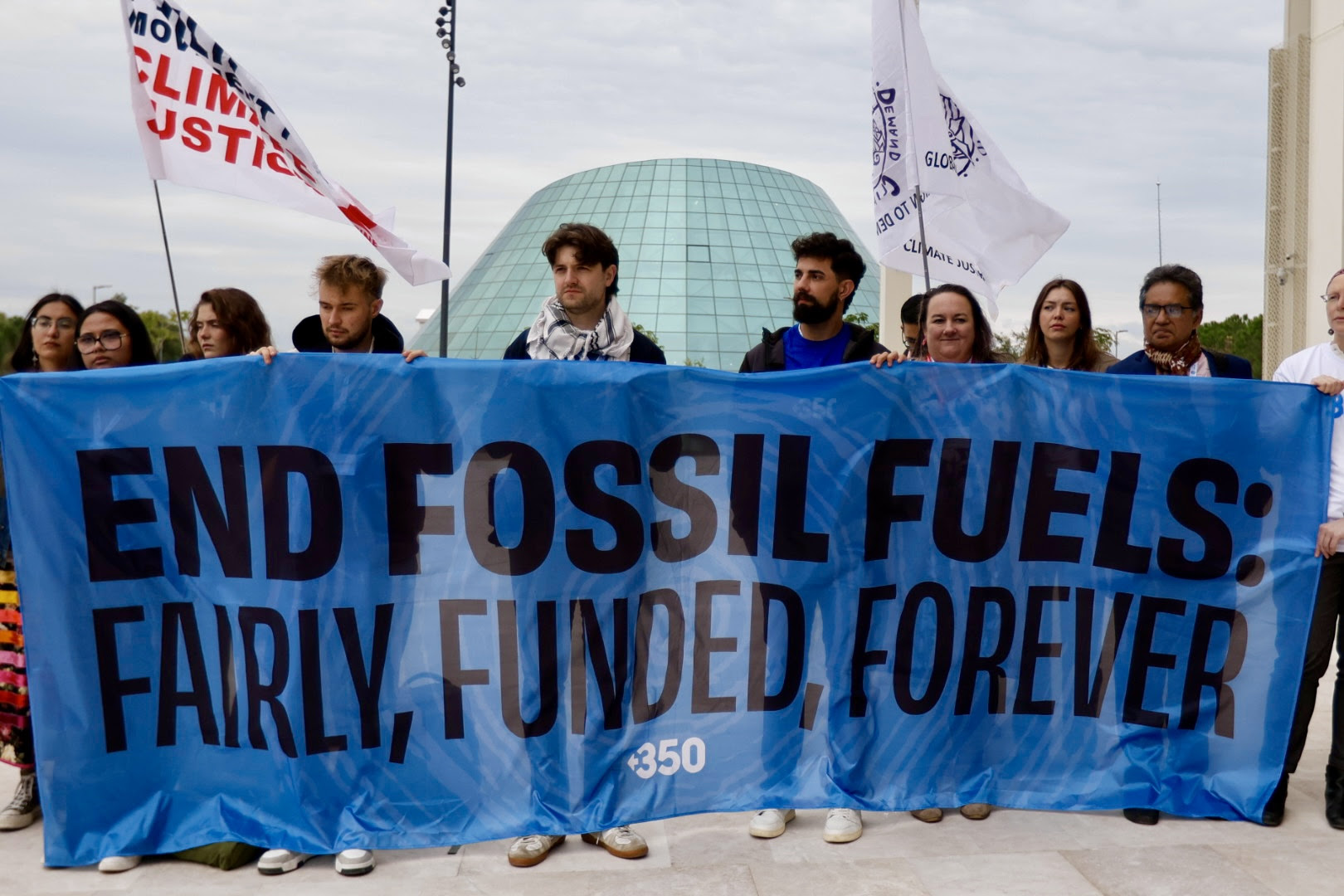
He praised young people, scientists, Indigenous communities, civil society organisations, and small island developing states for sustaining pressure on governments to address the climate crisis.
“I will not stop telling the truth,” he said. “And I will not stop fighting for it.”