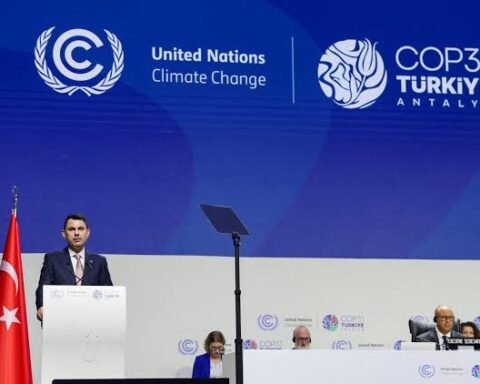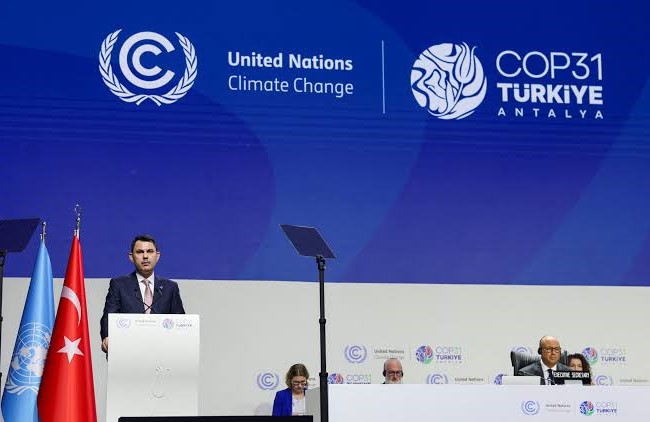

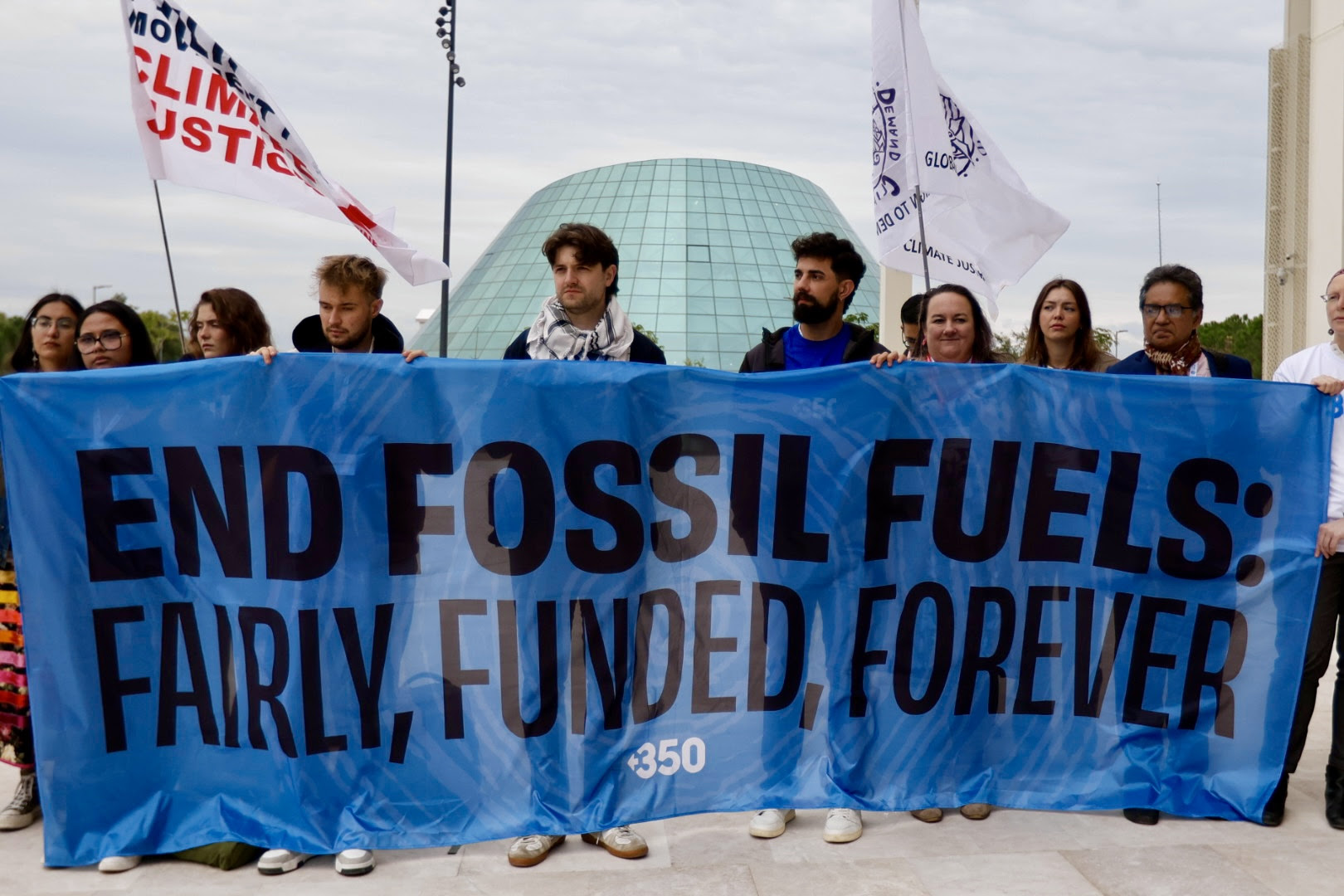
Climate advocacy organisations have criticised the COP31 Presidencies of Australia and Türkiye for failing to provide a clear commitment to advance global plans for a just transition away from fossil fuels, despite growing support from governments and international leaders.
The concerns were raised on Energy Day at the ongoing United Nations climate conference in Antalya, Türkiye, COP31, where the launch of the Electrify Now Finance Coalition highlighted growing efforts to mobilise investment for clean electrification.
The organisations said the failure to outline a concrete pathway for developing roadmaps to phase out coal, oil and gas could undermine momentum generated at previous climate negotiations and weaken efforts to keep global warming within the 1.5°C limit.
The groups called on the COP31 Presidencies to include a commitment in the summit’s final agreement or establish a presidency-led process to sustain discussions ahead of the second Global Stocktake under the Paris Agreement.
The criticism followed high-level discussions on Tuesday involving countries from different negotiating blocs, United Nations Secretary-General António Guterres, former COP presidents and ministers, who expressed support for continuing the fossil fuel transition roadmap initiative launched by Brazil’s COP30 Presidency in Belém in 2025.
According to the climate organisations, while Türkiye indicated its openness to considering the initiative, Australia did not provide a clear pathway for taking the process forward.
They argued that the two countries, which jointly lead the COP31 Presidency, must demonstrate stronger political leadership to translate growing international support into an actionable plan.
Fenton Lutunatabua, Pacific and Caribbean Programme Manager at 350.org, said discussions at the summit had demonstrated that support for a just transition away from fossil fuels extended across negotiating blocs.
“Today’s discussions have made one thing abundantly clear: the political mandate for a just and equitable transition away from fossil fuels is there. Countries from across negotiating blocs, alongside the UN Secretary-General, have called on Türkiye and Australia to carry this process forward. The ball is now firmly in the COP31 Presidencies’ court,” he said.
Lutunatabua expressed concern that the two governments had yet to demonstrate the leadership required to advance the initiative, alleging that Australia had failed to offer a pathway forward while Türkiye had not explained how it intended to sustain the roadmap process.
He urged Türkiye to take the lead if Australia remained unwilling to advance the proposal, warning that the international community could not afford another climate summit where governments acknowledged the need to move beyond fossil fuels without agreeing on practical steps.
The dispute comes as the climate negotiations increasingly focus on how countries can reduce dependence on fossil fuels while expanding access to affordable and reliable energy, particularly in developing economies.
The initiative is expected to support investment in electrifying homes, transport systems and industries, particularly in developing countries, as part of efforts to accelerate the global energy transition.
However, 350.org warned that electrification alone would not guarantee emissions reductions if electricity demand continued to be met through coal and gas-fired power generation.
The organisation said the expansion of electricity access must be accompanied by increased renewable energy generation and a clear commitment to reduce fossil fuel production and consumption.
Fanny Petitbon, Policy Analyst at 350.org, said electrification and the transition away from fossil fuels must be pursued together.
“Electrifying our economies and breaking free from fossil fuels are two sides of the same coin. Wiring up more homes, transport and factories achieves little if the grid runs on coal and gas, and no country can walk away from fossil fuels without affordable renewable energy to replace them,” she said.
Petitbon welcomed efforts at COP31 to promote electrification and mobilise clean energy finance, but warned against financing arrangements that could increase the debt burden of developing countries already facing the consequences of climate change.
She said the transition must be affordable, equitable and accessible, adding that it should not reproduce the inequalities and corporate control associated with the fossil fuel economy.
“Electrification must be powered by renewables, accessible and affordable for everyone, and rooted in equity and climate justice. It must not leave the countries and communities already hit hardest by the climate crisis with new debts to pay,” she said.
Groups demand clear timelines, climate finance
The climate organisations called on governments to develop national and regional roadmaps for phasing out fossil fuels in a fair, orderly and ambitious manner.
They said such plans should contain clear timelines and deadlines against which governments could be held accountable, alongside adequate climate finance to help developing countries implement their energy transitions.
They also urged the COP31 Presidencies to ensure that electrification delivers genuine emissions reductions consistent with the 1.5°C temperature goal.
This, they said, would require renewable-powered electrification, faster reductions in fossil fuel production and consumption, and safeguards against rising electricity demand driving new investments in fossil gas.
The groups further called for the fossil fuel transition process to be linked to the second Global Stocktake, which will assess collective progress towards the goals of the Paris Agreement and inform stronger national climate commitments.
They also demanded that fairness and climate justice remain central to the transition, with developed countries providing public finance on fair terms and at the scale required to support developing economies.
Another demand was for the operationalisation of the Just Transition Mechanism to ensure that workers, communities and people whose livelihoods depend on fossil fuel industries receive support as economies move towards cleaner energy sources.
Petitbon said COP31 should bring together the push for electrification and a clear, adequately financed pathway away from fossil fuels.
“COP31 must bring these agendas together: a clear, fair and financed pathway away from fossil fuels, alongside an acceleration of renewable energy and electrification that delivers for people, not polluters,” she said.
Implications for Africa’s energy transition
The debate has significant implications for African countries, including Nigeria, where energy access, economic development and dependence on fossil fuel revenues remain central to national policy discussions.
Nigeria is a major oil and gas producer but continues to face electricity supply challenges, with millions of people lacking reliable access to power. Expanding electricity access while reducing emissions presents a difficult policy challenge for a country seeking to grow its economy and industrialise.
For many African countries, the transition away from fossil fuels raises questions about the availability of affordable alternatives, the cost of renewable energy infrastructure, energy security, employment and the resources required to protect vulnerable communities.
Climate advocates argue that developing countries should not be expected to abandon fossil fuel dependence without adequate financial and technological support to build reliable renewable energy systems.
The call for a just transition therefore places responsibility on wealthier countries to provide predictable climate finance, support technology transfer and help developing economies expand clean energy access without worsening debt pressures.
For Nigeria, the challenge is to ensure that investments in solar, wind, hydropower and other renewable sources translate into affordable electricity, productive jobs and improved energy access, while supporting workers and communities affected by changes in the energy sector.
The outcome of the COP31 discussions could help determine whether the global transition debate moves beyond broad political declarations towards clearer timelines, financing commitments and practical measures.
As negotiations continue in Antalya, climate organisations say the COP31 Presidencies must use the growing international support for fossil fuel transition roadmaps to establish a process capable of delivering measurable progress before the next Global Stocktake.
By Dare Akogun