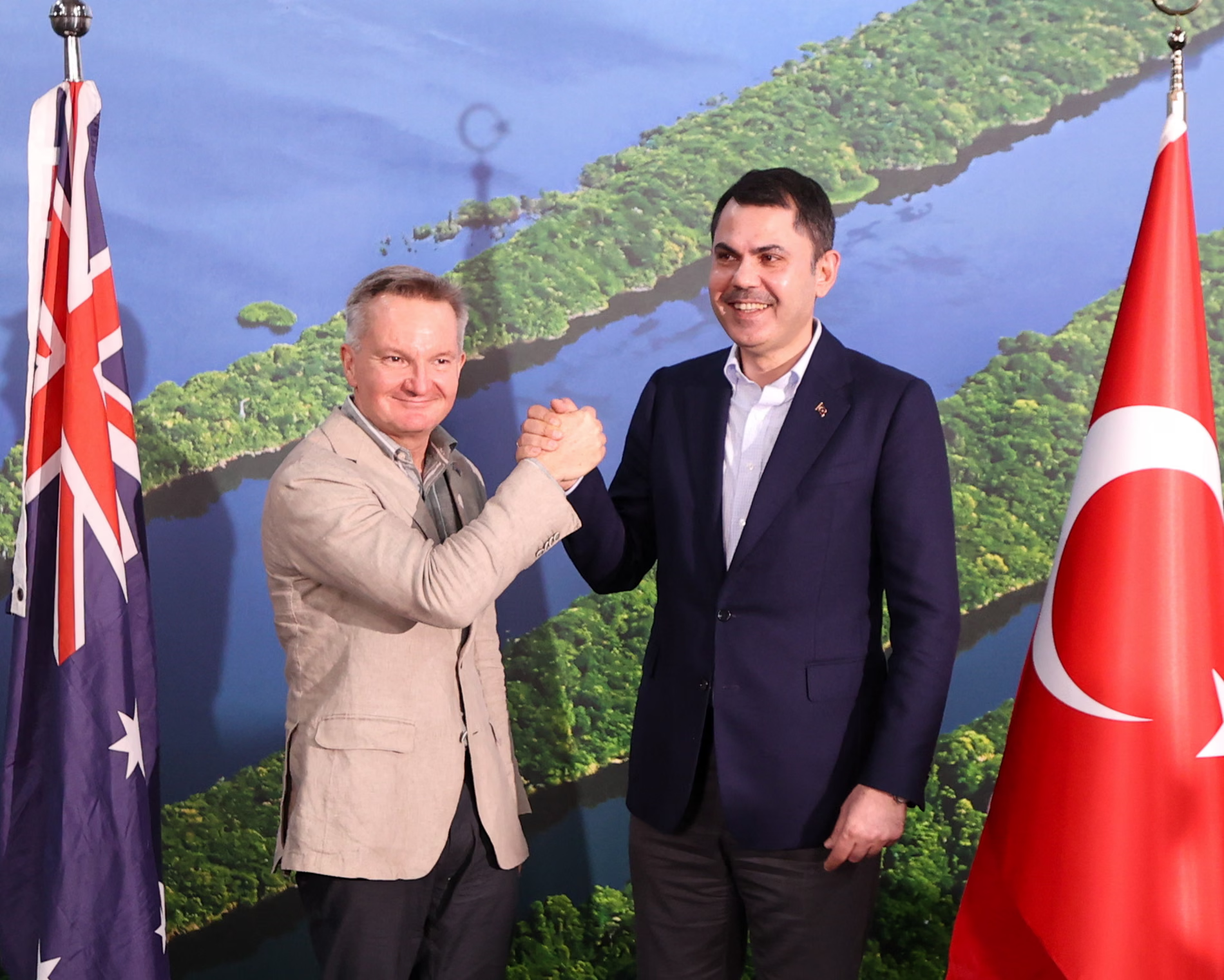

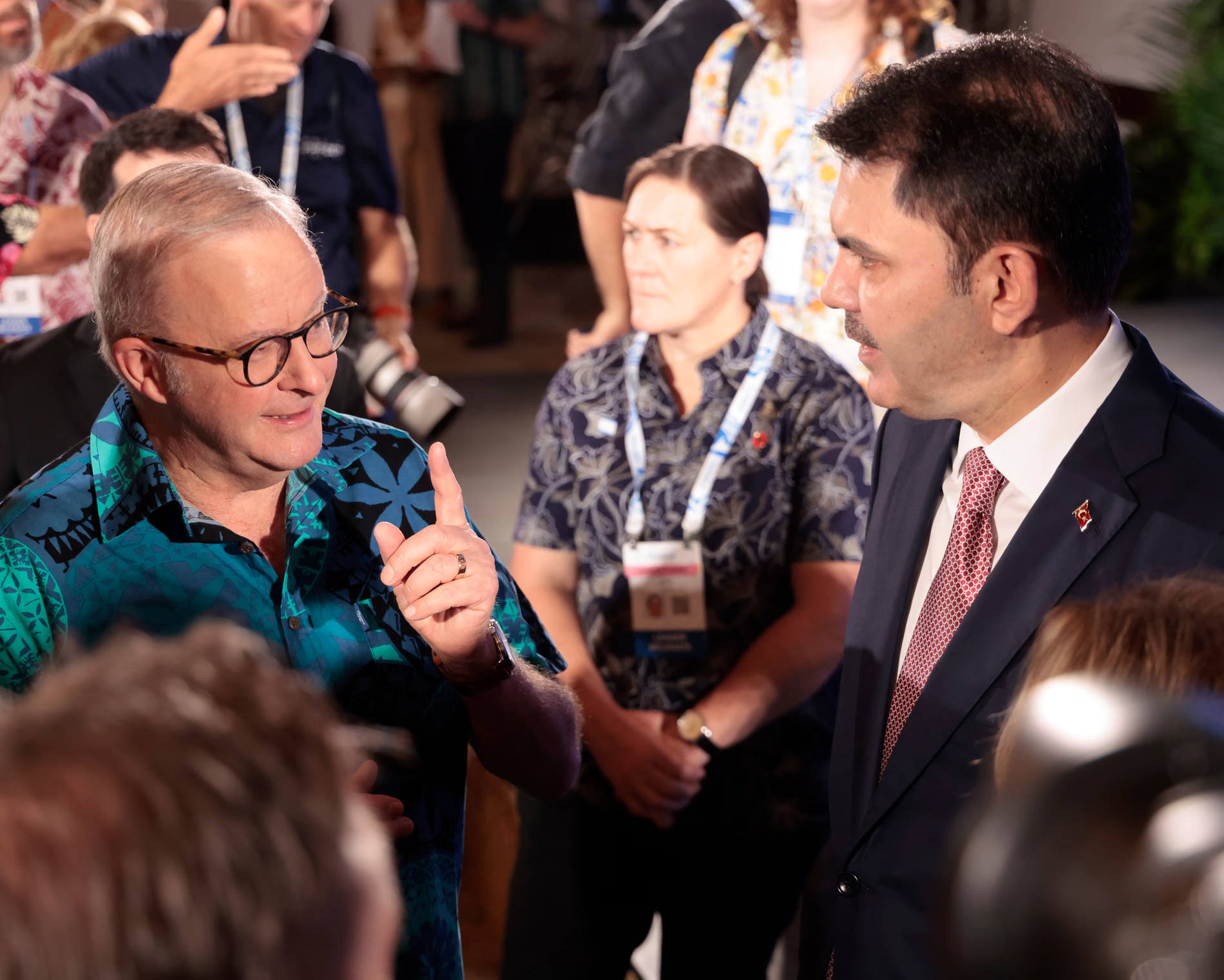
The President-designate of the 31st United Nations Climate Change Conference, Murat Kurum, has urged wealthy countries to spend far more on tackling climate change than the five per cent of gross domestic product they have pledged to spend on defence.
Kurum, Turkey’s climate change minister, said climate change should be treated as a security threat, arguing that “the climate issue is the security issue”.
He made the remarks in an interview with The Guardian UK during a pre-COP31 meeting in Nadi, Fiji, ahead of the main conference scheduled to be held in Antalya, Turkey, in November.
However, Kurum was less explicit on whether countries should renew their commitment to “transition away from fossil fuels”, the principal driver of global warming, at the forthcoming summit.
He said the world was “already in a transition”, suggesting that fossil fuel consumption could be addressed indirectly through other climate measures.
The remarks could complicate negotiations at COP31, as countries face growing pressure to accelerate emissions reductions and strengthen their climate commitments.
The pre-COP meeting brought together government leaders, ministers, officials, civil society representatives and other stakeholders to discuss priorities for the November summit.
Australia, which will lead negotiations at COP31, pushed for the preparatory meeting to be held in the Pacific to draw greater international attention to the vulnerability of island nations to rising sea levels and extreme weather.
However, geopolitical tensions, an energy crisis and uncertainty surrounding the United States’ climate policy limited the participation of national leaders. Only 13 national leaders joined Australian Prime Minister Anthony Albanese in Nadi, most of them from Pacific countries.
About 30 ministers, including representatives from India and European countries, as well as delegates from major emitters China and Saudi Arabia, also attended the meeting alongside heads of international agencies and thousands of other participants.
During the gathering, a delegation travelled to Tuvalu, a low-lying Pacific island nation of about 10,000 people, to witness the effects of rising sea levels and intensifying extreme weather.
The visitors were shown a 20-hectare land reclamation project aimed at addressing the country’s vulnerability to rising waters, storm surges and other climate-related threats.
Much of Tuvalu lies only about two metres above sea level, leaving its communities exposed to the growing risks posed by climate change.
In an address to the delegation, 13-year-old Melelusi Sokotia said the climate crisis was threatening the future of children in the island nation.
She said her friends’ aspirations to become “teachers, doctors, builders” were increasingly overshadowed by concerns about whether they could “grow safely here in Tuvalu”.
Fiji’s Climate Minister, Lynda Tabuya, was moved to tears during her closing address at the meeting, urging delegates to remember the people they had encountered and take their experiences into the negotiations.
“This pre-COP draws to a close tonight. Our responsibility does not,” she said.
The call comes amid warnings that the world is falling short of the emissions cuts needed to limit global warming to 1.5 degrees Celsius above pre-industrial levels, the threshold set under the Paris climate agreement.
A recent report by the United Nations Environment Programme warned that global temperatures could rise by at least 1.8 degrees Celsius even under the most optimistic projected scenario.
The report called for immediate and sustained reductions in greenhouse gas emissions, warning that every fraction of a degree of warming avoided would help save lives and reduce economic losses.
Ahead of COP31, Pacific leaders reiterated their demands for countries to keep the 1.5-degree target within reach, provide accessible climate finance to vulnerable communities and prioritise ocean protection.
They argued that communities which contributed least to the climate crisis were bearing some of its most severe consequences.
The November summit in Antalya is expected to test countries’ willingness to translate climate commitments into stronger action on emissions, climate finance and support for vulnerable nations.
By Dare Akogun