
As world leaders prepare to move from pledges to implementation, a new Greenpeace report warns that global efforts to protect 30 per cent of the world’s oceans by 2030 may fail unless Indigenous Peoples and local communities are placed at the centre of conservation decision-making, DARE AKOGUN writes on the impact of the report which coincides with the hosting of the Our Ocean Conference first time on African soil bringing global attention to the continent’s oceans, coastal communities and blue economy ambitions.
The global goal of protecting at least 30 per cent of the world’s oceans and ecosystems by 2030 could fail unless Indigenous Peoples and local communities are placed at the centre of conservation efforts, according to a new report by Greenpeace International.
The report, titled Global Ocean Justice Now: Making the Case for a Human Rights-Based Approach to Marine Conservation, was launched on June 1, 2026, barely two weeks before the 11th Our Ocean Conference in Mombasa, Kenya, and six months ahead of the Convention on Biological Diversity’s COP17 in Yerevan, Armenia.
Its central argument is straightforward but powerful: conservation efforts that exclude local communities are unlikely to succeed.
For Africa, where millions depend directly on oceans, rivers, mangroves, and coastal ecosystems for livelihoods, food security, and cultural identity, the findings raise urgent questions about how governments define conservation and development.
The report argues that while governments continue to make ambitious international pledges, many are simultaneously approving industrial projects that undermine marine ecosystems and displace communities that have protected those environments for generations.
Why the 30×30 Target Matters
The global 30×30 target emerged from the Kunming-Montreal Global Biodiversity Framework adopted in 2022.
The goal seeks to ensure that at least 30 per cent of the world’s land, freshwater, and marine ecosystems are effectively conserved and managed by 2030.
Scientists have repeatedly warned that biodiversity loss, climate change, and ecosystem degradation are occurring at unprecedented rates.
Oceans play a critical role in regulating the Earth’s climate, absorbing carbon emissions, supporting fisheries, and sustaining billions of people worldwide.
However, Greenpeace warns that many governments are approaching the target as a numerical exercise rather than a transformative conservation agenda.
According to Nichanan Tanthanawit, Global Project Lead of Greenpeace’s Ocean Justice Campaign, the focus on percentages risks overlooking the people whose stewardship has historically protected marine ecosystems.
“Too many governments are treating the 30×30 target like a numbers game. You cannot claim to protect the ocean while excluding the very communities that have protected these ecosystems for generations. The science is already clear: oceans are healthier where communities have rights, power, and stewardship,” he said.
Africa’s Moment in the Global Ocean Conversation
This year’s Our Ocean Conference carries particular significance. For the first time since the conference series began, the event will be hosted on African soil.
Scheduled for June 16–18, 2026, in Mombasa, Kenya, the conference is expected to attract governments, businesses, researchers, development agencies, and civil society organisations from across the globe.
Under the theme, Our Ocean, Our Heritage, Our Future, the gathering seeks to move beyond promises and focus on implementation.
For many African countries, the conference provides an opportunity to highlight the continent’s unique marine ecosystems, growing blue economy ambitions, and mounting environmental challenges.
From the Gulf of Guinea to the Western Indian Ocean, African coastal communities face increasing pressure from industrial fishing, pollution, offshore oil and gas exploration, climate change, and coastal erosion.
The Greenpeace report suggests that unless local communities become equal partners in decision-making processes, international conservation commitments may remain largely symbolic.
The Rise of ‘Paper Parks’
One of the report’s strongest criticisms is directed at what conservation experts describe as “paper parks.” These are protected areas that exist in official documents and government declarations, but provide little real protection on the ground.
The report argues that many conservation zones are underfunded, poorly enforced, or designed without community participation.
As a result, destructive activities continue despite a formal protection status.
In some cases, local communities are restricted from accessing resources they have sustainably managed for generations while industrial actors continue operating nearby.
This contradiction, Greenpeace argues, undermines both conservation outcomes and human rights. The report states that governments frequently overlook traditional ecological knowledge and governance systems developed by Indigenous Peoples and local communities.
Instead, they often prioritise large-scale infrastructure projects, extractive industries, and commercial interests under the banner of national development.
The report documents examples from multiple continents. In Patagonia, concerns have emerged over industrial salmon farming.
In West Africa, fishmeal and fish oil factories continue to place pressure on fisheries and food security.
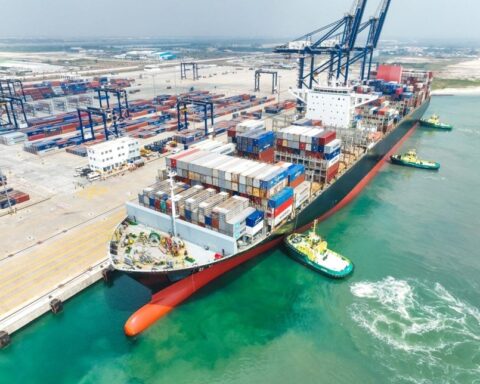
In Sri Lanka, sand mining threatens coastal ecosystems. In Southern Thailand, mega-port developments have generated tensions between economic expansion and environmental protection.
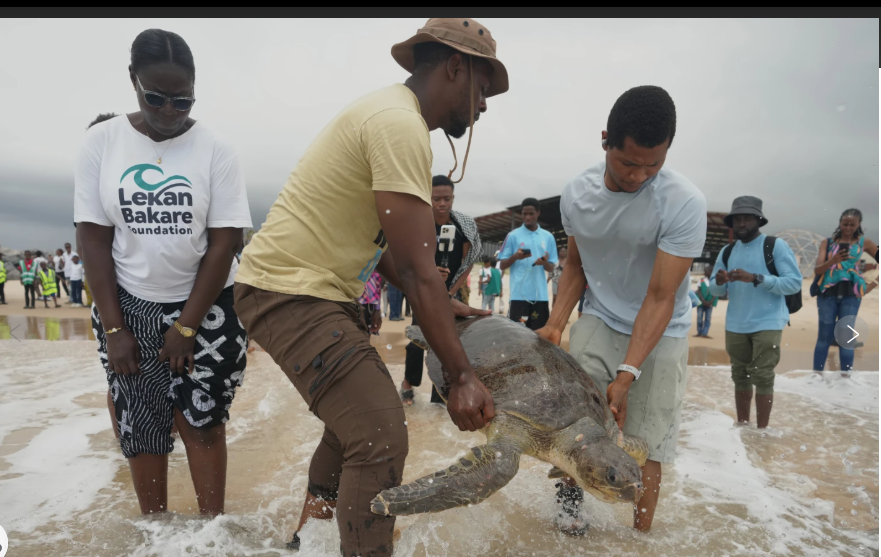
Despite these challenges, Greenpeace argues that local communities are demonstrating effective alternatives. Rather than being passive victims of environmental degradation, many have become leaders in conservation and ecosystem restoration.
Their experiences suggest that conservation succeeds when communities have ownership, legal recognition, and meaningful participation in decision-making.
West Africa’s Fisheries Crisis
For West Africa, the report highlights the growing threat posed by industrial fishing and fishmeal production. According to Greenpeace Africa campaigner Mamadou Kaly Ba, coastal communities in Senegal are facing an unprecedented environmental and economic crisis.
He noted that industrial overfishing, fishmeal and fish oil factories, pollution, and offshore oil and gas expansion are threatening marine biodiversity and traditional livelihoods.
“Yet across our coastline, communities are proving that sustainable and community-led marine conservation works when local people are empowered and included in decision-making,” he said.
His warning resonates across several West African countries, including Nigeria, Ghana, and Sierra Leone, where artisanal fishing communities increasingly compete with industrial fleets for declining fish stocks.
What It Means for Nigeria
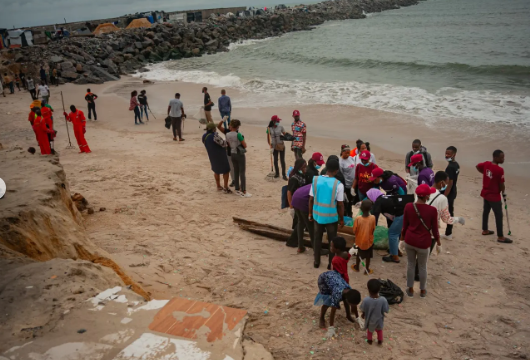
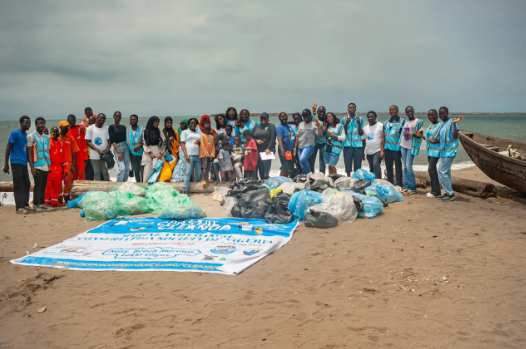
Nigeria’s coastal communities are already experiencing many of the issues highlighted in the Greenpeace report. Along the Atlantic coastline, communities face challenges ranging from coastal erosion and flooding to pollution, oil spills, overfishing, and mangrove degradation.
In the Niger Delta, decades of oil exploration have left lasting environmental scars. Communities continue to raise concerns about declining fish catches, disappearing mangrove forests, and deteriorating water quality.
Speaking on the implications of the report, marine conservation expert and Executive Director of the Nigerian Conservation Foundation, Dr Joseph Onoja, said experiences across several coastal communities in Nigeria have shown that conservation outcomes improve significantly when local people are recognised as partners rather than obstacles.
According to him, communities along Nigeria’s coastline have accumulated generations of ecological knowledge that can strengthen fisheries management and marine biodiversity protection.
“Conservation cannot succeed through enforcement alone. The people who live closest to these ecosystems often understand them better than anyone else. Their traditional knowledge, fishing practices, and stewardship systems are valuable resources that should be integrated into national conservation strategies,” Onoja said.
He noted that community-led conservation initiatives in parts of the Niger Delta and other coastal regions have demonstrated that local participation often leads to better compliance, reduced resource conflicts, and improved environmental outcomes.
“Many governments still approach conservation from a top-down perspective. Yet evidence from across the world shows that ecosystems tend to be healthier when local communities are actively involved in governance and management. Excluding them creates distrust and weakens conservation efforts,” he added.

Onoja further stressed that as Nigeria pursues its blue economy agenda, sustainability must remain central to development plans.
He warned that economic growth from fisheries, shipping, tourism, and offshore industries must not undermine the ecological systems upon which coastal livelihoods depend.
“The blue economy should not simply be about generating revenue. It must also be about protecting marine ecosystems and ensuring that future generations can continue to benefit from ocean resources. Sustainable development and conservation must go hand in hand,” he said.
Also speaking, climate and biodiversity advocate and Executive Director of the International Climate Change Development Initiative, Olumide Idowu, said the Greenpeace report underscores the growing intersection between biodiversity conservation, environmental justice, and human rights.
According to him, many vulnerable coastal communities across Africa are already bearing the brunt of climate change, coastal erosion, pollution, and biodiversity loss despite contributing minimally to global environmental degradation.
“Environmental justice requires that the people most affected by ecological decline have a voice in decisions that affect their lives and livelihoods. Conservation cannot be successful if it ignores the rights and realities of frontline communities,” Idowu said.
He noted that the contradiction between international conservation commitments and domestic development policies remains evident across many African countries, including Nigeria, where coastal communities continue to face mounting environmental pressures.
“The discussions in Mombasa and later at COP17 will provide an opportunity for countries to demonstrate that conservation is not merely about protecting ecosystems on paper. It is about protecting people, livelihoods, and cultures.
“For Nigeria, this is the moment to demonstrate leadership by embracing inclusive conservation approaches that place communities at the centre of ocean and biodiversity protection,” he added.
Idowu said the concerns raised by Greenpeace resonate strongly in Nigeria, where the gap between international commitments and local realities is becoming increasingly difficult to ignore.
“Despite being a signatory to several global agreements on biodiversity protection and sustainable ocean governance, environmental degradation continues to threaten the livelihoods of millions of Nigerians living along the country’s coastline.
“In coastal states such as Lagos, Bayelsa, Rivers, Delta and Akwa Ibom, communities face growing challenges linked to oil pollution, uncontrolled dredging, sand mining, mangrove destruction, coastal erosion and large-scale infrastructure projects.
“Environmental advocates argue that many of these developments proceed without adequate safeguards or meaningful consultation with affected communities.
“The consequences have been severe. Declining fish stocks, loss of traditional livelihoods, displacement of residents and weakened ecosystem resilience have become common features across many coastal settlements,” he said.
COP17: A Critical Test
Beyond Mombasa, attention is already shifting to COP17 of the Convention on Biological Diversity in Armenia.
The meeting will mark the first major assessment of global implementation of the Kunming-Montreal Global Biodiversity Framework.
Countries will be required to demonstrate progress towards biodiversity targets, including the 30×30 commitment.
Environmental advocates argue that the review process must go beyond counting protected areas and focus on actual ecological outcomes.
The Greenpeace report suggests that without affirmative answers to these questions, conservation targets risk becoming little more than political slogans.
From Conservation to Justice
Perhaps the report’s most important contribution is its framing of ocean conservation as a justice issue rather than merely an environmental one.
For decades, debates about conservation have often focused on species, habitats and protected areas.
While these remain important, Greenpeace argues that conservation cannot succeed without recognising the rights, knowledge and leadership of the people who depend on those ecosystems.
The organisation is therefore calling on governments to redirect conservation financing towards community-led initiatives, halt destructive industrial activities in sensitive marine areas, and place food security, human rights and local participation at the centre of conservation policies.
The Road Ahead
As world leaders prepare to gather in Kenya and Armenia, the Greenpeace report serves as a reminder that conservation is ultimately about people as much as it is about nature.
For Africa, where oceans support millions of livelihoods and where biodiversity remains deeply connected to culture, identity, and survival, the stakes are particularly high.
The challenge confronting governments is no longer whether they can announce ambitious targets. It is whether they can build conservation systems that genuinely protect ecosystems while empowering the communities that have safeguarded them for generations.
Without that shift, Greenpeace warns, the global promise of protecting 30 per cent of the planet by 2030 may remain little more than a number on paper.
This story was produced as part of the 2026 Our Ocean Conference Fellowship organized by Internews’ Earth Journalism Network’