
As governments, scientists, environmental advocates and maritime industry leaders prepare for the forthcoming Our Ocean Conference in Kenya, a growing number of experts are warning that Nigeria may struggle to fully benefit from the global blue economy revolution unless it first addresses a more fundamental challenge widespread ocean illiteracy.
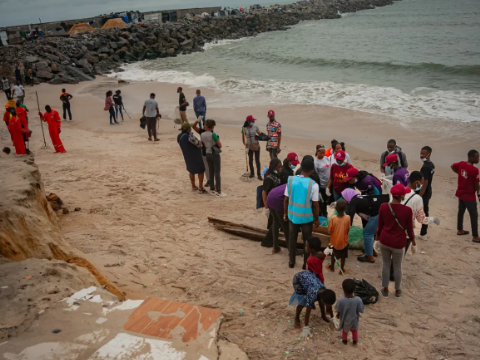
That concern took centre stage during Nigeria’s commemoration of World Ocean Day 2026 in Lagos, where stakeholders from the maritime, environmental, research and policy sectors called for a dramatic shift in how Nigerians understand, value and interact with the ocean.
The message resonated strongly with emerging global conversations around the regenerative blue economy, a concept increasingly gaining traction among policymakers seeking to balance economic growth with environmental sustainability.
According to a recent report by the World Economic Forum, marine ecosystems worldwide are facing unprecedented pressure from climate change, warming oceans, rising sea levels, pollution, biodiversity loss and unsustainable exploitation of resources.
The report argues that traditional economic models centred on extraction are no longer sustainable and advocates a transition towards a regenerative blue economy one that restores ecosystems while creating jobs, supporting coastal communities and strengthening climate resilience.
For Nigeria, Africa’s largest economy and one of the continent’s most strategically positioned maritime nations, the stakes could hardly be higher.
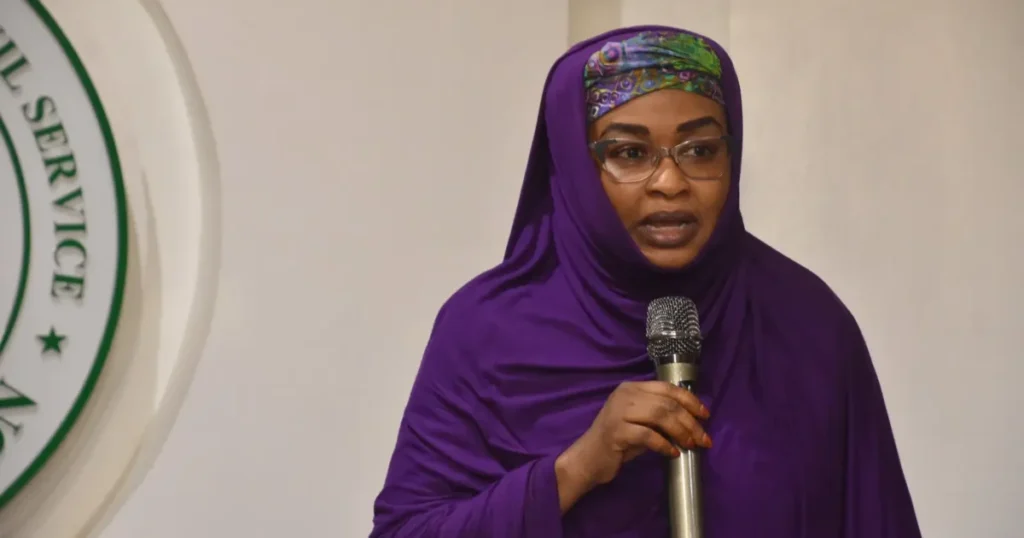
Permanent Secretary of the Federal Ministry of Marine and Blue Economy, Fatima Mahmood CREDIT /PUNCH NewspapersOcean wealth hidden in plain sight
Globally, roughly 40 per cent of the world’s population lives within 100 kilometres of the coast.
Though this narrow coastal zone accounts for just five per cent of inhabited land, it generates between 30 and 50 per cent of global Gross Domestic Product.
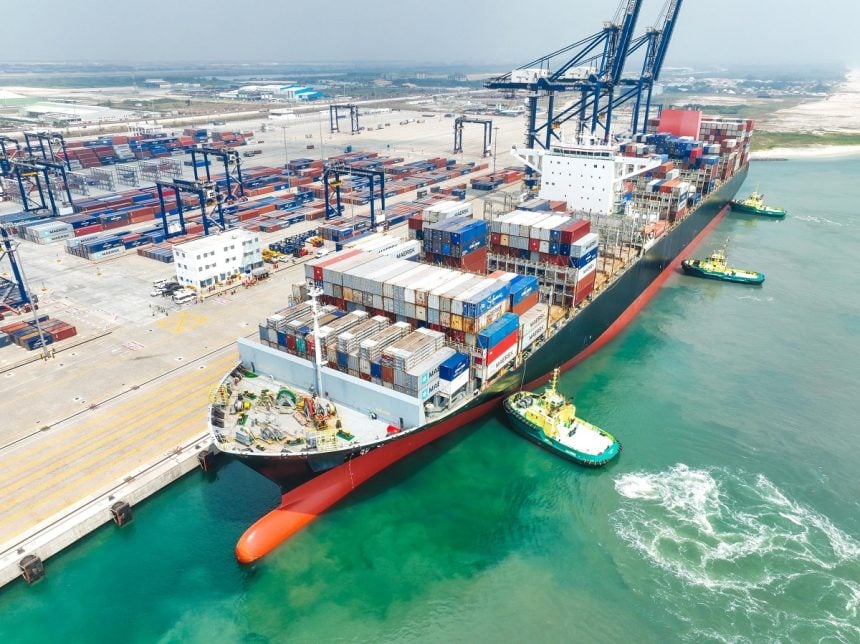
It is home to major ports, energy infrastructure, tourism hubs, fisheries, aquaculture operations and emerging renewable energy projects.
The World Economic Forum identifies integrated ocean governance, innovative financing, technology and artificial intelligence, and human capacity development as critical levers for building a regenerative blue economy.
These are areas where experts believe Nigeria must rapidly improve if it hopes to compete in the evolving ocean economy.
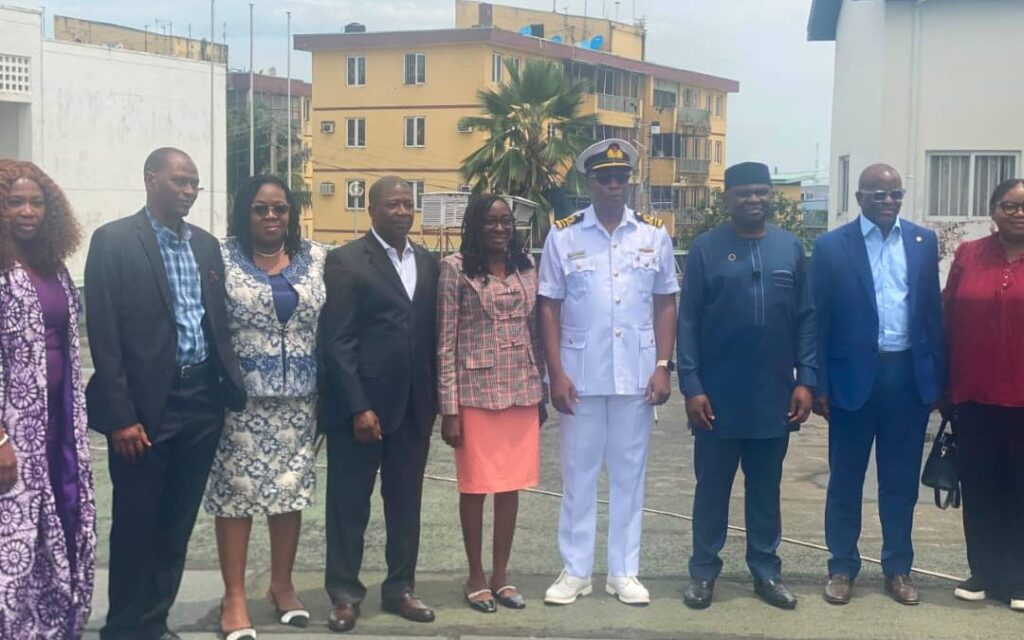
At the World Ocean Day celebration organised by the International Ocean Institute Nigeria Centre in collaboration with the Nigerian Institute for Oceanography and Marine Research and other partners, maritime strategist and Founder of the Blue Economy Academy, Ubong Essien, argued that Nigeria remains largely disconnected from its ocean identity despite possessing vast marine assets.
“We live in Lagos. We live along an 853-kilometre coastline. Every day should be Ocean Day for us,” Essien said.
“Most Nigerians know only half of their country. We know the land, but we rarely see the sea. Yet the ocean influences our food systems, trade, climate, energy, security and economic future.”
His remarks reflected a growing concern among maritime experts that Nigeria remains trapped in what they describe as “sea blindness” the inability of individuals, institutions and governments to appreciate the strategic importance of the ocean.
From crude oil to blue economy
For decades, Nigeria’s economic fortunes have revolved around crude oil.
However, global energy transition efforts, declining fossil fuel investments and climate commitments are forcing countries to rethink their development strategies.
Essien warned that Nigeria could no longer depend indefinitely on petroleum revenues.
“Oil is increasingly becoming a wasting asset. The world is moving towards cleaner energy solutions, and Nigeria must identify where its future prosperity lies. The Blue Economy offers that opportunity,” he said.
His argument aligns closely with recommendations emerging from international blue economy discussions ahead of the Kenya conference, where delegates are expected to examine sustainable fisheries, marine conservation, ocean finance, coastal resilience and climate adaptation.
Experts believe Nigeria possesses enormous untapped opportunities in shipping, fisheries, aquaculture, marine biotechnology, offshore renewable energy, coastal tourism and maritime services.
Yet unlocking these opportunities requires more than policy declarations, it demands a shift in public consciousness.
“We cannot manage what we do not see, the first step toward sustainable ocean governance is moving from sea blindness to sea consciousness,” Essien noted.
A marine environment under pressure
While Nigeria seeks to expand its blue economy ambitions, experts say the country must first confront growing environmental threats facing its marine ecosystems.
Marine pollution, oil spills, overfishing, coastal erosion, indiscriminate waste disposal and habitat destruction continue to undermine the health of ocean resources.
Essien warned that current patterns of marine resource exploitation are unsustainable.
“The state of our oceans demands stewardship. We must move from extraction mentality to stewardship mentality,” he said.
Plastic pollution remains a particularly visible challenge.
Every year, thousands of tonnes of waste find their way into rivers, lagoons and coastal waters, threatening marine biodiversity and fisheries upon which millions of Nigerians depend.
“We are all culpable,” Essien said.
“The ocean’s crisis is not somebody else’s fault. Every one of us has contributed in one way or another.”
These concerns mirror findings contained in the World Economic Forum report, which warns that continued degradation of marine ecosystems threatens the livelihoods, food security and economic stability of coastal populations worldwide.
Conservation targets and Nigeria’s slow progress
Another major issue likely to feature prominently at the Kenya conference is marine conservation.
Under the landmark Kunming-Montreal Global Biodiversity Framework adopted at COP15, countries committed to protecting at least 30 per cent of terrestrial and marine ecosystems by 2030.
Known as the “30 by 30” target, the commitment has become a key benchmark for global conservation efforts.
However, experts say Nigeria remains significantly behind.
According to figures cited during the World Ocean Day event, only a tiny fraction of Nigeria’s marine territory currently enjoys formal protection through Marine Protected Areas.
Environmentalists argue that without stronger conservation measures, fish stocks, coastal biodiversity and ecosystem services will continue to decline.
Protected marine zones are widely recognised as effective tools for restoring fish populations, safeguarding habitats and enhancing climate resilience.
They also provide long-term economic benefits through sustainable tourism and fisheries management.
The role of governance and collaboration
A recurring theme during the Lagos event was the need for stronger collaboration among stakeholders.
Essien identified five critical groups that must work together to unlock Nigeria’s blue economy potential government, industry, researchers and educators, coastal communities and the wider public.
“No institution can do this alone. The maritime sector has taught us that collaboration is non-negotiable,” he said.
Lessons from Nigeria’s anti-piracy successes and the implementation of the Deep Blue Project were frequently cited as examples of what coordinated action can achieve.
Participants argued that similar levels of cooperation would be required to tackle marine pollution, climate adaptation and sustainable ocean governance.
Why Kenya matters
The upcoming Our Ocean Conference in Kenya presents a significant opportunity for African countries to shape global conversations on ocean sustainability.
The conference is expected to mobilise financial commitments, strengthen international cooperation and accelerate implementation of ocean-related climate and conservation goals.
For Nigeria, observers say the gathering offers more than diplomatic visibility.
It provides an opportunity to showcase recent policy reforms, attract investment into maritime industries and strengthen partnerships capable of advancing blue economy development.
But experts insist that international commitments must be matched by domestic action.
Earlier in his welcome address, Director of the International Ocean Institute Nigeria Centre, Akanbi Williams, described ocean sustainability as both an environmental necessity and an economic imperative.
“For Nigeria, reimagining our relationship with the ocean is not merely an environmental necessity; it is an economic imperative and a national development priority,” he said.
Williams highlighted opportunities in sustainable fisheries, maritime transportation, renewable energy, marine biotechnology, tourism and coastal resilience as sectors capable of generating jobs and driving economic diversification.
The future of Nigeria’s ocean economy
The World Economic Forum argues that the future of ocean governance should not be measured solely by the wealth generated from marine resources.
Rather, success should be judged by whether that wealth restores ecosystems, promotes fairness and strengthens resilience for future generations.
This regenerative vision challenges governments to move beyond short-term extraction and adopt approaches that balance economic growth with environmental protection.
For Nigeria, that challenge is particularly urgent.
As climate change intensifies, coastal populations grow and traditional revenue sources face increasing uncertainty, the ocean may become one of the country’s most important development frontiers.
Yet experts insist that infrastructure investments, maritime security and policy reforms alone will not be enough.
Ocean literacy helping citizens understand the ocean’s role in their lives and livelihoods may ultimately determine whether Nigeria succeeds in building a sustainable blue economy.
As delegates prepare to gather in Kenya, stakeholders in Lagos have already issued their message.
Nigeria’s future prosperity may depend not on what lies beneath the soil, but on how well the nation understands, protects and harnesses the vast wealth of its oceans.
And that journey, they argue, begins with seeing the sea not as a distant horizon, but as a critical part of the country’s economic and environmental future.
By Dare Akogun
This story was produced as part of the 2026 Our Ocean Conference Fellowship organized by Internews’ Earth Journalism Network’