

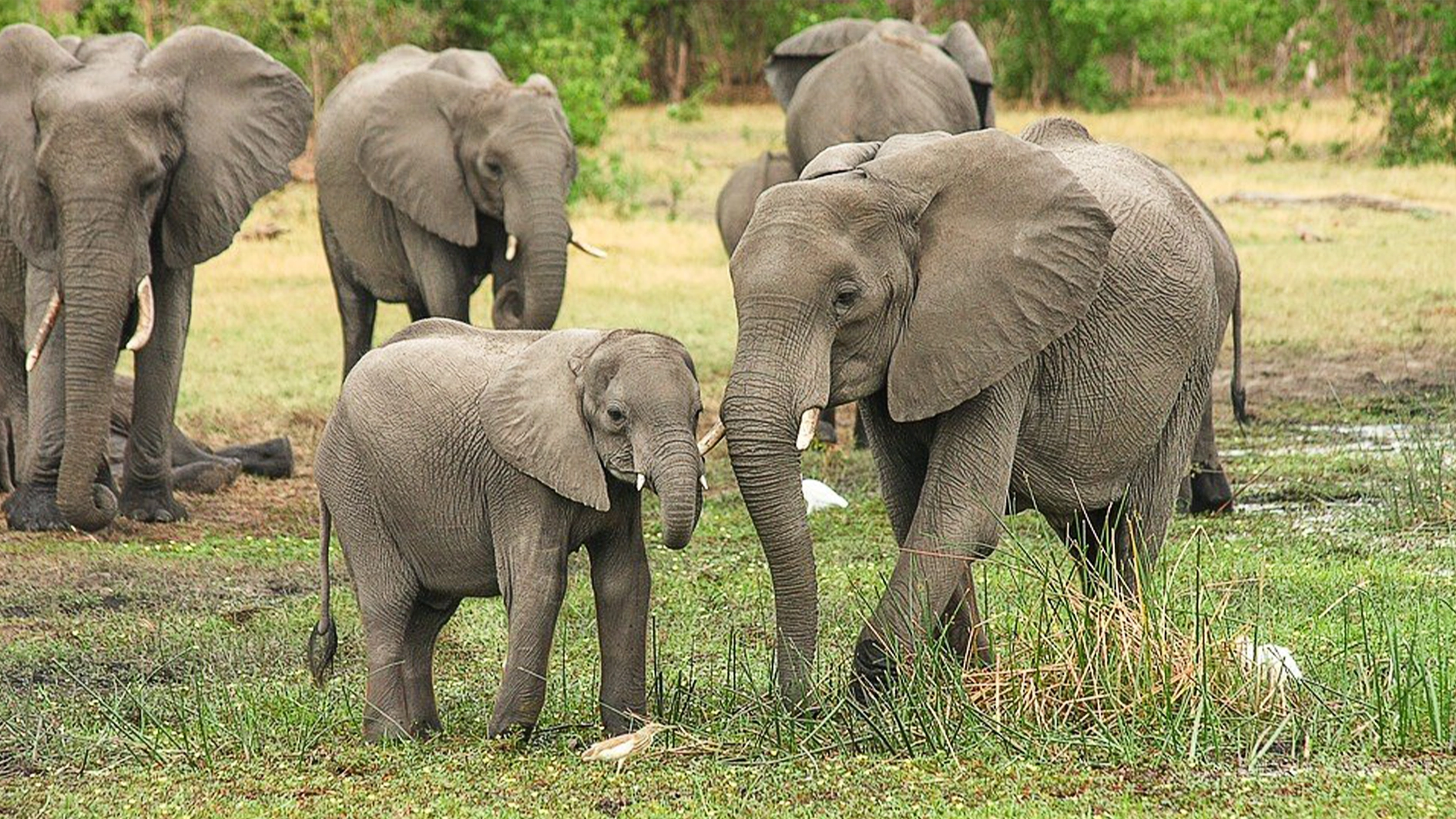
Nigeria’s elephant population has fallen to an estimated 400 animals in the wild, placing one of Africa’s most important ecosystem engineers at growing risk from habitat loss, illegal ivory trade, human-wildlife conflict and insecurity, conservationists have warned.
The warning came ahead of World Elephant Day, marked annually on August 12, during a virtual media engagement organised by Wild Africa and the Nigerian Conservation Foundation (NCF).
According to conservationists, Nigeria’s remaining elephants comprise approximately 300 forest elephants and 100 savannah elephants, with their increasingly fragmented habitats making the species more vulnerable to isolation, inbreeding and eventual extinction.
Dr Mark Ofua, wildlife veterinarian, conservationist and West African representative of Wild Africa, described the estimated population as a critical mass that requires urgent protection.
“Elephants are tenders of the forest,” Ofua said, explaining that the animals play a critical role in maintaining forest health, biodiversity and ecological balance.
He described elephants as an “umbrella species”, stressing that their decline would be an indication of wider deterioration within the ecosystems on which other wildlife and human communities depend.
According to him, losing elephants would have implications beyond wildlife conservation, affecting biodiversity, carbon storage and other ecosystem services that support human livelihoods.
Ofua identified illegal ivory trafficking, retaliatory killings arising from human-elephant conflict and accidental injuries from snares intended for other wildlife as some of the major threats confronting Nigeria’s elephants.
He said the problem was compounded by inadequate public awareness, estimating that about 80 per cent of Nigerians were unaware that wild elephants still existed in the country.
He called for sustained public education and strategic communication campaigns to change attitudes towards wildlife and discourage practices that threaten endangered species.
Ofua also urged businesses to move beyond viewing conservation as charity, arguing that environmental protection should form part of corporate responsibility.
He encouraged Nigerian companies to support conservation initiatives, including the adoption of rescued elephants and investment in programmes that protect threatened habitats.
The conservationist also called for greater investment in ecotourism, arguing that Nigeria’s wildlife assets could generate employment, support local communities and provide an alternative source of revenue for conservation.
He cited Rwanda’s gorilla trekking model as an example of how properly managed wildlife tourism can generate economic value, noting that visitors pay about $1,500 for a one-hour gorilla trekking experience, with proceeds supporting conservation, infrastructure and surrounding communities.
Ofua said Nigeria could develop similar models around its wildlife reserves and natural attractions if government and private-sector investment were properly coordinated.
He also called for greater public awareness of the consequences of the illegal possession and use of elephant tusks and other wildlife products, saying cultural practices involving animal parts should evolve alongside modern conservation realities.
According to him, existing legislation still contains gaps around domestic possession of wildlife products, although a new bill awaiting presidential assent is expected to strengthen some aspects of wildlife protection.
He advocated stronger enforcement, accountability and inter-agency cooperation involving government authorities, the National Park Service, customs officials, conservation organisations and other relevant stakeholders.
Dr Stella Egbe, who leads biodiversity pillar programmes at the NCF, said Nigeria’s forest elephants could be found in areas including Omo Forest Reserve, Cross River National Park and parts of the coastal region of Rivers State.
Savannah elephants, she said, are mainly found in Yankari Game Reserve in Bauchi State.
Egbe explained that elephant populations do not recognise political boundaries and could move between Nigeria and neighbouring countries, including Benin Republic and Cameroon.
She said conservationists use scientific techniques such as line transects and camera traps to monitor elephant populations, while field observations and records of poaching incidents also contribute to population estimates.
Habitat loss driving human-elephant conflict
Egbe identified habitat fragmentation as a major factor behind increasing encounters between elephants and human communities.
She cited incidents in areas such as Itasin, where encroachment into elephant habitats had resulted in crop destruction and retaliatory killings.
To reduce conflict, she recommended measures including the protection of elephant corridors and the use of non-lethal deterrents such as noise, beehives and chilli fences to keep elephants away from farms.
However, she noted that conservation organisations face difficulties responding to human-elephant conflicts because of inadequate emergency funding to compensate farmers whose crops are destroyed.
Egbe also identified insecurity, including banditry and the proliferation of sophisticated weapons, as a major obstacle to conservation activities in areas such as Gashaka Gumti.
According to her, insecurity restricts access to protected areas, limiting conservation management, scientific research and monitoring activities.
Egbe said implementation of Nigeria’s National Elephant Action Plan remained constrained by inadequate funding.
She explained that although resources had been secured to develop the plan, substantially more funding was required to implement the actions contained in the document.
She called for stronger partnerships between government agencies, conservation organisations, development partners and the private sector to close the funding gap and strengthen wildlife protection.
The NCF official said the organisation already works with private-sector partners, including Chevron and MTN, while advocating policies that require businesses to reduce and mitigate their environmental impacts.
Egbe argued that Nigeria’s enormous natural resource wealth had historically encouraged the country to focus more heavily on crude oil and mineral extraction, leaving wildlife and tourism with comparatively limited attention.
She said protected areas and natural attractions could instead become engines of local economic development if properly managed and marketed.
According to her, wildlife tourism could support year-round economic activities and create jobs in hospitality, transportation, guiding and other related sectors.
The conservationists lamented that several of Nigeria’s natural attractions, including waterfalls, floating lakes and other unique ecosystems, remain underdeveloped and poorly marketed.
They urged governments to treat biodiversity and wildlife not merely as conservation concerns but as economic assets capable of supporting communities and contributing to sustainable development.
As Nigeria joins the global community to mark World Elephant Day, conservationists said protecting the country’s remaining 400 elephants would require more than laws and protected areas.
They called for sustained funding, stronger enforcement against wildlife crime, protection of habitats, improved community engagement and greater public awareness to ensure that Nigeria’s elephants do not become another casualty of the country’s accelerating environmental crisis.
They also urged journalists to sustain reporting on wildlife and biodiversity and hold relevant authorities accountable for implementing policies designed to protect the country’s remaining elephant populations.
By Dare Akogun