
Semaform Foundation has launched an AI-powered platform to help grassroots nonprofit organisations and climate innovators find grant opportunities, access technical expertise, and improve their chances of securing funding.
The platform, named Grant Swipe, was launched at the Handshake Summit and Awards held during the 31st United Nations Climate Change Conference in Antalya, Türkiye.
In a statement made available to DA NEWS on Monday, Summit convener and Head of Failure and Social Experiments at Semaform Foundation, Chaste Inegbedion, said the Grant Swipe platform is designed to match nonprofits with funding opportunities, expertise and technical support.
“The initiative, developed in partnership with ConcordeApp, is designed to address the difficulties smaller organisations face in accessing funding despite running community-based projects, particularly those working on climate change and environmental challenges.
“Its developers said the platform would use artificial intelligence to match organisations with relevant funding opportunities, connect them with corporate pro bono volunteers and provide support in areas including finance, research, technology and grant writing.
“It is also expected to assist organisations in strengthening applications and tracking project milestones,” the statement reads.
Inegbedion said Africa needed to move beyond climate pledges to examine whether resources were reaching communities most exposed to climate risks.
He said climate finance discussions should focus not only on the volume of money pledged but also on who could access it, who controlled decisions, and whether investments reached vulnerable communities.
“Climate finance cannot remain a conversation about how much money has been pledged. We must ask who can access it, who makes the decisions, and whether the resources are reaching the communities closest to the challenges.
“Africa had the talent, ideas and entrepreneurial capacity to develop climate solutions but needed stronger pathways connecting innovation to investment and commitments to implementation,” he said.
According to the statement, the launch was led by Enebi Opaluwa, Head of Natural Resource and Climate Governance at BudgIT Foundation, who endorsed the initiative and received the Climate Governance Award at the event.
Opaluwa said technology should be used to improve access to information, participation and accountability, noting that Grant Swipe could help organisations connect their work with funding and expertise.
“Technology becomes meaningful when it helps people access information, participate in decisions and hold institutions accountable.
“Grant Swipe presents an opportunity to apply that same spirit of innovation to the challenge of helping impact organisations connect their work with funding and expertise.”
The keynote address was delivered by Ayo Sotinrin, Managing Director of the Bank of Agriculture, Nigeria, who received the Agricultural Finance Leadership Award and linked agricultural finance with food security and climate resilience.
A panel discussion, titled Happy and Hungry, examined the disconnect between food production and access, drawing parallels with climate finance, where capital is available but often fails to reach vulnerable communities.
The panel was moderated by Inegbedion and featured Joy Osomiahmhe-O, Executive Director of G-SEL Network CIC, alongside three award recipients: Dr Babatunde Ajayi, General Manager of the Lagos State Environmental Protection Agency; Dr Joy Nnamdi Amaoma, Environmental Management Specialist at the Niger Delta Development Commission; and Nneka Okoye, Executive Director of World Impact Initiative.
Osomiahmhe-O said clean cooking was connected to public health, livelihoods, food systems and environmental sustainability, stressing that climate solutions must be affordable and accessible.
Ajayi said environmental protection should be integrated into economic development through cleaner production, responsible resource use and effective environmental oversight.
Amaoma called for the knowledge of communities living closest to environmental change to inform policies and investments, while Okoye said inclusion must extend beyond representation to giving communities the resources and decision-making power to shape solutions.
The summit’s discussions reflected broader calls at COP31 for climate finance to translate into investments and measurable results.
COP31 President Murat Kurum had urged delegates to back climate promises with capital, investments and results, while UN Secretary-General António Guterres warned that countries shared a common fate in the face of climate change.
Nigeria’s Minister of Environment, Balarabe Lawal, called for increased concessional financing and lower capital costs for developing economies, while Director-General of the National Council on Climate Change, Tenioye Majekodunmi, had emphasised the importance of certainty in attracting capital.
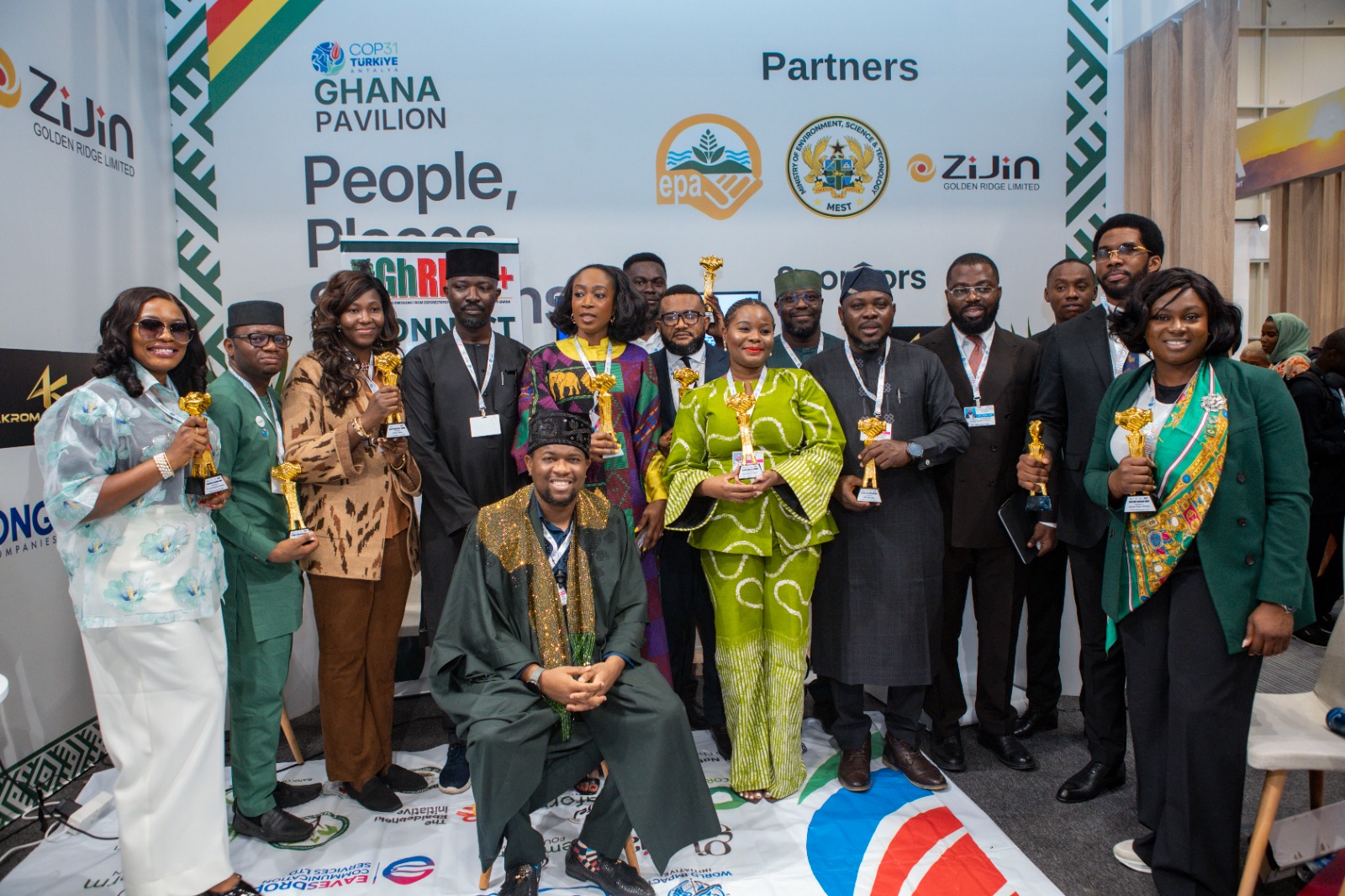
Nigeria’s public sector was strongly represented among the 20 honourees, including lawmakers, presidential aides and state government officials working on climate policy, finance, advocacy and carbon markets.
Hon. Dr Kama Nkemkanma, Chairman of the House Committee on Climate Change and Security, received the Legislative Climate Leadership Award, while Comrade Yusuf Olatunji Kelani, Special Assistant to the President on Climate Change Matters, received the Climate Advocacy Award.
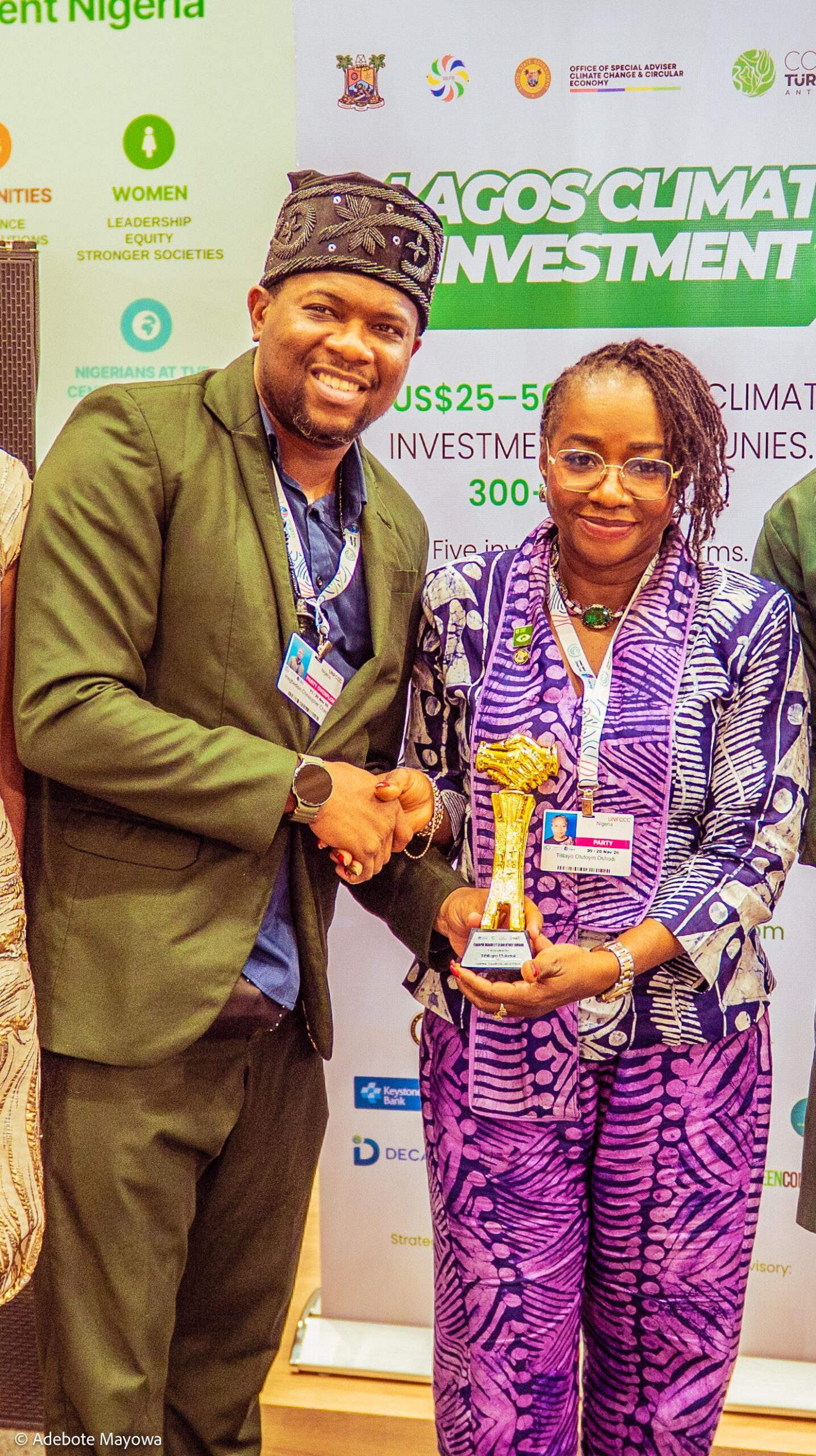
Ibrahim Abdullahi Shelleng, Senior Special Assistant to the President on Climate Finance and Stakeholder Engagement, received the Climate Catalyst Award, while Titilayo Oshodi, Special Adviser on Climate Change to the Lagos State Governor, was honoured with the Carbon Markets Leadership Award.
Other recipients included civil society, business, energy, media and youth leaders recognised for their work in climate governance, sustainability, environmental protection, climate justice, clean energy and community mobilisation.
Two leaders, Stephanie Akut, Chief of Staff to the Director-General of the National Council on Climate Change, Nigeria, and Patricia Mwangelwa Longwani, co-founder of Triharmony Climate Network, were inducted into the Elite Humanitarian Hall of Fame for their contributions to humanitarian and community development work.
The awards and summit chaired by Ojugo Onyelukachukwu came amid concerns over unequal access to climate investment across Africa.
The State of ClimateTech in Africa 2.0 report by Briter, FSD Africa, Catalyst Fund and BFA Global found that the continent’s 20 largest climate technology companies received 60 per cent of capital deployed since 2016, while women-only founding teams attracted less than one per cent.
By Dare Akogun