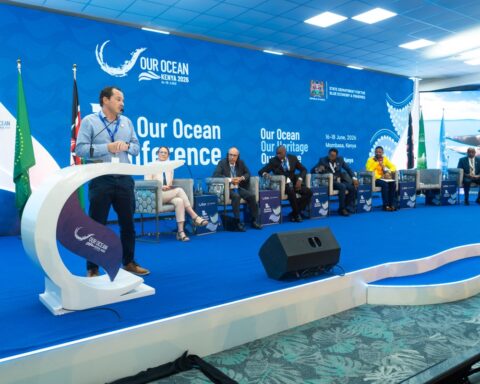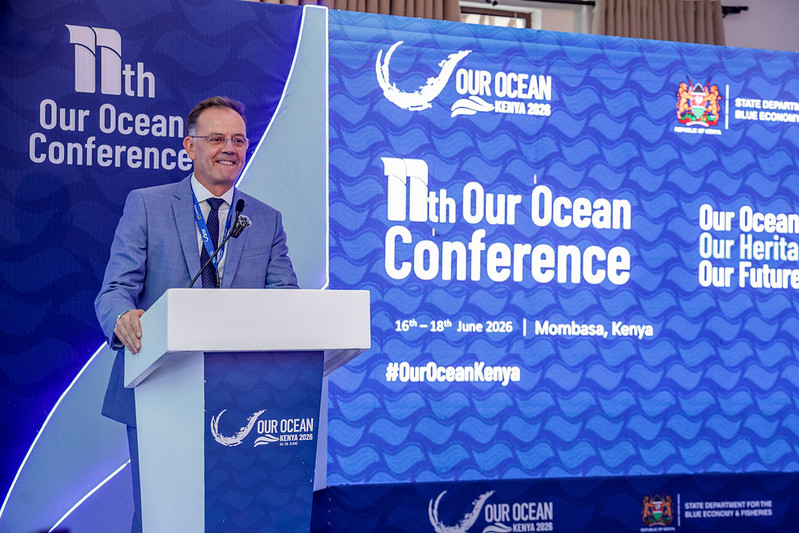

As world leaders, policymakers, scientists, and environmental advocates prepare to gather in Mombasa, Kenya, for the 11th Our Ocean Conference, Nigeria is coming under increasing pressure to align its growing blue-economy ambitions with the realities facing millions of people living along its fragile coastline.
The conference, scheduled for June 16 to 18, 2026, will be the first edition of the global ocean summit hosted on African soil. Under the theme, “Our Ocean, Our Heritage, Our Future,” the gathering is expected to focus on marine conservation, climate resilience, sustainable fisheries, maritime security, ocean pollution, and the future of the global blue economy.
For Nigeria, however, the discussions expected in Mombasa extend far beyond diplomatic commitments and international declarations.
They mirror challenges already unfolding across coastal communities from Lagos to Bayelsa, Rivers, Delta, and Akwa Ibom, where environmental degradation, climate impacts, and weak governance structures continue to threaten livelihoods and ecosystem stability.
The conference comes at a time when Nigeria is aggressively promoting the blue economy as a new frontier for economic growth.
Since the establishment of the Federal Ministry of Marine and Blue Economy in 2023, the Federal Government has repeatedly emphasised plans to expand investments in fisheries, shipping, coastal tourism, renewable energy, and maritime infrastructure as part of broader economic diversification efforts.
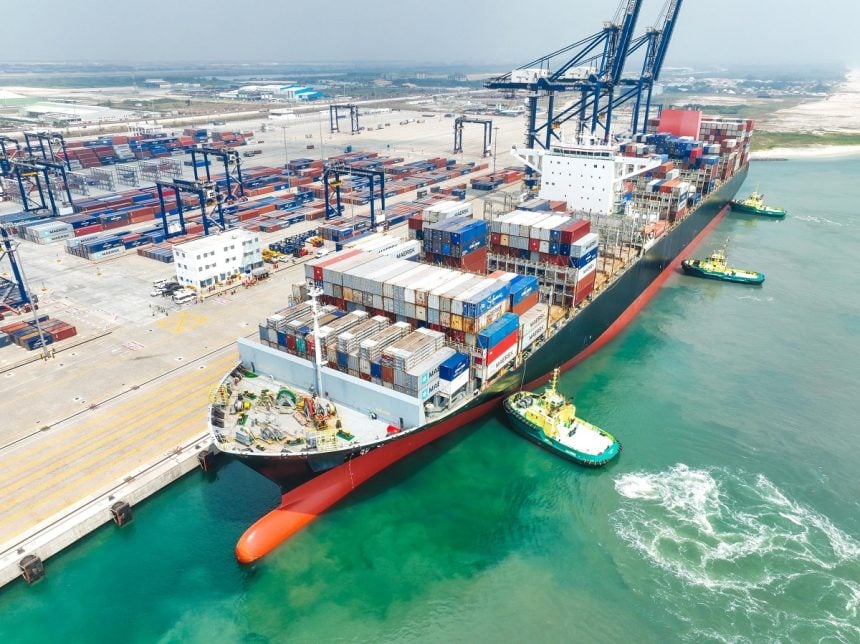
According to the Federal Ministry of Marine and Blue Economy, the sector remains critical to trade, food security, employment generation, and economic competitiveness, with more than 90 per cent of Nigeria’s international trade transported through maritime channels.
Minister Adegboyega Oyetola recently stressed that the sector occupies a strategic position within Nigeria’s economic future, highlighting its role in transport efficiency, fisheries development, and sustainable economic growth.
Yet environmental experts argue that the success of Nigeria’s blue economy agenda will ultimately depend on how effectively the country addresses the growing environmental and social pressures facing its coastal regions.
Across Nigeria’s coastline, evidence of ecological decline is becoming increasingly visible.
In Lagos, rising sea levels, coastal erosion, and recurrent flooding continue to threaten low-income communities living along the Atlantic coastline. Several settlements have experienced significant shoreline loss over the past decade, while residents regularly face displacement during periods of intense rainfall and ocean surges.
A Reuters report documented how ocean surges have devastated coastal settlements in Lagos, with environmental advocates linking the worsening situation to a combination of climate change, dredging activities, and large-scale coastal infrastructure projects.
According to the report, “An ocean surge swept through the village of Apakin, one of Lagos’ last indigenous coastal communities, washing away fishing boats, nets, and graves. It was only the latest event in the settlement of roughly 3,000 people that is losing homes and livelihoods to rising seas.
“Despite pledges of support from Commonwealth leaders, worsening ocean surges have left the centuries-old community feeling powerless, with residents fearing their ancestral land could soon be lost to the sea, according to local chief Abimbola Iyowun.
“We only have two graves left from my father’s lineage. “We’ve been trying to move them, but we haven’t found the place to move them to,” Iyowun said, pointing into the ocean where his house and that of his father once stood,” the report stated.
A 2022 study published in the Journal of African Earth Sciences found that nearly 80 per cent of Lagos’ shoreline has been lost to coastal erosion over the past five decades.
The researchers identified the construction of deep-water ports along the Bight of Benin as a major factor accelerating shoreline retreat and altering natural sediment movement along the coast.
Across Lagos, more than a dozen coastal communities continue to battle the devastating effects of ocean surges and rising sea levels. However, residents of Apakin say their community has been among the hardest hit.
What was once a thriving coconut-growing settlement in Apakin has witnessed extensive land loss, with the last remaining 50-metre stretch of coconut trees swallowed by the encroaching Atlantic Ocean about four years ago.
Beyond Lagos, communities in the Niger Delta continue to grapple with decades of environmental degradation linked to oil exploration, pollution and ecosystem destruction.
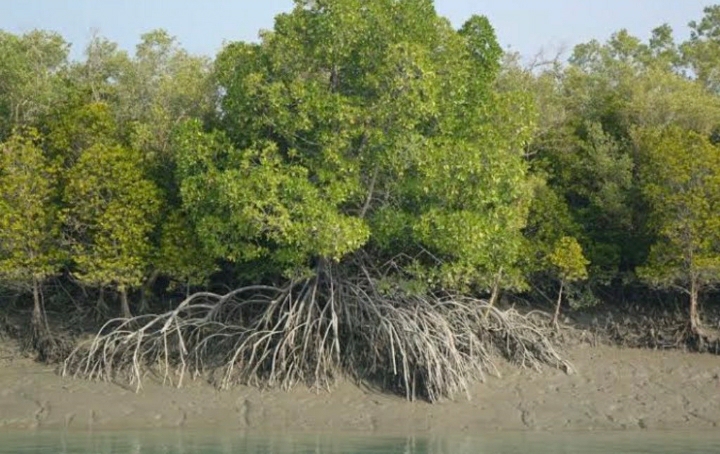
Mangrove forests that once served as natural buffers against flooding and coastal erosion have suffered extensive damage, weakening the resilience of local ecosystems.
Environmental advocates warn that these challenges directly undermine Nigeria’s commitments under global biodiversity and climate agreements.
Climate and biodiversity advocate and Executive Director of the International Climate Change Development Initiative, Olumide Idowu, said the upcoming conference presents an important opportunity for African countries to place environmental justice and community participation at the centre of ocean governance.
According to him, many coastal communities are already experiencing the impacts of climate change, biodiversity loss, and environmental degradation despite contributing very little to the global environmental crisis.
“Environmental justice requires that the people most affected by ecological decline have a voice in decisions that affect their lives and livelihoods. Conservation cannot be successful if it ignores the rights and realities of frontline communities,” he said.
Idowu argued that one of the major challenges confronting ocean governance globally is the widening gap between international environmental commitments and local realities.
“The discussions in Mombasa will provide countries with an opportunity to demonstrate that conservation is not simply about protecting ecosystems on paper. It is about protecting people, livelihoods, and cultures. Communities must be recognised as central actors in conservation efforts,” he added.
The concerns raised by environmental experts are consistent with broader global debates expected to dominate discussions at the conference.
According to organisers, the Mombasa summit will focus heavily on marine protected areas, sustainable fisheries, marine pollution, climate resilience, maritime security, and financing mechanisms for ocean conservation.
The conference is also expected to spotlight Africa’s growing leadership role in ocean governance and sustainable blue economy development.
Since its establishment in 2014, the Our Ocean Conference has generated thousands of commitments valued at more than $140bn aimed at protecting marine ecosystems and promoting sustainable ocean management. Organisers say the Mombasa edition represents a critical moment for translating global ambition into measurable action.
For Nigeria, one area likely to attract significant attention is maritime decarbonisation.
In recent months, Nigeria has intensified efforts to reduce greenhouse gas emissions from its maritime sector through collaboration with the International Maritime Organisation under the GreenVoyage2050 Programme.
Earlier this year, the Federal Ministry of Marine and Blue Economy and the Nigerian Maritime Administration and Safety Agency, NIMASA, launched the development of a National Action Plan on maritime decarbonisation aimed at aligning the country with the IMO’s 2023 greenhouse gas reduction strategy.
The initiative seeks to address emissions from shipping activities while supporting the transition towards a lower-carbon maritime sector.
NIMASA Director-General, Dayo Mobereola, represented at the event by the Director of Marine Environment Management at NIMASA, Dr Oma Ofodile, described the initiative as an important step towards building a sustainable maritime future.
“The development of Nigeria’s National Action Plan represents a critical step in our journey towards a low-carbon maritime future,” she stated during a stakeholders’ workshop in Lagos.
Mobereola also emphasised that maritime decarbonisation extends beyond compliance with international obligations.
According to him, the transition is necessary to protect marine ecosystems, strengthen the blue economy, and ensure long-term competitiveness within the maritime sector.
Observers believe Nigeria’s efforts in maritime decarbonisation may feature prominently during discussions in Kenya, particularly as countries seek practical strategies for balancing economic growth with environmental sustainability.
Another issue expected to shape conversations at the conference is the growing vulnerability of West Africa’s coastline.
A recent World Bank-backed coastal resilience initiative warned that coastal erosion, flooding, and environmental degradation continue to threaten hundreds of thousands of people across the region, while also undermining economic opportunities linked to fisheries, tourism, and maritime trade.
In many communities, environmental challenges are no longer viewed solely as ecological concerns but as threats to food security, public health, and economic survival.
Declining fish stocks have affected artisanal fishing communities, while pollution and habitat destruction continue to weaken local economies dependent on marine resources.
Environmental stakeholders are therefore calling on Nigeria to prioritise investments in nature-based solutions, including mangrove restoration, wetland protection, and ecosystem rehabilitation.
Such measures, they argue, offer cost-effective approaches to climate adaptation while simultaneously supporting biodiversity conservation and local livelihoods.
There are also growing calls for stronger regulation of dredging activities, improved environmental impact assessments, and greater accountability in the implementation of large-scale coastal infrastructure projects.
For many observers, the challenge facing Nigeria is not a lack of policy commitments but weak implementation.
Successive governments have signed multiple international agreements relating to biodiversity conservation, climate action, and sustainable development. However, environmental groups argue that enforcement remains inconsistent, while affected communities are often excluded from decision-making processes.
The Mombasa conference is therefore expected to serve as a test of Nigeria’s willingness to translate global commitments into concrete domestic action.
For coastal communities already battling flooding, erosion, pollution, and declining livelihoods, the stakes could hardly be higher.
As governments gather to discuss the future of the world’s oceans, many Nigerians will be watching closely to see whether promises made on international stages will eventually lead to meaningful improvements in the lives of those living on the frontlines of environmental change.
For Africa’s largest coastal economy, the message emerging ahead of the conference is increasingly clear: protecting the ocean can no longer be separated from protecting the people whose futures depend on it.
This story was produced as part of the 2026 Our Ocean Conference Fellowship organized by Internews’ Earth Journalism Network’