

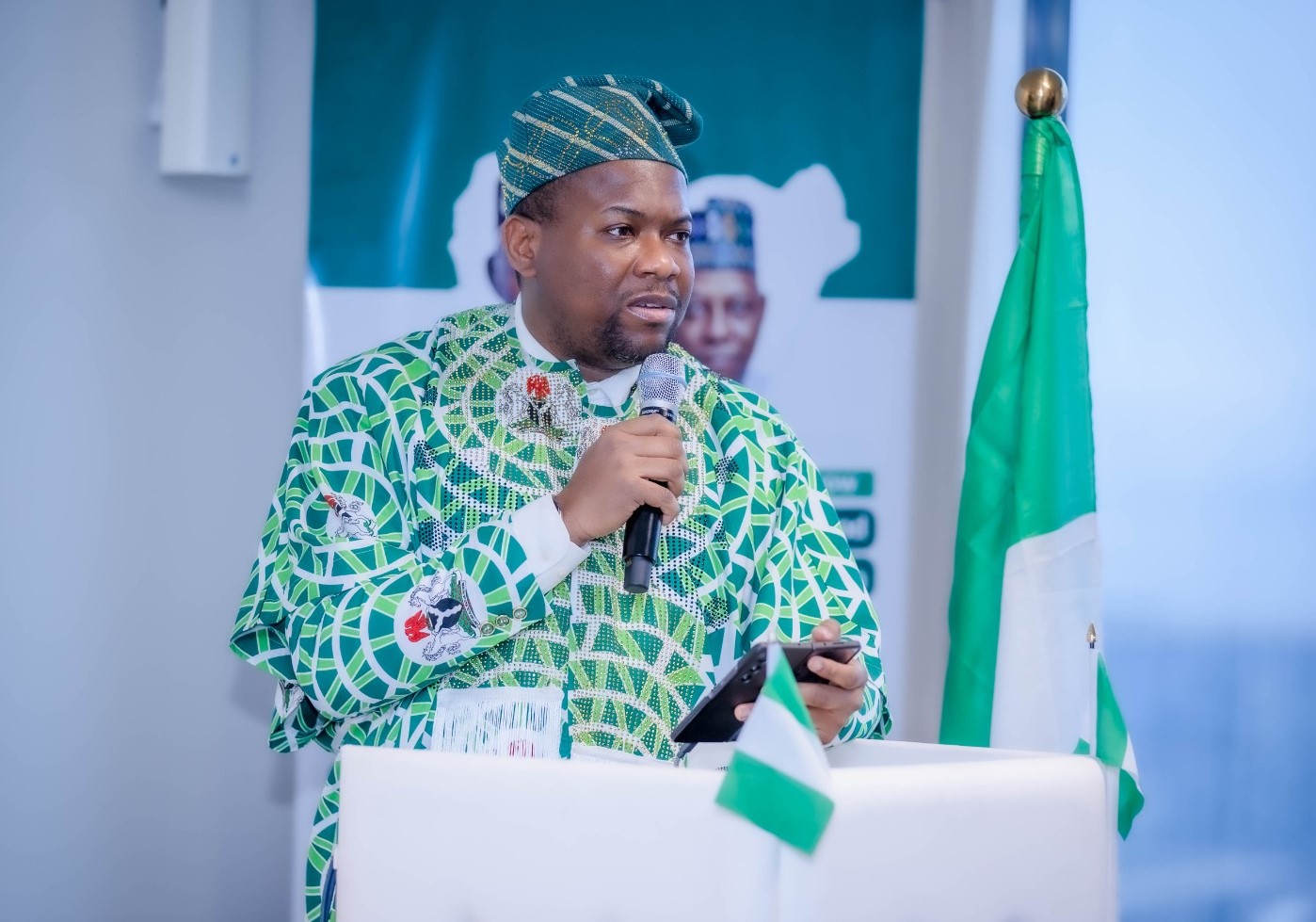
I’m on the train leaving Davos, watching the Alps disappear behind a curtain of snow, my body finally catching up with the week.
Blood drawn just days before. X-rays on my knees. Flights delayed, rerouted, canceled. Airline chaos layered on top of altitude sickness. And waiting for me back home a winter storm.
Yikes. And yet God is good.
This was the final checkbox in a long, demanding year of global convenings. After UNGA, UNCSW, COP30, CES, and countless policy rooms across continents, I wanted to experience the World Economic Forum Annual Meeting in Davos firsthand.
Not from the sidelines, but close enough to feel how power, access, and execution actually work.
So I came quietly. Navigating badges. Timing shuttles. Moving between rooms as if I belonged important enough to be present, but invisible enough to listen.
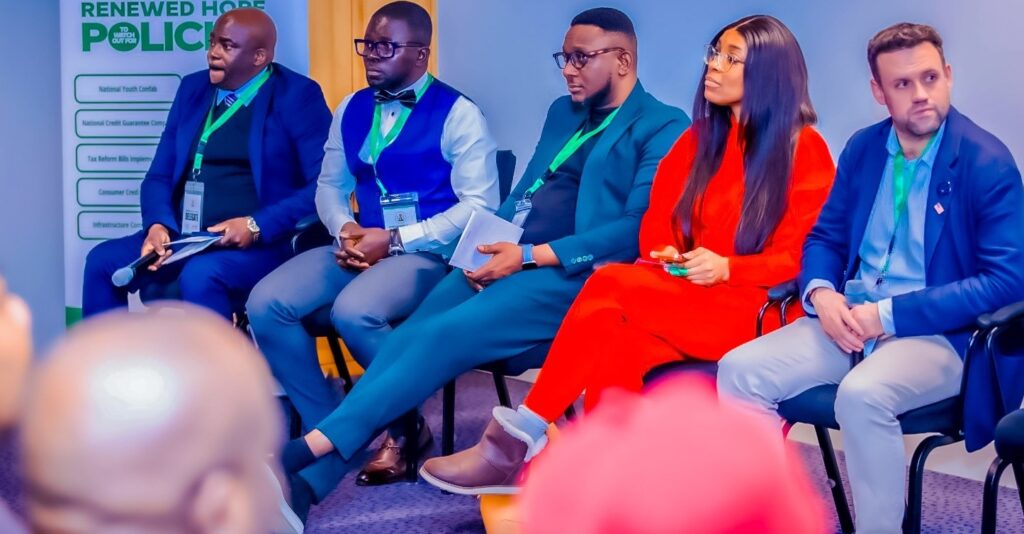
That vantage point revealed more than any panel ever could.
Davos Isn’t a Conspiracy. It’s compression.
We’ve all heard the stories of secret deals, shadow governance, and elite agendas.
The reality is far less dramatic and far more instructive.
Davos is a snowy village in the Swiss Alps where, once a year, an almost surreal concentration of CEOs, heads of state, founders, artists, civil society leaders, and journalists gather to compare notes about the future.
There is no hidden room where the world is decided unless I wasn’t invited to that part.
The real power of Davos is proximity.
You can have ten conversations in one day that would normally take a year to arrange.
Between the Belvedere, Abraham House, Nigerian House, African House, the Female Quotient, the Open Forum and the impressively efficient free airport shuttle.
I watched how access actually works. Who moves easily between spaces. Who waits. Who gets ushered into the next conversation without asking?
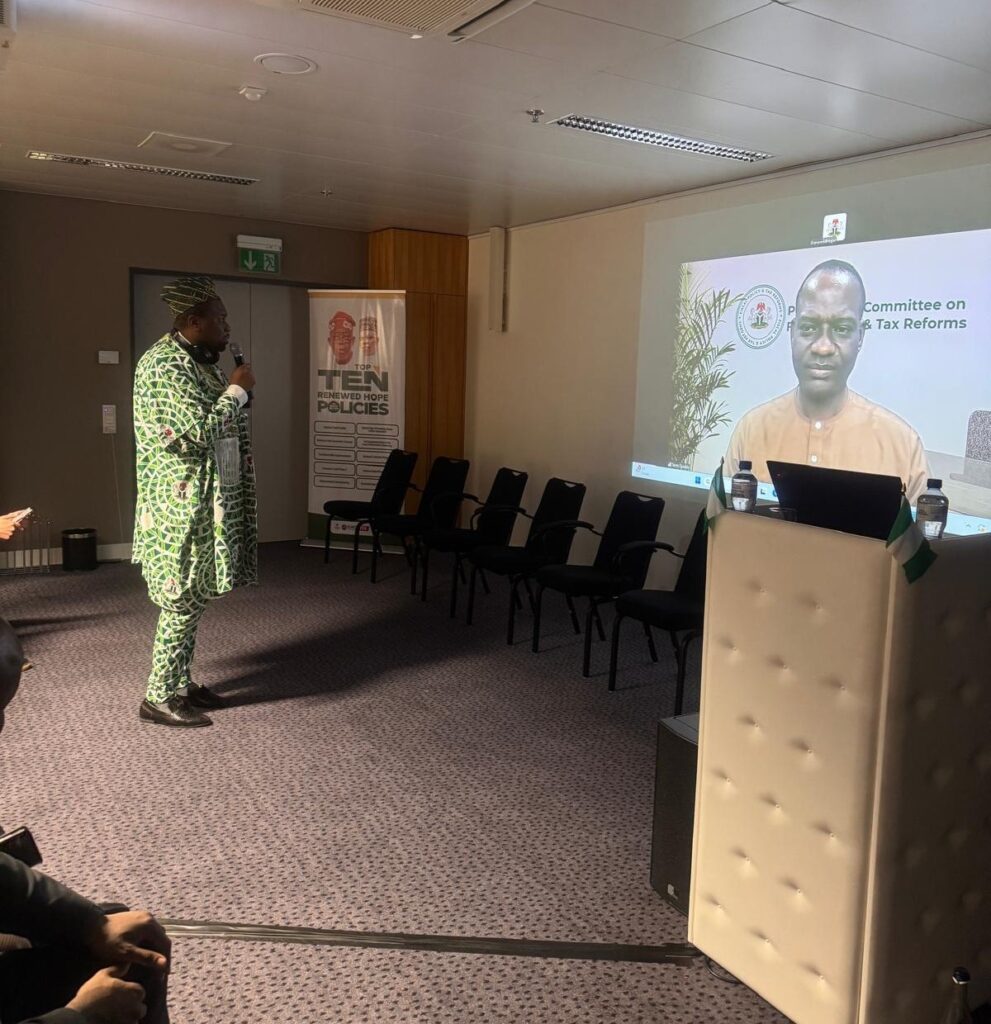
I met cultural icons like Tiwa Savage and Wyclef. Sat with major CEOs. Crossed paths with African leaders shaping WEF priorities. Ran into Chido Munati and others building bridges between regions too often treated as afterthoughts.
Altitude sickness humbled everyone equally. Davos has a way of doing that.
The Human Infrastructure No One Talks About
Early in the week, I lost my bag.
In Davos, where badges determine access and logistics determine survival, that moment could have derailed everything. Instead, it revealed something rarely written about: generosity.
Jennifer de Broglie didn’t hesitate; she offered me a bunk bed—a place to rest, reset, and keep going. Housemates I had just met celebrated my birthday on the very first night I arrived. In a village built for power, it was kindness that grounded me.
Food became its own diplomacy. From working dinners and late-night receptions to the unmistakable comfort of jollof rice at the Nigerian House and the energy of the Nigerian party itself, culture traveled faster than policy ever could.
Access, too, came through the community. A hotel badge courtesy of Alexa Karpova’s Davos FinTech & AI Salon unlocked rooms where AI, finance, and governance collided. Anna of Astra Group extended an invitation to the inDrive & Global Creative Economy Institute Gala.
Conversations continued at Semafor Davos, where capital flows, technology, and emerging markets were discussed with unusual candor.

What Do Google, Dropbox, PayPal, and SoundCloud Have in Common?
Beyond reshaping entire industries, they are all alumni of the World Economic Forum’s Technology Pioneers program.
Now celebrating its 25th anniversary, the initiative has recognized more than 1,200 early-stage companies since 2000. In 2025 alone, the Forum selected 100 startups from 28 countries,, a cohort that reflects a clear shift in innovation: smaller teams, fewer resources, and a heavier reliance on artificial intelligence.
“There has never been a more exciting time to dive headfirst into tech innovation,” said Verena Kuhn, Head of Innovator Communities at the Forum. “But no one gets far alone—you need a community to move your mission forward.”
That sentiment echoed everywhere I went. AI is no longer a side conversation. It is the operating layer.
The Davos Signal: Ambition Without Execution Is Over
Across markets, governments, and climate finance circles, the signal was unmistakable: ambition without execution no longer carries credibility.
During a Global Economic Outlook session featuring leaders including Christine Lagarde, Kristalina Georgieva, Albert Bourla, Mohammed Al-Jadaan, and Ngozi Okonjo-Iweala, the tone was unusually direct.
“From a trade perspective, the work we’ve done shows AI could be very beneficial,” said Okonjo-Iweala, citing reductions in trading costs, improved logistics, and productivity gains.
But she added a warning that landed heavily.
“We forecast that AI would increase trade by 40% by 2040 but only if adoption is relatively equal. If not, we are going to create more inequalities. Emerging markets and poorer parts of the world are the markets of the future.”
Saudi Arabia’s Finance Minister Mohammed Al-Jadaan echoed the concern: “We need to avoid underestimating the risks AI is going to bring, in terms of divergence of wealth.
The benefits must go to as many people and as many small and medium-sized enterprises as possible.”
For Christine Lagarde, President of the European Central Bank, the issue went beyond economics. “We must be careful how we use AI so we don’t jeopardize social fabrics,” she warned, pointing to lessons from social media and its impact on young people.
Meanwhile, recurring provocations from Elon Musk circulating across Davos-adjacent dialogues underscored a shared anxiety: AI is advancing faster than governance, forcing societies to choose between reactive regulation and proactive system design.
And threaded through private conversations were reflections on national renewal from the United States’ approaching 250th anniversary to debates around competitiveness and democratic resilience playing out in and around the U.S. House.
From Stablecoins to Subnational Power
At a Semafor Davos panel, Olugbenga Agboola, CEO of Flutterwave, offered one of the most concrete examples of what innovation looks like on the ground in Africa.
“When money moves across Africa today, for example, from Nigeria to Ghana, that money gets there in four or five days because it goes to New York, then from New York to Accra,” he said. “But with stablecoins, that money moves literally in seconds.”
It was a reminder that the future is already here, it’s just unevenly distributed.
That insight carried into one of the most meaningful moments of the week: sharing ConcordeApp during the launch of the Meridian Collective.
The Meridian Collective was officially introduced as a new international platform focused on fast-tracking the energy transition at the subnational level where implementation actually happens.
By bridging subnational policy priorities with global private capital and technical expertise, the initiative is designed to support practical, scalable, and implementable solutions.
It marks a clear shift from dialogue to deployment, and from intent to impact.
Global Signals From the Main Stage
On the main stage, the world’s contradictions were laid bare.
Børge Brende, President of the World Economic Forum, repeatedly emphasized that global cooperation is no longer optional it is the only path forward in a fragmented world.
His message was clear: trust, institutions, and execution must keep pace with innovation.
Mark Carney framed the moment as one demanding credibility where climate, finance, and technology must converge around delivery, not declarations.
Stability, he suggested, now depends on how well countries align long-term goals with near-term action.
From across the Atlantic, remarks linked to Donald Trump and conversations in and around the U.S. House in Davos reflected a different tension: national renewal, economic competitiveness, and the symbolism of the United States’ 250th anniversary a reminder that democratic institutions are being stress-tested at the same time as technological acceleration.
And looming over many private conversations was Elon Musk’s recurring provocation voiced across Davos-adjacent dialogues that AI is advancing faster than governance frameworks, forcing societies to choose between reactive regulation and proactive system design.
Five Things Davos Made Impossible to Ignore
As the snow melted and the WhatsApp groups finally quieted, these are the lessons I’m bringing home:
Urgency has replaced rhetoric. The conversation has shifted from why change is needed to how fast it can be delivered.
Unlikely alliances matter most. Progress lives at the intersection of public, private, and philanthropic worlds.
Youth voices are non-negotiable. Not token panels have real agenda-setting power.
Business is ready if frameworks are clear. The question is no longer whether to engage, but how.
Hope, grounded in pragmatism. Not a perfection movement.
The Real AI Divide Isn’t Technical. It’s Relational.

If you think the people at the top have a clear picture of what’s coming next, here’s the truth: they don’t.
The honest ones admit we’re all staring into the same fog, reacting quickly to breakthroughs.
The people who struggle will be those who confuse how they work with who they are. When the method changes, they experience it as an existential threat.
The ones who thrive are willing to feel like beginners again. Willing to experiment. Willing to move before the path is clear.
The same is true for institutions.
That question of how we turn high-stakes convening into durable outcomes is what I’m carrying forward into my work at ConcordeApp, where the focus is not on more conversations, but on making the ones we already have accountable and measurable.
From Nigeria to Davos and Back Again
If someone had told me, growing up in Nigeria, that I would one day be speaking and learning alongside some of the world’s most respected leaders in Davos, I would never have believed them.
Life is the greatest gift.
The good really does outweigh the bad. Perseverance matters. And possibility has a way of finding those willing to keep showing up.
I’m heading home with more than business cards and sore knees. I’m heading home with clarity.
Progress isn’t built in one room, one summit, or one week.
It’s built one connection at a time when ambition finally meets execution.
Back to work. With purpose.
Until next year, Davos.
By Chaste Inegbedion