
By Chaste Inegbedion
Africa at Davos: From Visibility to Leverage
Africa will take center stage at the World Economic Forum not as a talking point, but as a negotiating force. Recent conversations around the African Agenda underscore a clear shift: leaders from the continent are no longer focused on being included in global markets; they are focused on shaping them.
Across discussions on infrastructure investment, climate finance, economic reform, and capital mobilization, the tone has changed. The emphasis is now on execution, reform pipelines, and deployable capital. Africa is presenting itself not as a frontier of promise, but as a platform of solutions at a time when the global system is recalibrating.
As Ngozi Okonjo-Iweala, Director-General of the World Trade Organization, returns to Davos in 2026, her presence reinforces this reality. From climate-aligned trade to digital tariffs, the conversation has shifted from advocacy to implementation. As she noted in a recent interview, “Africa is not just negotiating for a seat. It’s negotiating for structure.”
Conferences as Decision Rooms, Not Convenings
From CES in Las Vegas to Davos, the Doha Forum, and UN platforms, global conferences have evolved into decision-making environments. This year alone, we saw Tony Elumelu sign Letters of Intent tied to entrepreneurship and capital deployment, while Aliko Dangote used the Doha Forum to announce initiatives with real implications for industrial growth across Africa.
These moments matter because they reflect a deeper truth: the real outcomes of conferences are no longer panels—they are partnerships, LOIs, and capital alignment. The work now happens in rooms where policy, private capital, and operators meet with the authority to act.
The Rise of Davos Premier Events and Side Architecture
Increasingly, Davos’ most consequential conversations are happening beyond the main Congress Centre. Premier events and curated gatherings now form the informal architecture of deal-making.
The Davos Fintech & AI Salon, hosted by Alexa Kaporva, alongside platforms such as Nigeria House, Africa House, and Italian House, has become a trusted space for targeted engagement. Add to this high-impact gatherings hosted by Devex, Semafor, and the Financial Times, and Davos begins to look less like a conference and more like a distributed negotiation floor.
For those attending, knowing where to be and who to engage can be the difference between being overwhelmed and being effective.
Nigeria House Davos: A National Platform with Teeth
Nigeria House Davos represents a maturation of how nations engage the World Economic Forum. Located along the Davos Promenade, it operates as an invitation-only platform for investment engagement, policy dialogue, and cultural exchange.
Structured around four economic pillars, solid minerals and mining, trade, infrastructure and agriculture, climate and energy, digital trade and the creative economy, it mirrors Nigeria’s reform agenda and growth priorities. As Dr. Jumoke Oduwole, Minister of Industry, Trade and Investment, stated, the objective is clear: convert global interest into real economic outcomes.
Crucially, this is a public-private architecture built for execution. Nigeria House Davos is delivered by Eviola & Co Integrated Services Ltd, in collaboration with Lex-Con Advisory Services Ltd, UFAM Services Nigeria Ltd, Intire Services AG (Switzerland), and key private-sector partners. This consortium does not merely organize an event—it engineers an engagement ecosystem that brings together government, industry leaders, investors, and innovators to advance credible, outcomes-driven dialogue during Davos week.
Backed by a growing sponsor base across finance, infrastructure, energy, and professional services—including the Africa Finance Corporation, Coronation Group, Aruwa Capital, AB InBev Africa, and more—Nigeria House is not about optics. It is a case study in alignment: where policy clarity, credible partnerships, and deployable capital converge.
AI, Sovereignty, and the 85% Opportunity
Artificial intelligence is now one of the defining issues shaping Davos 2026. With Russ Wilcox, AI Council Chair for United World Leaders and policy advisor to the Pentagon and U.S. Senate, chairing a ministerial panel on AI governance featuring President Julius Maada Bio, former President Ameenah Gurib-Fakim, Ambassador Bitange Ndemo, and former President Leonel Fernández, the focus has shifted to sovereignty, infrastructure, and long-term control.
Africa enters this conversation with a unique advantage. Much of its digital and AI infrastructure is still being built. That gap represents what Wilcox calls “the 85% opportunity,” the chance to design systems intentionally, rather than retrofit them later.
This is not about catching up. It is about leapfrogging.
Why Concorde App Exists: From Handshakes to Revenue
In an era of AI, global conferences must move beyond networking. Too many deals die after Davos because intent is not tracked, and follow-through is fragmented.
Concorde App was built to solve that problem. As a revenue matchmaking platform, it uses AI to map relationships, predict high-value partnerships, and convert meetings into measurable outcomes. At CES, Davos, and Doha, the pattern is consistent: when intelligence is embedded into convenings, conversations turn into contracts.
The future of conferences is not attendance—it is execution.
The Open Forum and Africa’s New Operators
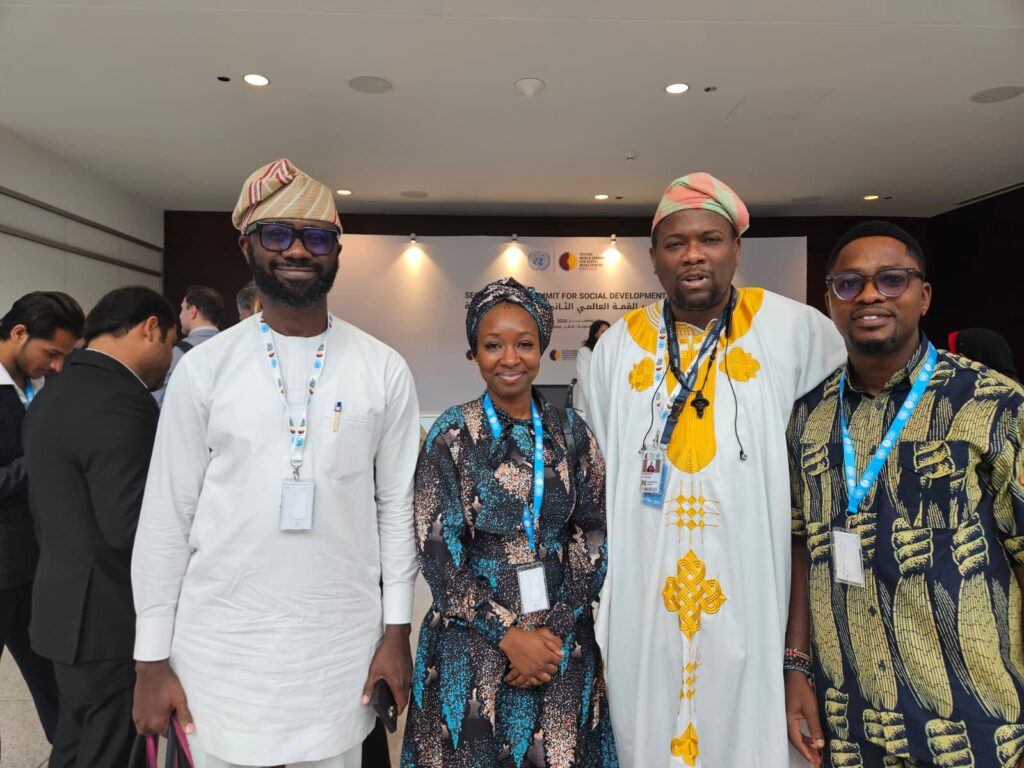
The Open Forum Davos 2026 reflects a generational shift. African young professionals already accredited—including Mojeed Abisaga Damilola, Temilade Aladeokin, Dare Akogun, Wantoe Samuel, Mubarik Osman, Osawe Uwagboe, and myself represent a cohort of builders operating across data, governance, communications, and technology.
We are not attending as observers or “future leaders.” We are operators engaging ministries, investors, and institutions as peers bringing systems, pilots, and partnerships to the table.
Chido Munyati, Head of Africa at the World Economic Forum, in a recent interview with ARISE TV, talking about the theme, said the big issues dominating the discussions will be around trade and integration, and how Africa will ensure that investments are centred around core needs in line with the AFCTA, making reference tot he Dangote refinery among others.
You can watch the full interview here https://youtu.be/PDHQbbVyWas?si=MIOnZwRFrhtloewA.
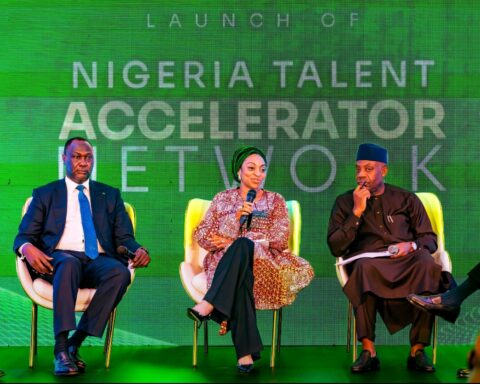
Also, recently, DA News reported that nations are increasingly investing in human capital as the defining lever of competitiveness, when Saadia Zahidi, Managing Director and Member of the Managing Board of the World Economic Forum, announced that Nigeria and Azerbaijan have officially joined the Forum’s New Economy Accelerator network, a global coalition dedicated to building the skills and capabilities required for the future of work.
OPEN LETTER TO PRESIDENT BØRGE BRENDE
From Seats at the Table to Shares in the Future: A Call for Co-Architecture at Davos 2026
Dear President Børge Brende,
We write to you as founders, innovators, and young professionals who have walked the promenades of Davos with a deep sense of possibility and a growing sense of urgency.
First, we thank you. The World Economic Forum’s efforts to bring Africa to “center stage” have opened doors that were once firmly shut. Through the Open Forum, the Global Shapers program, and the visibility granted to startups and young leaders, many of us have found our voices amplified, our networks expanded, and our solutions placed in front of the world’s most influential eyes.
But visibility is not the same as agency. A seat is not the same as a stake.
We are the founders building AI tools that predict famine and manage microgrids. We are the CEOs partnering with ministries to deploy civic tech and with multinationals to localize supply chains. We have moved beyond prototypes to pilots, beyond pitches to partnerships. Yet too often at Davos, we are framed as “the future”—a demographic to be showcased, rather than peers to be engaged as strategic equals.
Therefore, as you design Davos 2026, we respectfully call for a transition from access to architecture. We do not seek more panels about youth; we seek permanent roles within the Forum’s own governance—as advisors on the Global Future Councils, as co-designers of session agendas, and as partners in shaping the annual narrative.
We propose the following concrete actions:
- Create a “Founders & Governance” Track
Within the official programme, curate sessions where young founders sit not as speakers, but as negotiators alongside corporate and government leaders—drafting MOUs, designing investment vehicles, and solving regulatory barriers in real time. - Launch a Davos Innovation Procurement Pact
Mobilize Forum partners—both corporate and governmental—to earmark a percentage of annual procurement or pilot funding for solutions presented by young innovators during Davos week. Move from mentorship to market. - Establish a Young Founders Advisory Seat on the International Business Council
Institutionalize the voice of next-generation builders at the highest level of the Forum’s strategic dialogue. - Co-Design “Sovereignty in Action” Demonstrators
Ahead of Davos 2026, select 5–10 African AI/tech startups to build live, deployable solutions for challenges posed by Forum partners. Showcase not our potential, but our production.
We are not here to only learn. We are here to lead.
We bring to you not just energy, but evidence; not just ideas, but infrastructure. We ask that the World Economic Forum match our commitment with a new covenant of collaboration—one that moves beyond giving us a platform, to sharing the blueprint.
We stand ready to build it with you.
Respectfully,
The undersigned African founders, innovators, and operators.
Davos, Reimagined
Davos still matters. But its credibility will now be measured differently, not by headlines, but by LOIs signed, capital deployed, and systems sustained long after January.
Africa understands this shift. And that is why today, Davos is no longer a stage for Africa. It is a deal room.
By Chaste Inegbedion
Inegbedion is the founder of Concorde App, a revenue-matching platform for high-stakes conferences, and an accredited Open Forum participant at Davos 2026.