
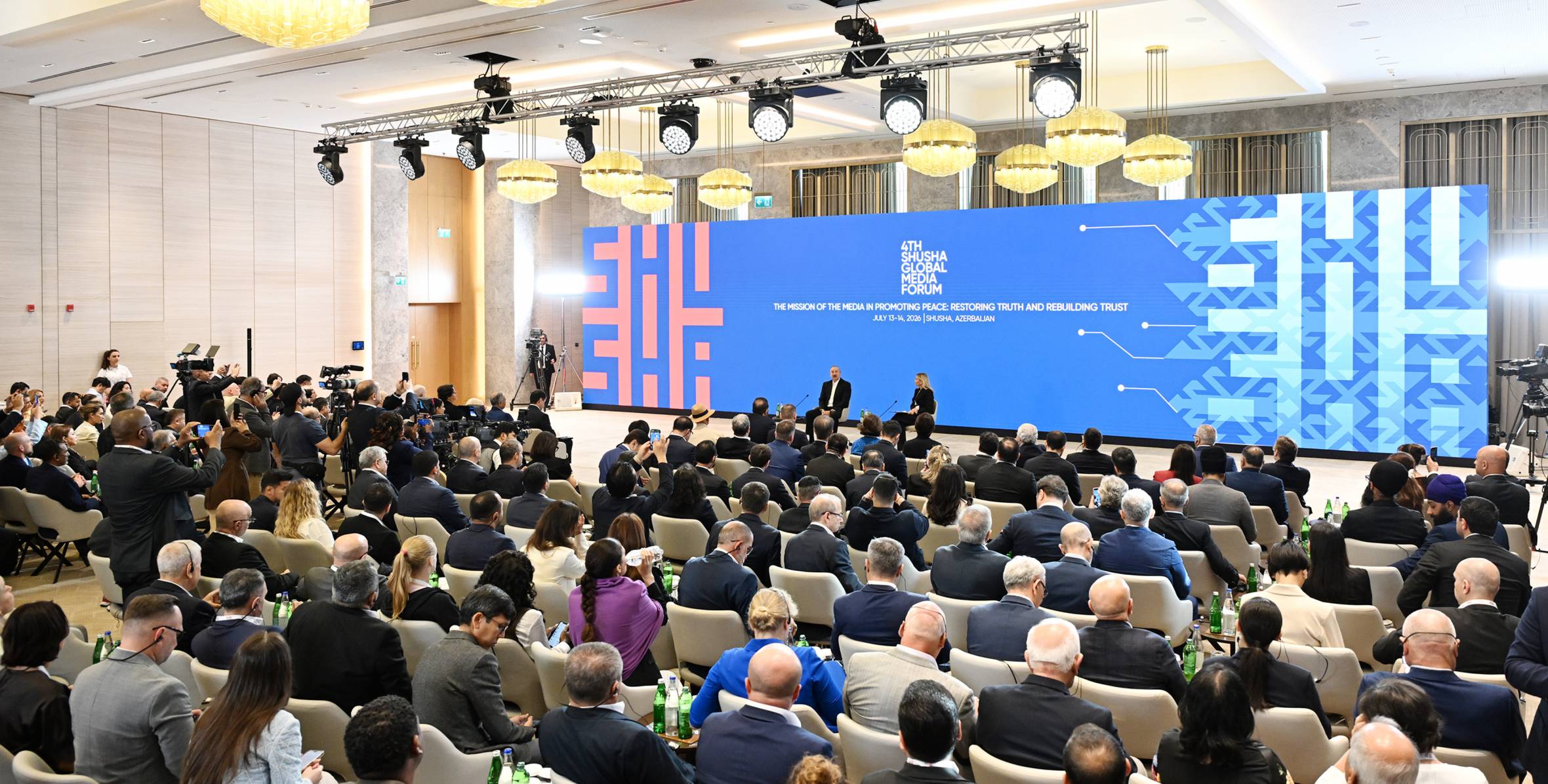
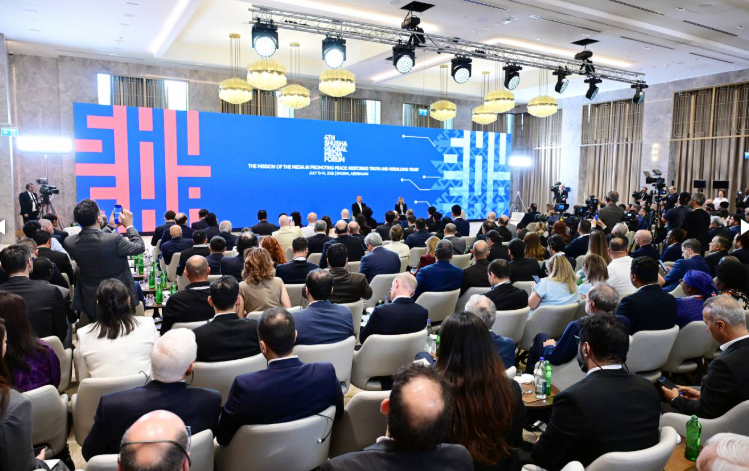
The ancient city of Shusha, regarded as Azerbaijan’s cultural capital, became a meeting point for some of the world’s leading journalists, media executives, policymakers, and technology experts over the weekend as the Fourth Shusha Global Media Forum ended with renewed conversations on media credibility, artificial intelligence, international cooperation, and Africa’s place in global governance.
For two days, nearly 30 international news agencies, more than 60 leading media organisations, and representatives of about 10 international organisations gathered under the theme, “The Mission of the Media in Promoting Peace: Restoring Truth and Rebuilding Trust.”
Beyond discussions on journalism and emerging technologies, one issue resonated strongly for participants from the Global South: the need for a more representative international system, particularly greater African participation in global decision-making.
For African journalists attending the forum, the conversations reflected many of the challenges confronting the continent today, from conflicts in Sudan and the eastern Democratic Republic of Congo to disinformation, digital transformation, and the struggle for stronger representation in global institutions.
Africa’s missing seat at the world’s highest table
One of the defining moments of the forum came during President Ilham Aliyev’s extensive question-and-answer session with participants.
Responding to a question on Africa’s persistent peace and security challenges and the continent’s absence as a permanent member of the United Nations Security Council, Aliyev backed broader institutional reforms that would give Africa a permanent voice.
He argued that the Security Council, established after the Second World War, no longer reflects contemporary geopolitical realities.
“One seat should go to the African Union, with the country holding the current chairmanship having the seat,” Aliyev said.
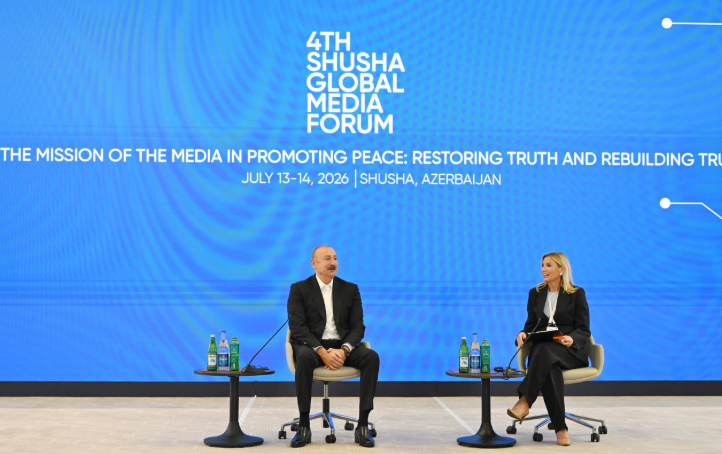
The Azerbaijani leader proposed that the reform should also allocate a rotating permanent seat with veto powers to the Non-Aligned Movement and another to the Organisation of Islamic Cooperation.
According to him, such an arrangement would make the Security Council more inclusive and representative.
“We all want peace, and peace in Africa is as important as peace in any other place,” he said.
Aliyev argued that many of Africa’s prolonged conflicts persist due to external interference.
“I think that one of the reasons there are still hotspots is external interference. If external interference ends, then peace will come very soon, and, of course, a lot will depend on the responsibility of the main actors involved.”
The President also highlighted Azerbaijan’s expanding diplomatic engagement with African countries, recalling that during its chairmanship of the Non-Aligned Movement, the country provided humanitarian assistance to 80 nations during the COVID-19 pandemic, many of them in Africa.
For African delegates, the remarks reflected growing international recognition that the continent’s population, economic potential, and strategic importance deserve greater influence within multilateral institutions.
Earlier, Hikmet Hajiyev, Assistant to the President of Azerbaijan and Head of the Foreign Policy Affairs Department of the Presidential Administration, outlined Azerbaijan’s ongoing media reforms.
According to him, strengthening journalism requires more than regulatory changes.
“Azerbaijan has carried out a comprehensive modernization of its media environment in recent years,” he said.
“These reforms aim to strengthen professional journalism, enhance institutional capacity, promote higher ethical standards, improve media literacy, and help the sector adapt to rapid technological changes.”
Hajiyev explained that media reform must involve sustainable institutions, investment in journalists, resilience against disinformation, and rebuilding public trust.
“Media reform is not just about legislation. It means building sustainable institutions, investing in journalists, increasing resilience to disinformation, and strengthening public trust.”
His remarks echoed broader debates across Africa, where many newsrooms continue to grapple with declining revenues, misinformation, political interference, and the rapid evolution of digital media.
Artificial intelligence is reshaping journalism
Artificial intelligence also featured prominently throughout the forum.
During a panel titled “AI, Visual Storytelling and Next-Generation Experiences,” speakers examined how rapidly advancing technologies are transforming news production and audience engagement.
Technology blogger Farid Pardashunas revealed that approximately 10 per cent of news consumers already rely exclusively on AI-generated news summaries.
While acknowledging the growing influence of AI, he maintained that journalism would continue to require human judgment.
“Professions requiring human thinking will not disappear,” he said.
Technology expert Tariyel Aghazada noted that AI enables publishers to personalise content and simultaneously produce material across multiple platforms.
However, he warned that the same technology also creates opportunities for misinformation and fabricated content.
“AI creates personalised content and allows work on multiple platforms simultaneously, but it also carries risks because it can create fake news,” he said.
For blogger Gela Vasadze, manipulation of public opinion predates artificial intelligence.
“Manipulation of public opinion has always existed, not just with the advent of AI,” he observed.
Another speaker, Diana Knud, argued that journalism’s future lies not in replacing reporters but in combining technological innovation with human creativity.
“The future lies in the combination of technology and human creativity,” she said.
The conversations resonated with many African media practitioners increasingly experimenting with AI-powered newsrooms while confronting growing concerns over deepfakes, election misinformation, and declining public trust.
Beyond artificial intelligence, participants devoted considerable attention to information security and combating disinformation.
Interactive sessions explored how false narratives increasingly shape geopolitical conflicts and public opinion.
Media executives discussed ways news organisations can strengthen verification processes, improve digital literacy, and reinforce ethical journalism amid rapidly evolving online ecosystems.
Speakers agreed that restoring trust in journalism requires collaboration between governments, technology companies, journalists, and civil society while safeguarding editorial independence.
For African countries where misinformation has fuelled electoral violence, communal conflicts and public health crises, participants argued that investment in media literacy has become as important as investment in traditional journalism.
Participants also toured several symbolic sites across Azerbaijan.
They visited the Khojaly Genocide Memorial, Victory Park in Khankandi, and reconstruction projects in Shusha, where authorities showcased ongoing efforts to rebuild infrastructure and restore communities affected by decades of conflict.
The visits formed part of broader discussions on the role of journalism in documenting conflict, supporting reconciliation, and promoting peace-building.
Delegates observed that media organisations bear significant responsibility not only in reporting wars but also in helping societies heal after conflict through balanced, factual, and people-centred reporting.
A growing platform for Global South dialogue
Since its inception, the Shusha Global Media Forum has evolved into an important international platform connecting journalists, policymakers, and communication experts from Europe, Asia, Africa, and Latin America.
This year’s edition demonstrated that discussions about media can no longer be separated from wider questions of diplomacy, governance, technology, and international development.
For Africa, the forum underscored several urgent priorities: strengthening independent journalism, preparing newsrooms for the AI era, combating disinformation, improving media sustainability, and securing a stronger voice within global governance structures.
As delegates departed Shusha, many agreed that rebuilding trust in journalism will require more than technological innovation or regulatory reforms. It will demand credible institutions, ethical reporting, international cooperation, and inclusive global decision-making that reflects the realities of an increasingly interconnected world.
For African journalists and policymakers, those conversations may prove just as significant as the forum’s central message that journalism remains one of the most powerful tools for promoting peace, challenging misinformation, and ensuring that every region, including Africa, has a voice in shaping the global narrative.
By Dare Akogun