
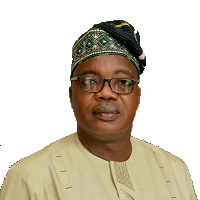
In this interview with DARE AKOGUN, the Immediate past President of the Fisheries Society of Nigeria and ECOWAS Coordinator for Non-State Actors in Fisheries and Aquaculture, Dr. Adegoke Agbabiaka, speaks on why Nigeria’s fisheries sector is underperforming despite its enormous natural resources.
The latest FAO report shows that global fisheries and aquaculture production has reached a record high of 235 million tonnes, yet Africa continues to struggle with production and access. From your perspective, where does Nigeria stand?
The first thing I always tell people is that before we celebrate figures, we must ask ourselves whether those figures reflect the reality on the ground. Nigeria has enormous potential. We have one of the largest domestic markets for fish in Africa. We have rivers, lakes, reservoirs, coastal waters, and millions of people whose livelihoods depend on fisheries and aquaculture.
Unfortunately, our performance is nowhere near our potential.
People continue to say fish production is increasing in Nigeria, but I always ask one simple question: Where are the statistics coming from? I am not convinced that we have a reliable database capable of measuring actual production accurately.
For more than three decades, I have worked in fisheries development across Nigeria and several ECOWAS countries. I have also participated in international projects and global fisheries programmes. From what I have seen, Nigeria is not growing at the pace people imagine.
Many farmers are entering aquaculture because they believe it is profitable, but many are also leaving because production costs have become unbearable vis-à-vis return on investment.
So, when we compare Nigeria with countries that have invested consistently in fisheries development, we are still playing catch-up.
You have repeatedly said that the lack of standardization is one of the biggest problems facing Nigeria’s fisheries industry. What exactly do you mean?
Everything starts with standardization.
In every successful livestock or aquaculture industry anywhere in the world, there is a system that guarantees quality. You know where your breeding stock comes from (traceability). You know its genetic characteristics. You know what performance to expect.
That is what Nigeria currently lacks in Aquaculture. The first foundation of aquaculture is genetics. If you cannot control the quality of the fish seed, you cannot control yield or productivity.
Today, anybody can produce fingerlings without proper certification. Farmers buy such fish seed without knowing the genetic quality. The result is poor growth, inconsistent yields, and reduced profitability and losses in most cases.
When you travel to countries like Egypt or Ghana, the situation is different.
If you want to buy tilapia fingerlings there, you will be told the exact genetic strain. There is traceability. There is confidence in the system.
Nigeria has not reached that level. Without standardization, farmers continue to gamble with production.
Beyond fish seed quality, where else is Nigeria losing ground?
Research, which is the engine of agricultural development.
Every developed aquaculture industry invests heavily in research because research improves genetics, feed efficiency, disease control, and productivity.
I ask a simple question whenever I attend conferences. What breakthrough has any Nigerian fisheries research institute delivered within the last twenty years?
Nigeria has two major Research institutes in Fisheries, several Universities offering Fisheries as courses, scholarly Professors, but where are the improved fish breeds and affordable feed?
Where are the certified breeding programmes? Where are the technologies farmers can easily adopt?
Agriculture advances through innovation, look at cassava.
Several decades ago, cassava took almost two years before harvest.
Today, improved varieties mature within six months because research has changed the genetics.
The same thing happened with African catfish.
When we were students in the 1980s, African catfish required between nine months and one year before reaching the market size of one kilogram.
Today, with improved genetics and proper management, farmers can harvest one-kilogram fish in about four months.
That is what scientific improvement does.
Unfortunately, Nigeria has not institutionalised continuous genetic improvement the way leading aquaculture countries have done.
The cost of fish farming has also increased significantly. What is driving this?
Production inputs. Everything is becoming very expensive.
The fingerling feed that farmers previously bought for about N25,000 per bag now costs between N60,000 and N80,000, depending on the brand.
Feed for mature fish has also increased dramatically.
The biggest problem is that many of these inputs are imported.
The breeding materials, many feed ingredients are imported, and the fish meal comes from countries like the USA, Denmark, Senegal, and Mauritania in Africa.
Exchange rate fluctuations, freight charges, import duties, and transportation costs eventually increase production costs for farmers.
If Nigeria develops local capacity to produce these inputs, farmers will spend less, and consumers will also benefit.
That is why investment in local manufacturing and research is extremely important.
The FAO report suggests production is increasing globally. Why do you disagree with the optimistic outlook for Nigeria?
Because production cannot be discussed in isolation, you must examine the factors that determine production.
First is the quality of your fish seed and feed, secondly is security, thirdly is research, and fourthly is policy.
If these variables are weak, sustained production growth becomes difficult. Many of our farmers cannot even access their farms because of insecurity.
Some areas that traditionally supplied maize and soybeans for fish feed have become unsafe.
Farmers abandon their farms because of banditry and insurgency.
How then do you expect feed prices to remain stable?
Even people involved in captured fisheries face security challenges.
If fishermen cannot safely access rivers and inland waters, production declines automatically.
These realities must be reflected when discussing national production figures.
You made an interesting distinction between food availability and food security. Can you explain?
Many people misunderstand food security; food availability is different from food security.
A country may have food available in the market, but if ordinary citizens cannot afford it, then food security has not been achieved.
Food security includes affordability; take fish, for example, fresh fish has become a luxury for many Nigerian households.
Even frozen fish that used to be regarded as food for low-income earners has become expensive.
Many Nigerians simply cannot buy fish regularly anymore, so when government officials say food is available, I ask whether the average citizen can afford it. If the answer is no, then food security has not been achieved.
You also criticised the movement of fisheries from the Ministry of Agriculture to the Ministry of Marine and Blue Economy. Why?
My concern is not about the name of the ministry; my concern is about priorities.
Within the blue economy framework, fisheries appear to receive less attention than other sectors; we are the last born!
The emphasis is often on Mining, shipping/ports, marine transport, offshore resources, and tourism investments.
Food production should remain central. When budget allocations are examined over the last few years, fisheries have not received the level of investment required to transform the sector.
If a sector is not adequately recognised, it cannot receive adequate funding; without funding, research suffers, Fisheries infrastructure suffers, extension services suffer, and farmers suffer.
That is why I continue to say that fisheries deserve greater attention within national development planning.
What role should universities and research institutions play in transforming aquaculture?
Their responsibility is enormous. Universities should become centres for genetic improvement and alternative Aquaculture candidates.
Research institutes should develop certified broodstock, they should support farmers with innovations, and they should work closely to develop hatcheries, especially for shellfish and other marine species.
Instead of importing breeding materials continuously, Nigeria should develop its own superior strains.
Countries that dominate aquaculture today invested heavily in research, which is not accidental; research determines productivity.
How important is genetics to fish production?
It is everything. Good genetics determines growth, it determines survival, feed conversion, and profitability.
If the parent stock is poor, no amount of feeding can completely compensate; that is why breeding programmes are fundamental. The first investment any serious aquaculture nation makes is in quality seed production and feedstuffs.
Do you believe government policies are helping the sector?
Policies alone are not enough; implementation is what matters. Many beautiful policies exist on paper; the real challenge is execution/ implementation.
We need stronger collaboration between the government, universities, research institutes, and private investors.
We need investment in hatcheries, affordable feed production, extension services, and stronger quality control.
Without implementation, policy documents remain ordinary reports.
Finally, what must Nigeria do if it truly wants to become self-sufficient in fish production?
The first step is to recognize fisheries as a strategic food security sector. Secondly, we must standardise fish seed production and develop new Aquaculture candidates, especially herbivores.
Thirdly, the government should invest aggressively in research and genetics. Fourthly, we should reduce dependence on imported production inputs by encouraging local manufacturing.
Fifthly, insecurity affecting farming communities must be addressed because aquaculture depends on agricultural raw materials for feed production.
Lastly, the government must ensure that fish remains affordable.
Food security is not achieved simply because food exists somewhere.
It is achieved when ordinary Nigerians can consistently buy nutritious food without financial hardship.
Nigeria has the natural resources, we have the manpower, and the market.
What remains is the political will to build a modern fisheries industry based on science, standardization, research, and long-term investment.
If those foundations are laid, Nigeria can become one of Africa’s leading aquaculture producers instead of continually depending on imports to meet domestic demand.