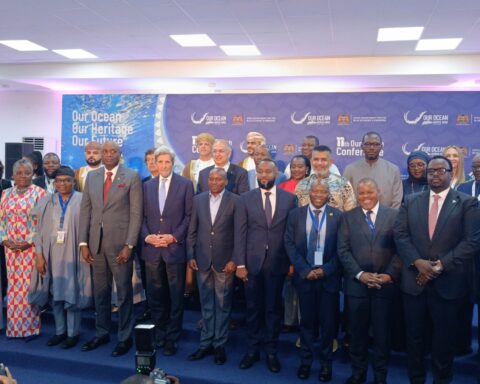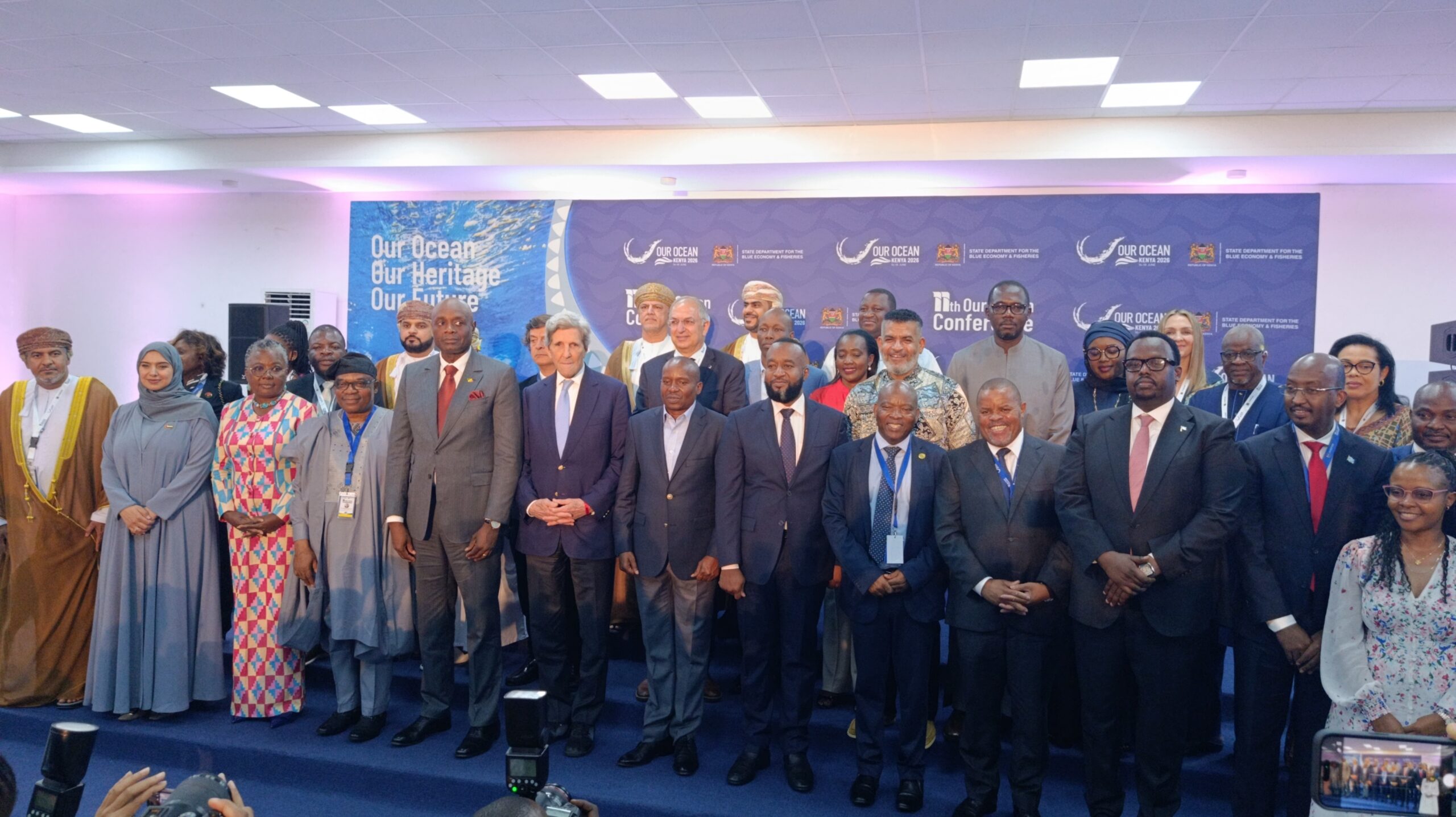

Nigeria was absent on Thursday as 16 countries from Africa, Europe, Asia, the Caribbean and the Pacific adopted the landmark Mombasa Declaration, a new international commitment aimed at strengthening fisheries transparency and intensifying the global fight against illegal, unreported and unregulated fishing.
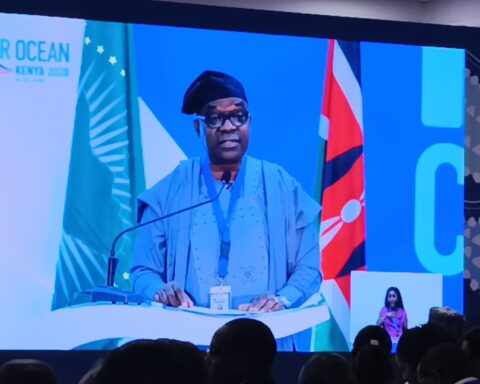
The declaration was adopted at the closing session of the 11th Our Ocean Conference in Mombasa, Kenya, with signatories committing to improve access to fisheries information, strengthen vessel monitoring and promote greater accountability in the management of marine resources.
Despite positioning itself as a major maritime nation and promoting its Blue Economy agenda, Nigeria did not feature among the inaugural signatories to the declaration.
The countries that endorsed the pact include Belgium, Cameroon, Chile, the Republic of the Congo, the Dominican Republic, France (on behalf of its overseas territories), Gabon, The Gambia, Ghana, Guinea, Liberia, Panama, Papua New Guinea, Peru, Somalia and South Korea.
The declaration is expected to serve as a global framework encouraging coastal and flag states to improve transparency in vessel ownership, fishing licences and fishing activities through the implementation of the principles contained in the Global Charter for Fisheries Transparency.
Organisers said the initiative would remain open to additional countries ahead of the next Our Ocean Conference scheduled for 2027.
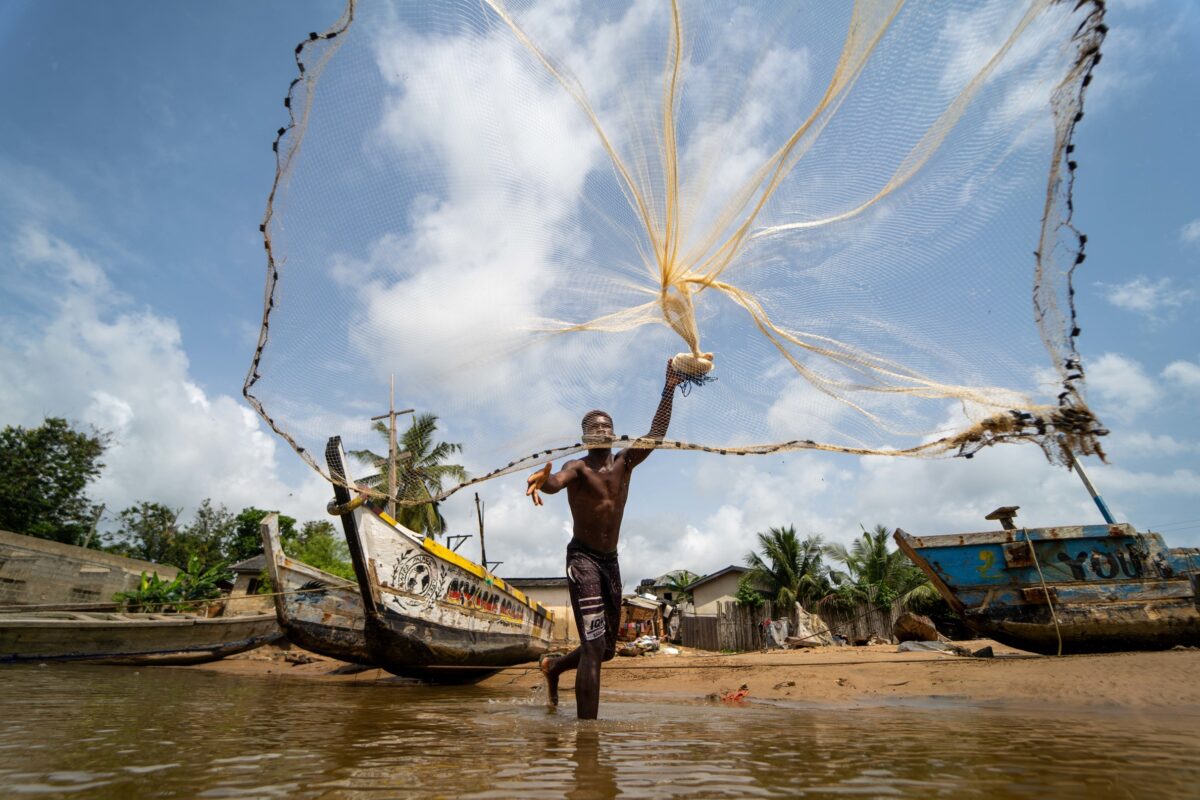
Illegal, unreported and unregulated fishing remains one of the biggest threats to marine biodiversity and coastal economies, with experts estimating that the practice costs the global economy as much as $50bn annually.
The declaration seeks to address the challenge through practical reforms, including modernising vessel registries, publishing fishing authorisations, improving access to fisheries data and strengthening cooperation among governments to enhance enforcement.
Speaking after Ghana signed the declaration, the country’s Minister of Fisheries and Aquaculture, Emelia Arthur, described fisheries as central to Ghana’s economy and national security.
“In my country, our very existence depends on fish. Sixty per cent of our animal protein comes from fish, and ten per cent of our population depends on the fisheries value chain for livelihood,” she said.
Arthur noted that Ghana joined the declaration because it provides governments with an international platform to collectively improve transparency and accountability within the fisheries sector.
Also speaking, France’s Minister Delegate for the Sea and Fisheries, Catherine Chabaud, said greater transparency had become indispensable in tackling illegal fishing.
“We will not be able to effectively combat illegal, unreported and unregulated fishing without greater transparency and international cooperation,” she said.
“The declaration provides an important opportunity for governments to demonstrate their political commitment to improving fisheries governance.”
The Mombasa Declaration was developed with support from the Coalition for Fisheries Transparency, a global alliance of more than 60 civil society organisations working to improve accountability in fisheries governance.
Director of the coalition, Maisie Pigeon, said growing recognition around the world showed that sustainable blue economies depended on transparent fisheries management.
“The countries signing the Mombasa Declaration today represent a diverse range of economies and geographies, demonstrating that momentum for transparency at sea is truly global,” she said.
Vice-President of Oceana, Beth Lowell, said opaque fishing operations had for decades enabled illegal fishing, depleted fish stocks and weakened coastal communities.
“Transparency is essential to protecting our oceans and the livelihoods of those that depend on them. The Mombasa Declaration signals that governments around the world are ready to act against illegal fishing,” she stated.
Similarly, Chief Executive Officer of Global Fishing Watch, Tony Long, described the declaration as a turning point in efforts to expose illegal fishing operations.
“For too long, illegal fishing has thrived in the dark,” Long said.
“When governments commit to transparency by sharing vessel identities, ownership information and tracking data, they create an interconnected system where bad actors have nowhere left to hide.”
Chief Executive Officer of the Environmental Justice Foundation, Steve Trent, said transparency would help expose abuses and support coastal communities that depend on fisheries for survival.
The declaration also received backing from Bloomberg Philanthropies, whose Environment Programme lead, Antha Williams, said better access to fisheries data would enable governments to make more informed decisions on marine resource management.
The agreement comes amid growing international concern over the impact of illegal fishing on food security, biodiversity and livelihoods, particularly in developing countries where monitoring and enforcement capacity remain weak.
Experts estimate that illegal fishing not only depletes fish stocks and undermines legitimate fishing businesses but is also frequently linked to forced labour, human rights abuses and weak regulatory oversight.
The declaration is expected to strengthen international cooperation on fisheries governance by encouraging governments to publish vessel ownership records, fishing licences and monitoring data while improving cross-border information sharing to combat illegal activities at sea.
For Nigeria, whose marine and inland fisheries support millions of livelihoods and contribute significantly to food security, observers say the country’s absence from the first group of signatories is likely to raise questions about its position on emerging global transparency initiatives within the fisheries sector, especially as the Federal Government continues to promote the Blue Economy as a key pillar of economic diversification.
By Dare Akogun Mombasa, Kenya
This story was produced as part of the 2026 Our Ocean Conference Fellowship organized by Internews’ Earth Journalism Network