
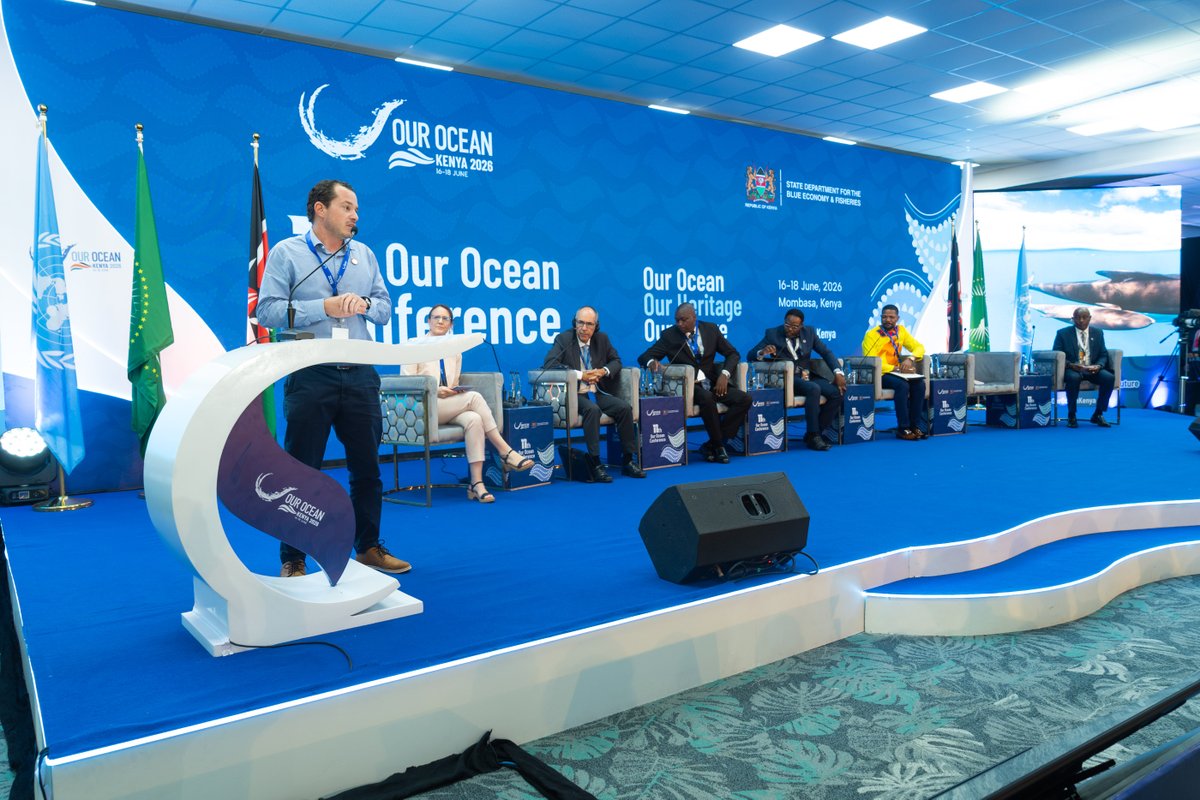
Global Fishing Watch has unveiled a series of new international partnerships and transparency initiatives aimed at strengthening fisheries governance, vessel tracking and the fight against illegal fishing, as countries participating in the 11th Our Ocean Conference called for greater accountability in the management of marine resources.
The announcements were made on Thursday at the close of the global ocean summit in Mombasa, Kenya, where participating governments adopted the Mombasa Declaration, a new international framework designed to improve transparency in global fisheries through better access to information on vessel ownership, licensing and fishing activities.
The declaration, endorsed by 16 countries across Africa, Asia, Europe, Latin America, the Caribbean and the Pacific, is expected to strengthen international cooperation against illegal, unreported and unregulated fishing while promoting sustainable management of ocean resources.
The development comes as Nigeria seeks to expand its blue economy and tackle illegal fishing, marine pollution and declining fish stocks that continue to threaten food security and the livelihoods of millions of artisanal fishers.
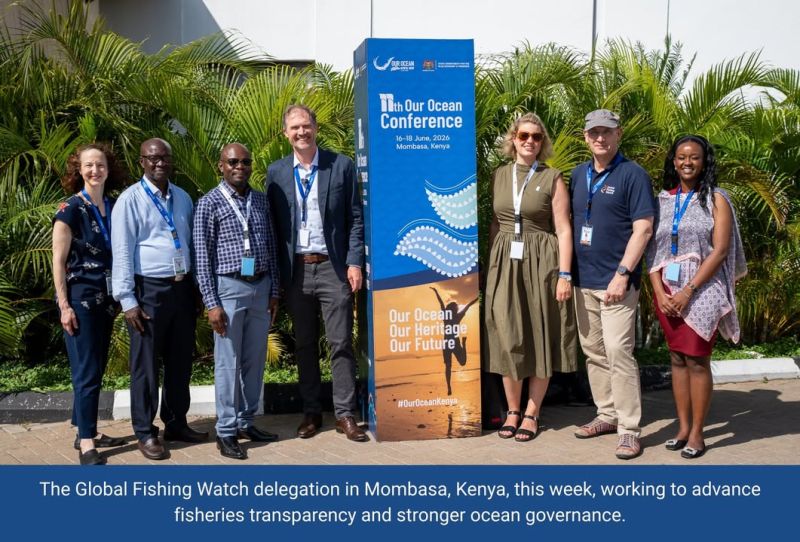
Speaking during an official conference side event titled “From Africa to the World: Scaling Fisheries Transparency Reforms,“ Chief Executive Officer of Global Fishing Watch, Tony Long, said sustainable fisheries could only be achieved through greater transparency in activities taking place at sea.
“The message coming out of Mombasa is clear. The future of sustainable fisheries depends on making activity at sea visible and verifiable, and holding those who fish fully accountable,” Long said.
He added that governments across the world were increasingly recognising that effective fisheries management begins with knowing who is fishing, where vessels are operating and whether they comply with existing regulations.
According to him, new commitments announced during the conference demonstrate growing international support for transparency as a critical tool for combating illegal fishing and improving ocean governance.
Among the major announcements, the Government of Panama committed to publicly sharing vessel monitoring system data from nearly 200 domestic fishing vessels through the Global Fishing Watch platform.
The initiative significantly expands public access to information on fishing activities within Panamanian waters and builds on an earlier agreement that made tracking information from the country’s international fishing fleet publicly available.
Head of Latin America at Global Fishing Watch, Mónica Espinoza Miralles, described the move as a major milestone in Panama’s transformation into one of the leading advocates of transparency in fisheries management.
“We are thrilled to deepen our collaboration with the Panamanian Authority of Aquatic Resources to strengthen transparency, support evidence-based fisheries management and advance responsible ocean governance,” she said.
Miralles noted that opening access to vessel monitoring data and beneficial ownership information would improve scientific research, fisheries traceability and responsible ocean governance.
Similarly, Madagascar’s Ministry of Fisheries and Blue Economy announced plans to deepen its partnership with Global Fishing Watch after nearly two years of collaboration.
The expanded partnership will focus on vessel tracking, joint scientific analysis, capacity building and enhanced monitoring, control and surveillance of the country’s fisheries.
In another major development, Global Fishing Watch launched a new partnership with the Minderoo Foundation to develop what is expected to become the world’s first comprehensive global map capturing both industrial fishing fleets and millions of small-scale fishing vessels.
The project, scheduled to commence on July 1, 2026, will combine satellite imagery, artificial intelligence and vessel tracking technology to improve monitoring of artisanal fisheries that are largely absent from existing global databases.
Experts say the initiative could provide governments with better information to combat overfishing, improve fisheries management and protect coastal communities that depend on marine resources.
Presenting findings at the conference’s Scientific and Research Symposium, Chief Scientist at Global Fishing Watch, David Kroodsma, said advances in satellite technology and artificial intelligence were transforming fisheries monitoring.
According to him, researchers identified more than 30,000 small-scale fishing vessels operating along Africa’s coastline and mapped areas where artisanal and industrial fishing activities overlap.
“For the first time, satellite imagery and artificial intelligence are giving us an unprecedented view of small-scale fishing activity across African waters, revealing the people, places and pressures that have long remained hidden,” Kroodsma said.
“This is about more than technology. It is about empowering governments and communities with the information they need to make better decisions for the future of the ocean.”
The conference also highlighted Africa’s growing leadership in promoting fisheries transparency, with countries including Ghana and Cameroon unveiling reforms aimed at integrating accountability into national fisheries policies.
Delegates noted that stronger transparency measures would improve enforcement against illegal fishing, strengthen regional cooperation and protect the livelihoods of coastal communities.
For Nigeria, observers say the outcomes of the conference underscore the need to accelerate investments in vessel monitoring systems, fisheries data management and digital surveillance as part of ongoing efforts to develop the country’s blue economy.
Illegal, unreported and unregulated fishing remains one of the biggest threats to Nigeria’s marine resources, costing the country billions of naira annually through depleted fish stocks, reduced government revenue and increased pressure on local fishing communities.
Long said momentum generated in Mombasa must now be translated into concrete action.
“What we’ve seen in Mombasa is clear evidence that ocean transparency is becoming a global expectation.
“From new government commitments and partnerships to advances in technology and data, momentum is building around a simple principle: we cannot sustainably manage what we cannot see.
“The challenge now is to turn that momentum into lasting action and make transparency the standard for every fishery, every vessel and every ocean around the world,” he said.
By Dare Akogun, Mombasa
This story was produced as part of the 2026 Our Ocean Conference Fellowship organized by Internews’ Earth Journalism Network