
A new global report has warned that Nigeria and other coastal nations risk missing the global target of protecting 30 per cent of the world’s oceans by 2030 unless they invest significantly in local capacity, governance, financing and technology.
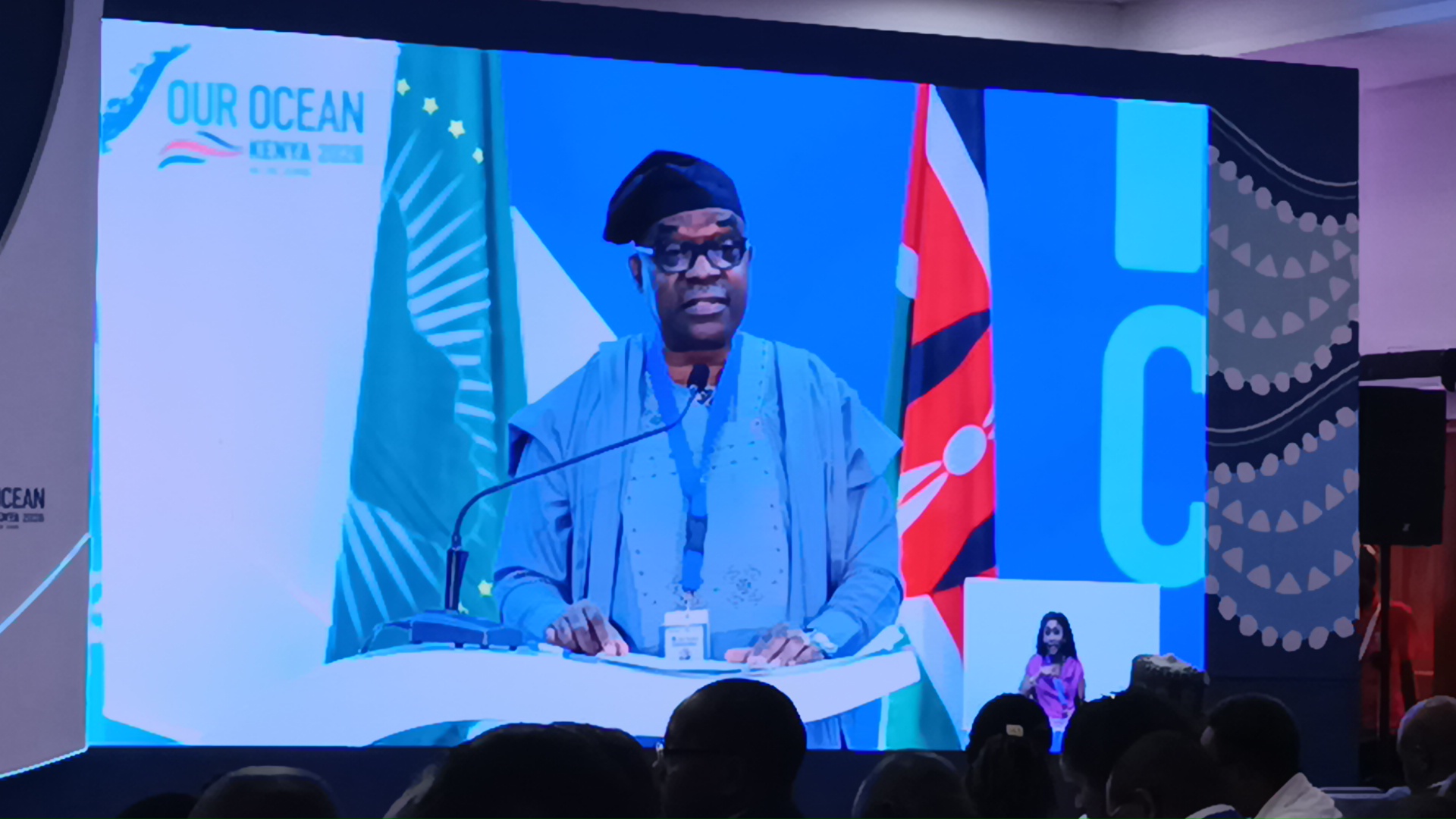
The report, titled Closing the Implementation Gap: Capacity Development for Effective Marine 30×30, was released on Tuesday by the Smithsonian Tropical Research Institute, was unveiled at side event at the ongoing 11th Our Ocean Conference in Mombasa, Kenya.
It argues that while countries continue to announce new Marine Protected Areas, many lack the workforce, institutional structures, long-term funding and community partnerships required to translate conservation commitments into lasting environmental outcomes.
The report comes as governments worldwide work towards achieving the Kunming-Montreal Global Biodiversity Framework, under which countries agreed in 2022 to protect at least 30 per cent of the world’s land and oceans by 2030.
According to the report, marine protected areas currently cover 9.8 per cent of the global ocean, an increase from 8.4 per cent recorded in 2024.
However, researchers warned that at least half of the existing protected marine areas remain either poorly implemented or operationally ineffective.
The report noted that an additional 20 per cent of the world’s oceans must still be protected to meet the 2030 target, stressing that simply declaring protected areas would not be enough without effective management.
“It is insufficient for marine 30×30 to just be a designation challenge,” Associate Director of the Arsht Resilience Initiative at the Smithsonian Tropical Research Institute, Dr Vanessa Constant, said.
“It has to become an implementation challenge, backed by complementary investment in people, institutions and long-term stewardship so that protected areas become more than lines on a map.”
For Nigeria, which has made the blue economy a key component of its economic diversification strategy, the report underscores the importance of strengthening marine governance, investing in coastal communities and improving enforcement across its extensive coastline and territorial waters.
The study identified regional contextualisation and effective coordination as the two most critical ingredients for successful marine conservation.
It stressed that conservation efforts cannot rely on a one-size-fits-all approach, noting that every region requires governance systems tailored to local realities and supported by long-term partnerships among governments, coastal communities, scientists and the private sector.
Beyond these, the report highlighted six priority areas requiring urgent investment, including governance and policy continuity, sustainable financing, inclusive stakeholder engagement, access to data and technology, socio-ecological integration and improved public communication.
Researchers also expressed concern over the widening gap between advances in marine technology and the realities facing many developing countries.
While satellite surveillance, artificial intelligence and digital monitoring tools are rapidly expanding, many coastal communities still lack the technical expertise, digital infrastructure and access to reliable data needed to benefit from these innovations.
The report further called for a shift in public messaging around marine conservation, urging governments to present marine protected areas not as restrictions on livelihoods but as investments that strengthen fisheries, food security, tourism and long-term economic prosperity.
Managing Director of Regional Programs at Rare, Rocky Sanchez Tirona, described the challenge as one requiring comprehensive institutional reform rather than isolated conservation projects.
“This is ultimately a systems challenge. Effectively protecting 30 per cent of the ocean will depend not only on political will, but on sustained investment in the people, institutions, relationships, and regional and local leadership needed to make conservation endure,” Tirona said.
The report was developed through consultations involving governments, scientists, Indigenous Peoples, local communities, non-governmental organisations and financial institutions across Southeast Asia, Latin America and the Caribbean, as well as the Western Indian Ocean region.
Its release coincided with the 11th Our Ocean Conference the first edition to be hosted on African soil where governments, investors, researchers and civil society groups are meeting to accelerate global action on ocean conservation.
For Nigeria, whose economy depends heavily on fisheries, maritime trade and coastal ecosystems, experts say the findings reinforce the need to move beyond policy declarations by investing in institutions, local communities and sustainable marine management.
They argue that as climate change, illegal fishing and marine pollution continue to threaten ocean resources, the country’s success in developing a resilient blue economy will depend not only on expanding protected marine areas but also on ensuring they are effectively managed, adequately funded and supported by the people who depend on them.
By Dare Akogun, Mombasa, Kenya
This story was produced as part of the 2026 Our Ocean Conference Fellowship organized by Internews’ Earth Journalism Network