
Davos is exhausting before it is enlightening.
The airports, the time zones, the choreography of badges, side events, and informal negotiations over access. By the time you arrive, you already feel behind. And yet people keep returning, because something important still happens here when you look beyond the main stage.
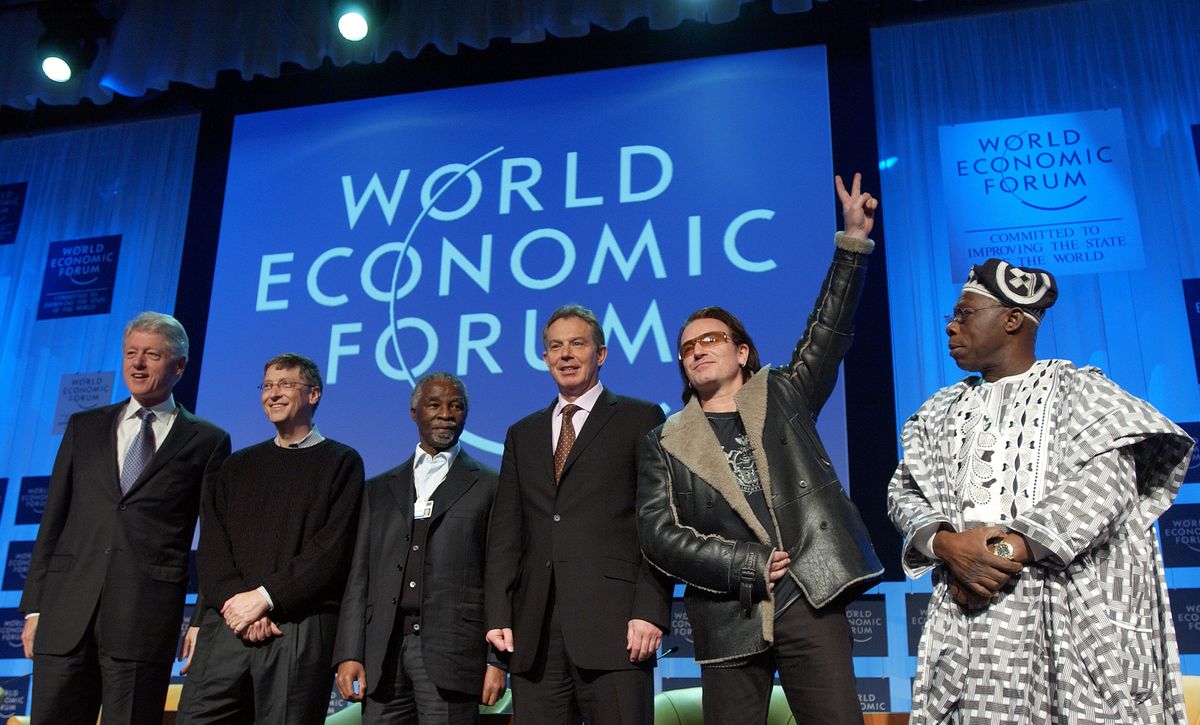
This year feels different. For the first time since its founding in 1971, the World Economic Forum is convening without Klaus Schwab at its center. That absence is not merely symbolic. It has forced Davos to confront a harder question about its future.
Our Big Read on Davos captures an institution wrestling not just with its founder’s departure, but with its purpose. That challenge is real, but the obituary for Davos is premature.
What most people do not tell you is that the real learning rarely happens inside conference halls or curated dinners. It happens in motion. When you walk instead of being driven. When you take public transport. When conversations unfold without an agenda.
Movement strips things back. It reminds you what people actually care about. Security. Opportunity. Health. Climate. Belonging.
Davos remains a place of contradiction. Badge culture governs access along the three-kilometer promenade. Official WEF badges open doors. Partner badges open some. And then there are the badgeless, navigating private houses, salons, and WhatsApp groups where last-minute hotel rooms trade like breaking news for extraordinary sums. It is a parallel economy built on proximity and possibility.
And yet, ideas still collide here.
The Superstar Six to Expect at Davos
Some individuals stand out at Davos not because they dominate the room, but because their work quietly shapes the systems everyone else depends on. This year, six such figures capture where the global economy is actually headed.
Andrew Hill, Senior Business Writer and Consulting Editor at the Financial Times, brings intellectual discipline to a moment overloaded with narrative. His work on governance, leadership, and long-term value grounds conversations that might otherwise drift into abstraction. At Davos, his presence matters because he asks the questions that endure after the headlines fade.
Rene Haas, CEO of Arm, operates at the core of the global compute stack. With more than three decades of experience across engineering, strategy, and executive leadership, he sits at the intersection of technology, geopolitics, and scale. His perspective reflects a simple truth. The future economy will be defined by infrastructure most people never see, but everyone relies on.
Prof. Dr. David Matusiewicz brings clarity and humanity to digital health at a time when trust is fragile. As a dean, institute director, bestselling author, and systems thinker, he reframes health not as a sector, but as foundational infrastructure for human capability. His work reminds Davos that progress is meaningless if it does not improve lived outcomes.
Venancio Alberto Mendez Levy, Global Shaper and founder of SunLean AI, represents a new generation of climate builders focused on execution. By using drones, computer vision, and digital twins, SunLean AI strengthens how renewable energy projects are built, verified, and financed. His work bridges climate ambition with capital efficiency, reducing risk while accelerating deployment.
Vinicius Laguardia de Castro Oliveira works at scale on the climate agenda, advancing the just transition, bioeconomy, and renewable energy across borders. He believes delivery, not declaration, will determine success. At the World Economic Forum’s Annual Meeting, he contributes insight on how cross-sector partnerships and countries like Brazil can lead the green transition by aligning ambition with implementation.
Alexander Zanders, founder and CEO of UfarmX, is transforming agriculture across Africa by focusing on smallholder farmers. His platform helps farmers triple yields, double revenues, and access premium markets across Nigeria, Senegal, and Liberia. This is not abstract impact. It is deeply personal, deeply local, and globally consequential. Africa holds most of the world’s remaining arable land, and his work demonstrates what unlocking that potential truly looks like.
Why the FT Live Briefing Matters
One of the most anticipated conversations this week is an upcoming Financial Times Live briefing moderated by Andrew Hill, featuring leaders from the Stellar Development Foundation, Franklin Templeton, and DTCC.
The focus is clear. How open infrastructure delivers measurable business value. Near-instant settlement. Liquidity unlocked. Tokenized rails with real metrics. Not ideology. Execution.
This is where infrastructure stops being theoretical and starts reshaping enterprise behavior.
Another issue that deserves far more attention as we look toward Davos 2026 is Global Mobile Coverage. Integrating terrestrial and non-terrestrial networks to bring connectivity and compute everywhere on earth is foundational to economic inclusion, climate resilience, and digital sovereignty.
Meanwhile, Gen Z is no longer being consulted. They are contributing. Through the Global Shapers Community, lived experience is shaping institutional agendas. In 2025, 173 Global Shapers participated globally, with 48 shaping agendas as speakers. Their work reached more than 2.2 million people and supported 134,000 individuals through community-led projects. This is what trusted youth leadership looks like in practice.
Where ConcordeApp Fits
Davos creates powerful moments. But it has a quiet problem.
Relationships formed here are intense, high-trust, and often fleeting. Context disappears. Follow-up decays. Signal turns into noise.
We are in the midst of a one trillion dollar shift in how creators and professionals trade value. ConcordeApp exists for what happens after the handshake.
Concorde App is the operating system for global convening. Backed by Microsoft for Startups and built as a full-stack B2B SaaS and patent-pending hardware ecosystem, we are reimagining how leaders connect, trade, and scale at the world’s most influential gatherings.
Whether you are sharing a room in Davos, selling a photography package at a tech summit, or turning a fifteen-minute conversation into a letter of intent, Concorde provides the infrastructure to make it measurable.
We are not a networking app. We are the war-room infrastructure for the future global economy.
Microsoft and McKinsey are among the US companies reportedly paying up to one million dollars each to sponsor Davos venues serving as bases for US government officials during President Donald Trump’s visit. Capital concentration is undeniable. But access alone will not build what comes next.
Davos must open doors to those forging the new economy.
The challenge is real. But Davos is not finished. The work simply begins after the meeting ends.
By Chaste Inegbedion
Chaste is Head of Happiness, Concorde App (Microsoft for Startups)